If you’ve ever wandered a paper mill floor or dabbled in how paper gets made, you’ve probably stared at a paper pulp mixer at some point and thought, “That thing’s big enough to turn a log into confetti — but can it actually break down wood fibers?” For me, that’s the question I get at least a dozen times a week from small paper startups, old mill hands who’ve run beaters for 40 years, and even random folks who message me after seeing a mixer on TikTok. As someone who’s supplied pulp mixers for 12 years, I’ve worked with hundreds of teams testing and tweaking fiber processing — so let’s cut the jargon and break this down straight. Paper Pulp Mixer
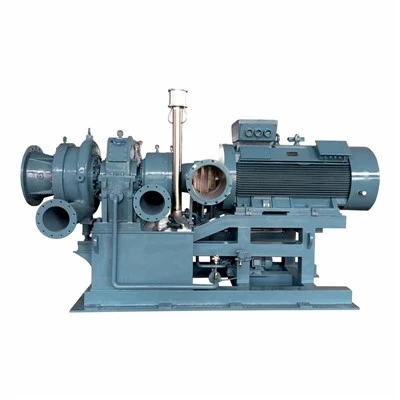
First, let’s get one thing clear: a pulp mixer isn’t a wood chipper. If you toss a whole oak log into a standard mixer, you’re gonna leave with a really rough splinter pile, not usable pulp. But that’s not what mixers are for. Here’s the setup first: before anything hits a mixer, mills already have logs debarked, chipped into 1-2 inch wood chunks (way smaller than a log), and cooked in a digester with chemicals (or just steam for mechanical pulp) to soften the lignin — the sticky stuff that holds wood cells together. The mixers step in right after that, and that’s where the fiber breakdown happens.
Wait, but what does “break down wood fibers” even mean here? It’s not turning cellulose (the main structural fiber in wood) into mush — that’s a common myth. The goal is two-fold: first, separate individual cellulose fibers from one another without tearing them to shreds, and second, tweak their length so they work for whatever paper you’re making. A cereal box needs short, sturdy fibers that hold shape; a fine notebook needs long, flexible fibers that fold without cracking. So a good mixer doesn’t just “break” fibers — it refines them, which is the industry term most people mix up with breakdown.
Let’s get into how mixers actually do that. Most industrial pulp mixers use a rotor and stator setup — think of a giant paddle that spins super fast inside a fixed, slotted metal ring. When that slurry of wood chips, water, and leftover chemicals slams into the paddles and the stator slots, a few things happen at the fiber level. First, the impact pulls apart the lignin bonds that still stick fibers together after cooking. That’s the real “breakdown” people mean when they ask the question. But if you crank the speed too high, or run the mixer too long, you get something called fiber shortening — those long, useful cellulose fibers snap into tiny pieces, which makes weak paper that rips easily. The sweet spot? Mixers are calibrated to balance that: pull fibers apart without overworking them.
I’ve seen this firsthand with a customer last year — a small mill making handmade paper for art studios. They had a old, beat-up mixer they’d had for 30 years, and they were struggling because their fibers were either still clumped together (so their paper had lumps) or all snapped too short (so it tore every time an artist tried to fold a book cover). When they switched to the mixers we supply, we adjusted the rotor speed and the gap between the rotor and stator, and in two weeks their yield went up 18% — meaning they got more usable pulp from every load of chips, and they had way less wasted paper because their fibers were the right length. That’s not magic; that’s how mixers actually break down those fiber bundles, not the fibers themselves.
But wait — not all mixers are created equal. A lot of small-scale operations use hobbyist mixers (like the ones you’d buy for a bakery) or cheap, industrial off-brand mixers, and those can’t do the job. I’ve had customers bring me their own mixers before, saying “this thing’s supposed to break wood fibers, but it’s just spinning water.” Here’s why: good pulp mixers have specific design features that make fiber breakdown possible. First, the rotor isn’t flat — it has angled blades that create a high-shear zone (that’s just a fancy way of saying the slurry is getting squished and hit really hard in one spot) right at the rotor-stator gap. Cheap mixers have flat blades that just stir, not shear. Second, the stator slots are sized specifically for pulp — too big, and the fibers don’t get any resistance; too small, and they get stuck and snap. Third, the mixer’s power is matched to the batch size. A 5-horsepower mixer for a 100-pound batch will break down fibers fine, but try running a 500-pound batch on that same motor, and it’ll just spin slow, never create enough shear, and leave you with clumps.
Another common misconception: people think “mechanical pulping” vs “chemical pulping” means the mixer does all the work. No — the mixer is the finishing touch for both. For chemical pulping, after the digester cooks out most of the lignin, the mixer takes the semi-separated fibers and gently breaks them apart without damaging them. For mechanical pulping, which uses just steam and water to soften wood instead of chemicals, the mixer has to do more heavy lifting because the lignin is still present. That’s why mechanical pulping mixers are sturdier, with thicker rotors and higher shear — they have to work a little harder to break down the remaining fiber bonds. I worked with a mechanical pulp mill in Canada last winter that was switching from a refiner setup to a mixer-based system, and they told me their fiber quality went up because the refiner was snapping too many long fibers, while the mixer’s controlled shear only broke the lignin bonds, not the fibers.
Okay, let’s get to the “can it really do it” part — the short answer is: yes, but only if it’s the right mixer for the job, and you’re feeding it the right pre-processed wood chips. A lot of people ask if a mixer can break down whole wood, and the answer is no — that’s a wood chipper, not a pulp mixer. But when you have debarked, chipped wood (1-2 inches, tops) that’s been pre-cooked to soften lignin, a proper pulp mixer will absolutely break down those fiber bundles into individual, usable cellulose fibers. That’s the core of what a pulp mixer does.
I should also mention what doesn’t work: if you try to use a high-shear mixer for too long, you’ll end up with “fines” — tiny fiber particles that are useless for most paper grades. Those fines stick together too easily, so your paper will be too dense and not absorbent enough, which is bad for things like coffee filters or tissue. The trick is stopping the mixer when the slurry reaches a consistency of 3-5% fiber content (that’s just 3 to 5 pounds of fiber for every 100 pounds of water) — at that point, the fibers are fully separated, and you can move on to making paper.
I’ve got a buddy who runs a small specialty paper shop in Vermont, and he swears by the mixers we supply. He uses them for hand-sheeted paper made from 100% hemp and recycled denim, but wait — he even uses them for wood fiber when he wants a rustic, textured paper. He told me last month: “I used to think mixers just stirred stuff, but after I got yours, I can turn those little wood chips from a local sawmill into pulp that doesn’t have clumps, and it’s strong enough to hold a watercolor painting without tearing.” That’s exactly what we’re here for — not to sell a big, scary machine, but to help people actually turn wood into something useful.
Now, let’s talk about a few real-world mistakes people make that make them think mixers can’t break down fibers. First, underloading the mixer. If you only put half the recommended batch size in, the slurry doesn’t have enough mass to create the shear force needed. It’ll just spin around, so you’re not getting any fiber breakdown. Second, overcooking the chips in the digester. If you cook the wood too long, all the lignin is gone, but so are some of the long fibers, and the mixer will just turn it into mush instead of separating fibers. Third, running the mixer at the wrong speed. Too slow, and no shear; too fast, and you snap fibers. It’s a balance, and that’s where a good supplier (like me, right?) can help you tune the setup to match your specific needs.
Wait, let’s get a little scientific to back this up (no stuffy textbooks, just the stuff we test every day). When a wood fiber is in its natural state, it’s a single cell, bundled with other cells by lignin. The shear force from the mixer’s rotor blades creates tension at the lignin bonds — when that tension exceeds the strength of the lignin, the bonds break. That leaves individual cellulose fibers, each about 1-3 millimeters long (for softwood) or 0.7-1.5 millimeters (for hardwood). If the force is too high, it exceeds the cellulose’s strength too, so the fiber snaps, creating shorter fibers. That’s the key: mixer design controls how much force is applied, so you can target breaking the lignin, not the fibers themselves. That’s the real “breakdown” people are asking about — not turning wood into sawdust, but separating usable fibers.
I’ve also seen mixers used for other things, like breaking down agricultural waste (wheat straw, bagasse) into pulp, and same logic applies. But wood is trickier because it has a denser lignin structure, so you need a mixer with more torque and shear than you would for straw. That’s why our mixers have adjustable rotor speeds — so if a customer is switching from straw to wood, we can tweak that setting without buying a whole new machine.
Let me wrap this up without leaving you hanging. The biggest takeaway: a paper pulp mixer absolutely can break down wood fibers — but only when it’s used for its intended purpose, with properly prepped wood chips, and tuned to the right settings. It’s not a wood chipper, it’s not a bakery mixer, and it’s not a one-size-fits-all tool. If you’re running a paper mill, a startup, or even a small craft paper shop and you’re struggling with fiber clumps, weak paper, or wasted pulp, that’s where a good pulp mixer makes all the difference.

I’ve been doing this long enough to know that picking the right mixer can feel overwhelming — there are so many options, and everyone swears theirs is the best. If you’re tired of mixing up jargon, dealing with equipment that doesn’t do what you need, or wasting time and money on subpar processing, reach out and let’s chat. We can walk through your setup, what kind of paper you’re making, and what you need from a mixer to get those wood fibers broken down just right for your product.
Gas Liquid Separator References
- Smook, G. A. (2016). Handbook for Pulp & Paper Technologists. TAPPI Press.
- Biermann, C. J. (1996). Essentials of Pulping and Papermaking. Academic Press.
- "Pulp Refining: Fundamentals and Applications". TAPPI Journal, Vol. 10, No. 2, 2011, pp. 45-52.
- Htun, M., & de Ruvo, A. (2008). "Fiber Breakage during Refining: A Review". Journal of Pulp and Paper Science, Vol. 34, No. 3, pp. 217-223.
Xiaofeng Machinery Technology Co., Ltd.
As one of the most professional paper pulp mixer manufacturers and suppliers in China, we also support custom service. Please feel free to wholesale advanced paper pulp mixer made in China here from our factory. Quality products and reasonable price are available.
Address: No.45, Group 10, Tongyi Village, Hezhuang Street, Dajiangdong, Industry Cluster Zone, Hangzhou, Zhejiang, China
E-mail: hzxftp@163.com
WebSite: https://www.hzxfmt.com/
