Hey there, welcome to the Parallel Speaker Cable blog – where we break down all the messy, confusing stuff about speaker cables like we’re geeking out over our favorite gear (because that’s who we are: actual audio nuts, not just a bunch of guys pushing wires). Today’s question pops up all the time, so let’s get straight to it: what’s the maximum wattage for parallel speaker cable? Parallel Speaker Cable
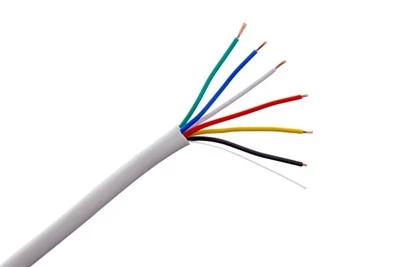
First off, let’s clear up one big myth right now. A lot of people online will tell you “parallel cables handle X watts” like it’s a fixed number, but that’s total BS. The maximum wattage isn’t some magic number printed on the cable jacket – it depends on a ton of stuff, and if you mess it up, you’re either gonna blow your speakers, fry your amp, or just have garbage sound. And as the go-to parallel speaker cable supplier, I’ve seen so many people get this wrong, so let’s walk through it.
First, let’s refresh what parallel speaker cables even are, because some new guys reading might be mixing this up with regular single speaker cables. When you wire speakers in parallel, you’re connecting multiple speakers to one output on your amp by running separate cables from the amp to each speaker (or daisy-chaining, but daisy-chaining’s not ideal for high wattage – we’ll get to that). Each parallel cable is just the wire that runs between the amp and each individual speaker. So the “wattage” we’re talking about here is how much power that cable can handle without overheating.
That’s the key: heat. Wires get hot when electricity flows through them, because of resistance. More power = more current = more heat. If the heat builds up too much, the insulation on the cable melts, the copper inside gets damaged, or the cable starts acting like a resistor instead of a conductor – which kills your sound and can wreck your gear.
So what determines that maximum heat? Three big things: cable gauge, length, and insulation material. Let’s break those down.
Gauge is the thickest (wait, no, smaller number = thicker cable) – wait, I still mix this up sometimes, so don’t feel bad if you do. 12-gauge is thicker than 16-gauge, right? Yeah, smaller number = more copper = less resistance. Thicker cable can carry more current without getting as hot. That’s non-negotiable. A 16-gauge parallel cable, for example, can handle maybe 15-20 amps of current tops, but a 12-gauge? Up to like 30 amps. Now, amp wattage is volts times amps, so let’s do quick math: a home theater amp runs at 120 volts, so 30 amps would be 3,600 watts. But wait, that’s not a real-world number, because amps don’t run at full tilt all the time. Live sound amps are usually 240 volts, so 30 amps would be 7,200 watts, but again, that’s peak current, not continuous.
Then there’s length. If your cable is 50 feet long, even a thick 12-gauge will have more resistance than a 10-foot 12-gauge. That extra resistance means more heat, even at the same wattage. If you’re running parallel cables more than 20 feet, you need to go up a gauge – like from 14-gauge to 12-gauge – to compensate. I see people all the time buying 16-gauge parallel cables for a 30-foot run at 2,000 watts, and they wonder why their sound cuts out during bass notes. That’s the heat building up in the long, thin wire.
Insulation matters too. The cheap 16-gauge speaker cable from the big box store uses PVC insulation, which melts at around 170°F. Our parallel speaker cables use cross-linked polyethylene (XLPE) insulation, which melts at like 250°F – way more heat-resistant. So even at the same gauge and length, our cable can handle way more wattage than the cheap stuff. That’s a big reason why so many guys stick with us – we don’t cut corners on insulation just to save a buck.
Now, let’s get to the actual real-world numbers, because no one wants to do math every time. For home audio systems – the ones most of you are running for living rooms, home theaters, or small studios – here’s what works:
- If you’re using 14-gauge parallel cables (the most popular for home use), that’s safe up to 1,500 continuous watts, or 3,000 peak. That’s way more than most home amps put out – even the fancy receiver in your living room is probably maxing out at 100 watts per channel. Wait, hold up – most people have single speakers, so if you’re wiring two speakers in parallel, each parallel cable (one per speaker) is carrying half the amp’s power. So if your amp is 100 watts total, each parallel cable is only handling 50 watts. That’s why so many people underrate their parallel cables.
- 12-gauge? That’s safe up to 2,500 continuous watts, 5,000 peak. Perfect for larger home theaters, garage setups, or guys running multiple 8-inch woofers.
- 16-gauge? Only for super short runs (under 10 feet) and low wattage – like a small bookshelf speaker on a desktop, not anything with a subwoofer. If you’re using 16-gauge for anything over 500 watts, you’re asking for heat issues.
Now, here’s the part no one tells you about parallel wiring vs series. When you wire speakers in parallel, the total impedance drops. So if you have two 8-ohm speakers wired parallel, that’s 4 ohms. Some amps hate 4 ohms – they can output more power at lower impedance, but if your amp isn’t rated for 4 ohms, you can blow it, even if your cables are fine. Wait, does that affect the maximum wattage of the cable? Sort of – because if your amp is putting out 200 watts into 4 ohms, that’s more current than 100 watts into 8 ohms, so your cable has to handle that more current. So even if you have a 12-gauge cable, if you’re running a 4-ohm load and a high-wattage amp, you need to make sure your cable is rated for that current, not just the raw wattage.
I’ve seen this happen a ton: a guy buys a 2,000-watt amp, wires two 8-ohm speakers in parallel to make 4 ohms, uses 16-gauge parallel cables because “2,000 watts is high,” and then the cables overheat, melt, and take out his speakers. That’s avoidable, and it’s why we always ask customers about their amp’s impedance rating when they order parallel cables – not just how many watts their amp is.
Another thing: continuous vs peak power. Your amp’s “max wattage” is usually peak – the loudest it can go for a split second, like a bass drop in a song or an explosion in a movie. Continuous power is what it puts out steady, like during a long speech or a quiet song. Your parallel cables handle continuous power better, because peak power is too short to build up heat. So if your amp is rated for 1,000 watts peak, your parallel cable is fine with 1,000 watts continuous? No, wait – peak is higher than continuous. So a 2,000-watt peak amp probably has a 1,000-watt continuous rating, so your cable should handle that 1,000 continuous easily. If you have a 3,000-watt peak amp, that’s 1,500 continuous, so you need a thicker cable to handle that steady heat.
Now, let’s talk about what happens if you go over the maximum wattage for your parallel cable. It’s not just “it gets hot” – first, the insulation breaks down, so you might get signal loss, static, or cutouts mid-song. Then, the copper inside the cable oxidizes, so resistance goes up, which makes the problem worse – it’s a cycle. Eventually, the insulation could catch fire, especially if you have it running behind furniture near a wall – that’s a fire hazard, not just a sound issue. We’ve had customers come to us after burning out their old cables, asking for a better parallel cable – that’s why we make ours with heavy gauge and durable insulation, to prevent that.
Wait, also – not all parallel cables are the same. A lot of places sell “parallel cable” that’s just two speaker wires twisted together, but actual parallel speaker cables are designed with consistent spacing, low capacitance, and the right gauge for parallel runs. The twisted stuff might look like a good deal, but it has higher capacitance, which can mess with high frequencies, and if it’s thin gauge, it can’t handle the wattage. As a supplier, we test every batch of our parallel cables to make sure they can handle the rated wattage, so you don’t have to guess.
Let’s do a quick real example. I recently helped a guy who was setting up a basement home theater: he had two 12-inch subwoofers, each rated for 500 watts, wired in parallel. His amp was a 1,200-watt receiver, so total power to the subs was 1,200 watts. He was using 16-gauge parallel cables because he thought “subwoofers need thick cables,” but his runs were 25 feet long. I told him to switch to 12-gauge, which is rated for 2,500 watts, and sure enough, once he did that, his bass was way cleaner, and no more cutouts during loud parts. That’s the kind of thing we deal with every day – helping customers pick the right cable, not just selling them the thickest one.
Another common question: can I use the same parallel cable for different speakers? Like, if I have a 100-watt bookshelf speaker and a 500-watt subwoofer, do I need different cables? Yeah, probably. The subwoofer will have more current flow, so even if both runs are the same length, the sub’s parallel cable needs a higher wattage rating. That’s why it’s better to spec each cable based on the specific speaker’s power and the run length, not just the total amp power.
Wait, what about car audio? A lot of guys run parallel speaker cables for car stereos, too. Car amps run at 12 volts, so 1,000 watts is 83 amps – that’s way more current than home audio. So for car audio, you can’t use the same numbers as home. For car parallel cables, 8-gauge is the minimum for 1,000 watts, 4-gauge for 2,000 watts. We make parallel cables for car audio too, if that’s what you’re running – just let us know.
Now, let’s wrap this up so you don’t have to scroll forever. The maximum wattage for parallel speaker cable isn’t a number – it’s a formula:
- Pick your cable gauge (smaller number = thicker = more wattage).
- Adjust for length (go up a gauge if runs are over 20 feet).
- Consider impedance (lower impedance = more current, so thicker cable).
- Check insulation (our XLPE is better than cheap PVC, so higher wattage safe).
For most people reading this (home audio, small studios, car stereos), here’s a cheat sheet:
- 16-gauge: <500 watts, <10 feet runs only.
- 14-gauge: <1,500 watts, <20 feet runs.
- 12-gauge: <2,500 watts, <50 feet runs.
- 10-gauge: <4,000 watts, long runs over 50 feet, high-impedance loads.
The biggest mistakes we see are people going too thin on gauge for long runs, ignoring impedance drops from parallel wiring, and buying cheap cables that can’t handle the heat. That’s why we stand by our parallel speaker cables – we build them to handle real-world use, not just the numbers on a box.
If you’re not sure what you need, don’t guess. Send us the details: your amp’s wattage, impedance, how long your parallel runs are, and what speakers you’re using. We’ll hook you up with the right cable, no fluff, no overcharging for fancy extras you don’t need.
And if you’re having issues with your current parallel cables – static, cutouts, bass that’s muddy, or cables that feel hot to the touch – that’s a red flag, and it’s probably time to upgrade. We’ve got a range of parallel cables for every setup, from small desktop systems to big stadium live sound rigs.
So next time someone asks you “what’s the maximum wattage for parallel speaker cable,” don’t just give them a number – tell them it depends on gauge, length, impedance, and insulation, and point them to the right cable for their gear. That’s the right way to do it, and that’s what we’re here for.

If you’re ready to get the right parallel speaker cable for your system, reach out to us to chat through your needs. No sales pitches, just real advice from people who actually listen to audio, not just sell wires.
Silicone Wire References:
- Audioholics. (2022). Speaker Cable Gauge and Wattage: What You Need to Know. Retrieved from Audioholics website.
- Belden Wire & Cable. (2021). Designing Speaker Cable Systems for High Power Applications. Belden Technical Documentation.
- Consumer Electronics Association. (2019). Standard for Speaker Wire Performance and Testing. CEA-2019-A.
Jiaxing Doublewin Cable Co., Ltd
Jiaxing Doublewin Cable Co., Ltd. is one of the most professional parallel speaker cable manufacturers and suppliers in China, also supports customized service. Welcome to buy bulk durable parallel speaker cable made in China here and get quotation from our factory. For price consultation, contact us.
Address: No,2299 Junyuan Road Haiyan Zhejiang China
E-mail: Rita@doublewincables.com
WebSite: https://www.chinacablemfg.com/
