If you’ve ever worked with diesel engines—whether in commercial trucks, agricultural equipment, or even industrial generators—you know the common-rail injector is at the heart of its performance. As someone who’s supplied common-rail injectors for over 12 years, I’ve seen firsthand how even a tiny flow discrepancy in an injector can throw off fuel efficiency, cause rough idling, or lead to catastrophic engine failure. Every time a customer calls with a complaint about poor engine performance, the first question I ask is: when was the last time you tested your injectors’ flow? Too often, shop techs skip this step, assuming a visual check will suffice, but flow testing is non-negotiable for keeping injectors working as intended. Common‑Rail Injectors
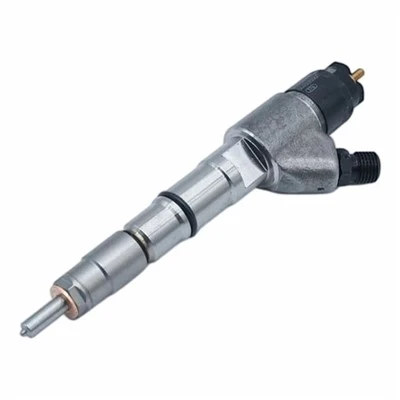
Let me start by breaking down why flow matters for common-rail injectors. Unlike older mechanical injectors that fired in pulses, common-rail systems rely on precise, metered doses of diesel (or biodiesel, for modern setups) delivered at pressures upwards of 30,000 PSI. Each injector’s flow rate is calibrated to a specific value for its make and model—say, 250 cc per 30 seconds at 100 bar, or whatever the manufacturer spec is. Over time, wear from fuel contaminants, corrosion, or electrical component degradation can alter this flow: a blocked nozzle tip will reduce flow, while a leaking internal seal will make flow erratic, or cause it to leak when it’s not supposed to. That’s why testing flow isn’t just a good practice—it’s the only way to confirm your injectors are delivering fuel consistently and efficiently.
When I’m training a new technician at my shop, I don’t just hand them a flow bench and say “go test.” I walk them through the three most common, reliable methods we use daily, each suited to different scenarios—whether you’re testing injectors removed from an engine, or even running diagnostics without pulling them first.
First, the bench flow test, which is the gold standard for us. This is the most accurate method, used when we’re rebuilding injectors, testing core returns from customers, or verifying new injectors before they ship. Here’s how we do it step by step, no shortcuts:
- First, we prepare the test bench. We use a purpose-built common-rail injector test rig, which connects to a high-pressure fuel supply, a pressure regulator, a flow measurement beaker, and a timer. We always use clean, filtered test fuel (often the same grade the customer’s engine uses, or reference-grade diesel for consistency) to avoid skewing results from dirty fluid.
- Next, we set the test parameters to match the injector’s OEM specs. For most passenger car injectors, we test at a rail pressure of 1000 bar, with a 20-millisecond pulse width (that’s how long the injector opens) over a 30-second interval. For heavy-duty truck injectors, we adjust to 1500 bar and a 40-millisecond pulse width, per the engine manufacturer’s guidelines. We never use generic settings—one of the biggest mistakes new techs make is skipping this step, leading to incorrect flow readings.
- Then, we mount the injector securely on the test bench, connecting the high-pressure line to the injector’s inlet, the return line to the bench’s recovery system, and the flow outlet to a calibrated glass beaker. We purge any air from the line first—air bubbles will throw off the flow measurement by as much as 10%—by running the bench for 10 seconds before starting the test.
- Finally, we run the test and record the result. We repeat the test three times to ensure consistency, then compare the average flow to the OEM spec. We consider an injector acceptable if it’s within ±5% of the specified flow rate. If it’s off by more than that, we flag it for rebuild or replacement.
The second method is the rail pressure test, which we use for quick in-engine diagnostics, especially when a customer is having trouble starting or getting poor fuel economy and doesn’t want to pull all injectors right away. This is less accurate than the bench test, but it’s great for narrowing down which injector is problematic. Here’s how it works:
- We connect a pressure gauge to the common rail of the engine, making sure to follow the manufacturer’s safety guidelines (common rail systems hold extremely high pressure, so we always wear eye protection and release residual pressure before connecting any tool).
- We run the engine at idle, then at a steady 2000 RPM, and note the rail pressure readings. A faulty injector will cause the rail pressure to drop unexpectedly when that injector fires—for example, if one injector is leaking, the rail pressure will dip lower and take longer to build back up than the others.
- To narrow it down further, we use a scan tool to command each injector to fire individually while monitoring rail pressure. The injector that causes the largest pressure drop when activated is the one with the flow issue. We recommend following this up with a bench test once the injector is removed, to get an exact flow value.
The third method is the return flow test, which is perfect for injectors that are still installed in the engine, and it’s a go-to for our field service teams. This test checks the amount of fuel that leaks back from the injector when it’s not firing, which directly relates to its flow integrity. Here’s our process:
- We attach individual graduated beakers to each injector’s return line (most modern engines have quick-connect fittings for this, making the process fast).
- We run the engine at idle for 10 minutes, then measure the fuel in each beaker. A healthy injector will have a return flow of less than 5 cc per minute at idle. If one injector has a return flow that’s 2x or more higher than the others, that’s a sign of internal leakage, which will alter its flow rate. We also run this test at higher engine RPM—say, 3000 RPM—because wear can show up more clearly under load.
Now, let’s talk about common mistakes I see when testing injector flow, because even with the right method, a bad test will give you bad data. First, don’t skip air purging. I can’t tell you how many times a tech comes to me with a “faulty injector” that just has air in the lines, making its flow reading off. Second, don’t use dirty fuel for testing. If you test with fuel that has contaminants or water, it can damage the injector during testing, or give you a lower flow reading than the actual spec. Third, don’t test only once. We always run at least three trials, because small variations in pulse width or pressure can happen. And finally, don’t ignore injector age. If an injector is over 150,000 miles, even if its flow is within spec, it’s a good idea to test it sooner rather than later—wear builds up gradually, and catching it early prevents bigger issues.
As a supplier, I also want to tell you about a common question I get: can I test flow on a used injector before buying or selling it? Yes, but we recommend testing it on a professional bench, not with a home-built setup. A lot of online sellers claim their used injectors are “like new,” but without a flow test, you’re taking a risk. I’ve had customers send in injectors they bought from a private seller that had flow rates 20% below OEM spec, which ended up causing their engine to lose 2 mpg and run rough. The bench test is the only way to verify that a used injector meets the required flow.
Another point: flow testing isn’t just for faulty injectors. We also test every new injector we ship to customers, to make sure it meets the OEM spec before it leaves our warehouse. We had a customer a few years ago who installed a cheap aftermarket injector that was only calibrated to 80% of the required flow, and it caused their entire fuel system to fail within a month. Since then, we’ve made flow testing a mandatory step for all our products—no injector leaves our shop without three passing flow tests on our professional bench.
If you’re a shop owner, a mechanic, or a fleet manager, here’s my advice: schedule flow tests for your injectors every 50,000 to 60,000 miles, even if you don’t notice any performance issues. Catching a flow discrepancy early can save you thousands in engine repairs down the line. If you do need to test injectors, invest in a good flow bench if you have a high volume, or partner with a reputable supplier who can do the testing for you.
At the end of the day, common-rail injector flow is about precision. It’s not just a number on a spec sheet—it’s what keeps your engine running efficiently, reduces emissions, and saves you money on fuel. As someone who’s spent years working with these parts, I know firsthand that skipping flow testing is a costly mistake.
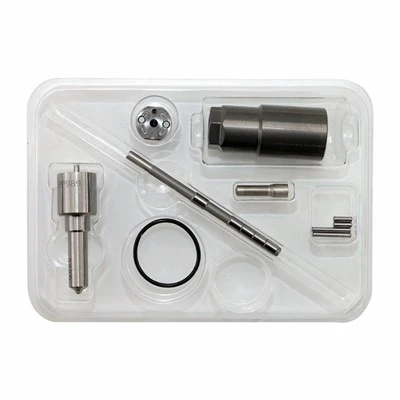
If you’re in need of professionally tested common-rail injectors, or have questions about flow testing your existing injectors, reach out to our team to discuss your requirements. We’ll help you get the right parts and testing support for your equipment.
Injector Nozzles References
- Common Rail Diesel Fuel Systems: Fundamentals, Diagnosis, and Repair, 2nd Edition. Bentley Publishers, 2019.
- Society of Automotive Engineers (SAE) Standard J2997: Test Method for Common Rail Injector Flow Characteristics, 2020.
- Diesel Net Technical Library: Common Rail Injector Flow Testing Best Practices, 2022.
Jiangsu Shunlong Electrionic Control Fuel Injection System Co., Ltd.
As one of the most professional common‑rail injectors manufacturers and suppliers in China, we have world-leading production equipment and strong manufacturing capabilities. Please rest assured to wholesale premium common‑rail injectors made in China here from our factory.
Address: No.666 Huifu Road , Jintan Development District, Changzhou City, Jiangsu Province
E-mail: kalen@EFINozzle.com
WebSite: https://www.efinozzle.com/
