When I first started working as a stainless steel insulated flask supplier five years ago, I used to get a lot of questions from new retail buyers and small café owners alike: “Why does a 500ml flask cost $12, but a 1000ml one cost $18?” Back then, I’d just rattle off a basic answer about more material, but over time I’ve learned there’s a lot more science and practical business behind that price gap. Today, I want to break down exactly how a flask’s capacity ties to its cost—from raw materials to manufacturing, insulation tech to customer expectations. This isn’t just about “bigger equals more expensive”; it’s a balance of engineering, value, and what makes a flask worth the investment for everyday use. Stainless Steel Insulated Flask
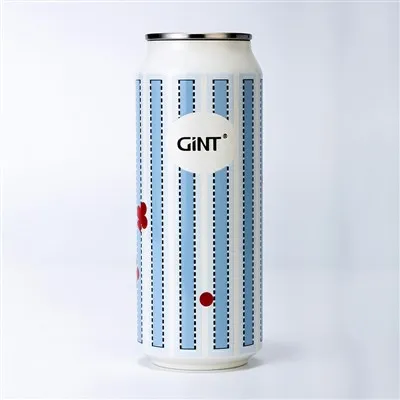
First, let’s start with the foundation: stainless steel itself. Most insulated flasks use 18/8 food-grade stainless steel—meaning 18% chromium for corrosion resistance and 8% nickel for durability. The amount of steel needed to make a flask scales almost directly with its capacity, right? But it’s not just the volume of liquid it holds; it’s the total surface area of the flask, both inside and out, that determines how much raw material is used. Let’s do a quick math check to make this make sense. A standard flask is a cylinder: volume is πr²h, and surface area is 2πrh + 2πr². For a 500ml flask (let’s say radius 3cm, height ~17.7cm), its total surface area is around 399 cm². A 1000ml flask (same radius, height ~35.3cm) has a surface area of ~698 cm². That’s a 75% increase in surface area, which translates to 75% more steel. But wait, the price difference between a 500ml and 1000ml flask isn’t 75%—it’s usually 30-50%. Why? Because there’s a fixed cost component that doesn’t change with size, plus the efficiency of manufacturing larger batches. For example, stamping a 1000ml outer shell uses almost the same tooling setup as a 500ml one; the only extra is a little more metal and slightly longer production time. That fixed overhead—like labor, energy to heat and form the steel, and tool maintenance—evens out a bit when scaling up, so per-milliliter cost drops. That’s why buying a larger flask doesn’t just give you more liquid space; it gives you a better value per ounce, which is a point I always highlight when talking to bulk buyers.
Next, the insulation layer, which is the whole point of an insulated flask—keeping drinks hot for 12 hours or cold for 24, depending on the model. Most quality flasks use vacuum insulation: two layers of stainless steel with a vacuum gap between them, sealed at the top, and sometimes a small amount of argon gas to improve heat transfer resistance. The gap size doesn’t change much between capacities, right? We keep it around 1.5mm for all our main lines, because a smaller gap doesn’t insulate well, and a larger one adds unnecessary weight and cost. But the amount of steel used for the inner and outer layers still scales with capacity. A 1000ml flask needs a larger inner chamber, so both inner and outer walls are bigger, which means more material for the vacuum seal. Also, the sealing process—where we weld the top edge to create the vacuum—uses a consistent amount of time per flask, regardless of size, so again, the fixed cost of sealing is spread over more volume for larger flasks. That’s another reason larger capacities are a better per-value deal: the insulation technology that costs us $1.50 per flask in overhead is spread over more milliliters, so the per-milliliter insulation cost is lower. There’s a catch here, though—cheap no-name flasks sometimes skimp on the vacuum gap for smaller capacities, but that’s why you see really low prices on flasks that don’t insulate well after an hour. As a supplier, we test every flask’s insulation (keeping hot water at 180°F for 12 hours and checking the temperature drop) so we can’t cut corners on that, even for smaller sizes.
Then there’s the lid and accessories, which often make up a big chunk of the cost that people don’t account for. A 500ml flask might have a simple screw-on lid with a sip spout, while a 1000ml one might come with a flip-top lid, a built-in strainer for tea or coffee, and a handle for carrying. Wait, is that always the case? Not necessarily, but it’s a common design choice. For example, our entry-level 500ml flask has a basic lid for $9.99, while our entry-level 1000ml has the same basic lid, no frills, for $14.99. The difference there is still the raw steel, not the lid. But when we get to premium lines, the lid can add to the cost. A 500ml premium flask with a leak-proof straw lid might be $14.99, while a 1000ml with the same straw lid plus a carry loop is $19.99. So the accessory adds $5, but the steel adds another $5, making that $10 difference. I always tell buyers: if you’re comparing prices, make sure you’re looking at the same lid and accessories. A 1000ml flask with a cheap plastic lid might be $12, but that’s not the same as a 500ml flask with a BPA-free, leak-proof lid—you’re not just paying for capacity, you’re paying for the parts that make the flask safe and easy to use. That’s a mistake new buyers make all the time, and it leads to confusion about why “bigger is more expensive” even when the price gap seems too high.
We also have to consider market demand and economies of scale for different capacities. Smaller flasks (200ml-500ml) are popular for personal use: people take them to work, to the gym, or on short hikes. Larger flasks (1000ml-1500ml) are popular for long trips, families, or people who don’t want to refill during the day. But how many units of each capacity do we sell? In our experience, 500ml is the best seller—we move twice as many 500ml flasks as 1000ml ones. That means when we produce 500ml flasks, we get a bulk discount on steel, and our production line is more efficient because we’re making more of the same size. For larger capacities, the production run is smaller, so we don’t get that same bulk discount, and the setup time for changing the mold is a little more. That pushes the cost up. It’s the same as any product: if you make fewer units, per-unit cost is higher. For example, if we make 10,000 500ml flasks, the steel cost per flask is $3. If we make 5,000 1000ml flasks, the steel cost per flask is $4. That’s a direct result of lower volume. I’ve seen this shift over the years: as more people switch to single-use plastics-free, demand for all capacities has gone up, but small and medium sizes still dominate, so large capacities still have a slight price premium from lower volume.
Another factor that’s often overlooked: weight and durability for different capacities. A 1000ml flask is heavier when full, so we have to reinforce the base and the side walls to make sure it doesn’t dent or leak when dropped. A 500ml flask is lighter, so thinner steel can work, but we still use the same quality grade. We tested this a few years ago: a 500ml flask can take a 3-foot drop without damage using 0.4mm thick steel, but a 1000ml flask needs 0.5mm thick steel to take the same drop. That extra 0.1mm of steel per layer adds up—for 5000 units, that’s about 20kg more steel, which is a small cost but still adds to the price. We also test for pressure, because when you fill a hot drink and seal the lid, some pressure builds up. Larger flasks have a bigger inner volume, so the pressure is slightly higher, so we have to make sure the seams are stronger. That means more time spent on quality control, which again, adds to the cost. As a supplier, we don’t want to sell a flask that breaks after a month, so we have to adjust material thickness and manufacturing steps for each capacity, which changes the price.
Now, let’s talk about value, not just cost. A lot of customers think “I don’t need a 1000ml flask because it’s too expensive,” but when you calculate per-milliliter cost, it’s often cheaper than a small one. Let’s do that again: our 500ml flask is $9.99, so per ml is ~$0.02. Our 1000ml is $14.99, per ml is ~$0.015. That means you’re getting 33% more liquid for only 50% more money, which is a better deal. The same goes for larger sizes: our 1500ml flask is $21.99, per ml ~$0.014, even better. I mention this to customers who are on the fence about size, because it’s not just about how much liquid you need—it’s about getting more for your money. Of course, if you only need a flask for a short walk and a 250ml size fits in your purse, that’s the better value for you, even if per ml is higher. It’s all about use case. That’s why we carry a range of capacities, from 250ml to 1500ml, so customers can pick the one that fits their needs, and the price makes sense for that.
I also want to address a common myth: that all stainless steel flasks are the same, so a larger one is just more material. That’s not true, especially when it comes to insulation. A low-quality 1000ml flask from a brand no one has heard of might cost $10, but we’ve tested those—they keep drinks hot for 4 hours, not 12, because they cut corners on the vacuum gap, use thinner steel, and have a cheap lid. That’s not a true comparison. When we price our flasks, we factor in the insulation performance, food safety (all our stainless steel is 18/8, no lead or BPA), and durability. So a 1000ml flask from a reputable supplier is more expensive than a no-name one because it’s a better product, not just because it’s bigger. That’s why I always advise buyers, especially retail buyers, to look beyond just the capacity and price—check the insulation test results, the material grade, and the manufacturer’s quality control. As someone who’s in this business, I’ve seen too many customers buy a cheap large flask, only to replace it after a few months, because it doesn’t work as well. That ends up costing more in the long run.
So putting this all together, the relationship between a stainless steel insulated flask’s price and its capacity isn’t linear, but it follows a few clear patterns: raw material cost scales with surface area (not just volume), fixed manufacturing costs (tooling, sealing, labor) mean per-unit cost drops as size increases up to a point, accessory and design changes for larger sizes can add some cost, and economies of scale mean best-selling smaller sizes have lower per-unit cost than less common larger sizes. But at the end of the day, it’s a balance: bigger flasks cost more, but they often offer better value per milliliter, and for people who need more liquid, that’s worth the extra investment.

If you’re a retail buyer, café owner, or someone looking to stock up on flasks for your team, and you want to talk about pricing for different capacities, insulation performance, or bulk orders, don’t hesitate to reach out. We can help you find the right size that fits your needs and budget, with the quality you can count on. To learn more about our line of stainless steel insulated flasks and discuss purchasing for your business, get in touch with our team to start a conversation.
Stainless Steel Vacuum Insulated Mug References
- International Stainless Steel Forum. (2022). Life Cycle Assessment of Food-Grade Stainless Steel for Food Contact Applications.
- American Society of Heating, Refrigerating and Air-Conditioning Engineers (ASHRAE). (2021). Vacuum Insulation Systems for Consumer Thermoses.
- National Sanitation Foundation (NSF) International. (2020). Standard for Food Equipment Materials (Chapter 5: Stainless Steel Utensils and Containers).
- Journal of Manufacturing Processes. (2021). Cost Optimization of Cylindrical Vessel Production for Consumer Insulated Containers, Vol. 68, Part B, pp. 1245-1253.
- Consumer Reports. (2023). Testing Guidelines for Reusable Insulated Water Bottles and Flasks.
Jiaxing Huading Vacuum Flask Technology Co., Ltd.
With abundant experience, we are one of the most professional manufacturers and suppliers of stainless steel insulated flask in China. Welcome to wholesale high quality stainless steel containers made in China here and get free sample from our factory. We also accept customized orders.
Address: No.628 Xingping First Road Pinghu Zhejiang China
E-mail: yangdongyan@gint.cc
WebSite: https://www.huadingtop.com/
