If you’ve ever stood at the edge of a modern balcony or walked through a sleek commercial lobby, the smooth, unobtrusive lines of an aluminum handrail profile probably caught your eye. As someone who’s spent 12 years supplying custom aluminum handrail profiles for residential, commercial, and industrial projects, I’ve had more conversations than I can count with architects, contractors, and homeowners asking the same question: “How flexible is this stuff, really?” It’s not a trivial question—choosing a handrail that’s too stiff can mean it cracks under temperature shifts or fails to fit a curved staircase, while one that’s too soft can feel flimsy, sag over time, or lack the strength required for building codes. Today, I’m breaking down that flexibility, what it means for your project, and how we tailor profiles to strike the perfect balance. Aluminum Handrail Profile
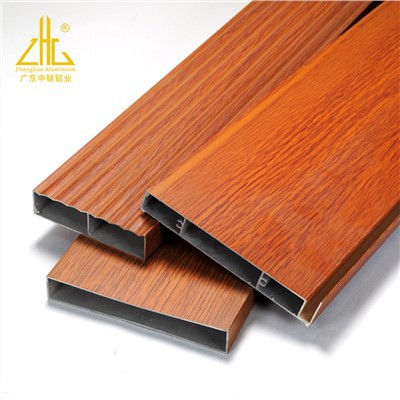
First, let’s get clear on what “flexibility” actually means for aluminum handrails, because it’s not the same as the bendable plastic hose you might have under your sink. When we talk about a metal’s flexibility, we’re usually referring to two separate properties: ductility and flexibility (sometimes called structural bendability), and modulus of elasticity. Ductility is the ability of a material to stretch or bend without breaking—think of how a copper wire can be pulled into thin strands. For aluminum, that’s a big part of why we use it, but structural flexibility is about how much a handrail can deflect (bend under weight) before it reaches its limit, without permanent damage. That’s the number that matters most for safety and long-term performance.
Aluminum is often mistaken for a flimsy metal, but that’s only true if you’re comparing it to steel pound for pound. Pure aluminum has a tensile strength of around 90 MPa (megapascals), which is about a third of mild steel’s 250 MPa. But here’s the thing: aluminum handrail profiles aren’t made from pure aluminum. We alloy it with small amounts of elements like magnesium, silicon, or copper to boost strength while keeping that light weight. The most common alloy we use for handrails is 6061-T6, a workhorse in the aluminum industry. Its tensile strength jumps to 310 MPa, almost on par with mild steel, but it’s still 60% lighter. That’s why a 10-foot 6061-T6 aluminum handrail profile weighs roughly 12 pounds, compared to a 30-pound steel one of the same length. The flexibility here is a tradeoff between strength and weight that makes aluminum ideal for projects where ease of installation and long-term durability matter.
So, what does that mean for how much an aluminum handrail can bend under use? Building codes, like the International Building Code (IBC) in the U.S., specify that a handrail supporting up to 200 pounds per linear foot must deflect no more than 1/360 of its total span. For a 10-foot handrail, that’s a maximum deflection of 0.33 inches. Let’s do the math: a standard 2-inch by 2-inch 6061-T6 aluminum square handrail profile will deflect about 0.28 inches under that 200-pound load. That’s less than the code allows. Compare that to a 2-inch steel square handrail of the same size: it deflects only 0.12 inches, but it’s much heavier, harder to cut and install on-site, and prone to rust. For most residential and light commercial projects, that extra 0.16 inches of deflection in aluminum is totally negligible. You won’t notice a wobble when you grab the handrail to steady yourself on a staircase.
But wait—what if you need a curved handrail, like for a spiral staircase or a mezzanine with a sweeping curve? That’s where the ductility of aluminum really shines. Unlike steel, which requires heavy machinery to bend into custom shapes, aluminum 6061-T6 has a high elongation rate—meaning it can stretch up to 10% of its original length before breaking. That makes it easy to bend on-site with simple tools, or to form into precise curved profiles at our facility. We regularly supply curved aluminum handrail profiles for high-end residential projects and retail spaces, where the shape of the staircase or balcony isn’t a straight line. I remember a project a few years back for a restaurant in downtown Portland that had a 120-degree curved mezzanine; the contractor was able to bend our 2-inch round profile on-site using a pipe bender that rented for $50 a day, no heavy equipment needed. If he’d tried to do that with steel, he would have had to order a pre-bent custom section that took three weeks to arrive and cost twice as much.
Of course, flexibility isn’t one-size-fits-all. We can adjust the profile’s thickness, shape, and alloy to match different flexibility needs. For example, if you’re installing a handrail for a commercial warehouse where forklifts might accidentally bump it, you’ll want a stiffer profile—we’ll go with a 3-inch square profile with thicker walls, which deflects only 0.12 inches under the same 200-pound load, almost as stiff as steel. For a residential balcony where you want a lighter, more modern look, we can use a thinner 2-inch round profile, which deflects around 0.3 inches—still well within code, and much easier to lift and install. We also offer extruded profiles with custom cross-sections, like rounded top rails for a softer look, or channels that let you run lighting along the handrail without adding extra bulk that would reduce flexibility.
There’s a common myth that aluminum handrails are prone to sagging over time, but that’s almost always a result of improper installation, not the material itself. If a handrail is mounted with undersized brackets, spaced too far apart, or attached to weak supports, even a steel rail will sag. When installed correctly, aluminum handrails have a very low creep rate—meaning they don’t deform permanently under constant load. Studies from the Aluminum Association show that 6061-T6 aluminum has a creep rate of less than 0.01% over 50 years at room temperature, which translates to a sag of less than 1/10 of an inch in a 10-foot rail. That’s barely noticeable, even on a long balcony. Compare that to wood, which can expand and contract with humidity, leading to noticeable sag or warping in as little as 10 years.
Another factor that affects flexibility is thermal expansion, which is especially important for handrails that span long distances or are exposed to extreme temperature changes. Aluminum expands about three times more than steel, but that’s not a flaw—we design profiles to accommodate that movement. For example, if you’re installing a handrail on a 30-foot outdoor balcony, we’ll include expansion joints every 20 feet, which let the rail expand and contract with temperature shifts without warping. If we didn’t account for that, a steel rail would hold its shape, but the joints would pull tight, leading to cracks at the connections. An aluminum rail with proper expansion joints stays flexible and intact for decades, even in places with harsh winters or hot summers.
I’ve seen a lot of handrail projects go wrong because contractors don’t understand the flexibility tradeoffs, and I’ve also seen some turn out beautifully because they do. Last year, a homeowner in Seattle hired a contractor who tried to use a thin, 1-inch aluminum profile for a second-floor balcony. The contractor cut corners on the material, using a lower-grade aluminum alloy with a tensile strength of only 150 MPa, way below 6061-T6’s 310 MPa. The result? The handrail sagged almost an inch within a year, and the joints started to pull apart. We replaced it with our standard 2-inch 6061-T6 profile, and it’s held up perfectly through Seattle’s rainy winters and mild summers for the past two years. That’s why we always stress to our clients that flexibility isn’t just about bendability—it’s about matching the material and profile to the job.
If you’re planning a project and wondering whether aluminum’s flexibility is right for you, here’s a quick checklist: If your project is residential, or light commercial, and you need a rail that’s easy to install, can be curved to fit unique shapes, and won’t rust, aluminum is a great choice. For heavy industrial applications where the handrail will bear constant heavy loads (like a loading dock where pallets are regularly stacked against it), we can supply heavier, stiffer profiles that meet even the strictest codes. And if you’re working on a budget, aluminum handrails are usually 20-30% cheaper than steel, because they’re lighter to transport and easier to work with on-site.

At the end of the day, the flexibility of an aluminum handrail profile is one of its biggest advantages—if you know how to use it. It’s not too stiff to curve, not too soft to fail codes, and it’s durable enough to last 50 years or more with minimal maintenance. We’ve supplied profiles for everything from tiny apartment balconies to 50-foot curved staircases in high-rise office buildings, and every time, we tailor the profile’s flexibility to the specific needs of the space. If you’re ready to talk through your project, whether you’re an architect specifying materials, a contractor looking for a reliable supplier, or a homeowner planning a remodel, reach out to our team to discuss custom handrail solutions that balance flexibility, strength, and style.
Aluminium Extrusion Profiles References:
- Aluminum Association. (2022). Aluminum Design Manual: Specifications and Guidelines for Aluminum Structures.
- International Code Council. (2021). International Building Code (IBC) Section 1014: Handrails and Guardrails.
- Davis, J. R. (Ed.). (2001). Alloying: Understanding the Basics. ASM International.
- ASTM International. (2019). Standard Test Methods for Tension Testing of Metallic Materials (ASTM E8/E8M-19a).
- Aluminum Association. (2020). Creep Behavior of Aluminum Alloys in Structural Applications.
Foshan Pailian Aluminium Ltd
Foshan Pailian Aluminium Ltd is one of the most professional aluminum handrail profile manufacturers and suppliers in China. With the aid of experienced staff and advanced equipment, we can assure you the high quality, high precision and excellent design of our products. Come and wholesale the cheap aluminum handrail profile made in China here from our factory. Customized orders are welcome.
Address: 1802A, 1802B, 1802C, 1802D, 1802E,18th Floor, Aluminum Association Building, NO.70 Lingnan Road,DALI FOSHAN CITY,GUANGDONG ,CHINA
E-mail: zhlaluminum@gmail.com
WebSite: https://www.pailian-aluminium.com/
