If you’ve ever stood in a stationery supply room, staring at a stack of plain paper and wondering if it’s versatile enough for more than just printing documents, you’ve probably glanced at white kraft paper at some point. As a white kraft paper supplier who’s spent the last 12 years working with printers, small business owners, and boutique stationers, one question comes up weekly: Can white kraft paper actually be used for envelope making? The short answer is yes—but it’s not a one-size-fits-all solution, and understanding how it stacks up against traditional envelope materials can make all the difference if you’re considering it for your next project. White Kraft Paper
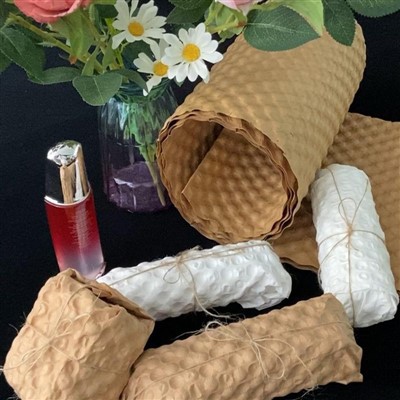
Let’s start with the basics: What is white kraft paper, anyway? Unlike the brown kraft paper you might associate with grocery bags or shipping packaging, white kraft is manufactured by bleaching the wood pulp used in kraft production to a soft, opaque off-white or bright white tone—without stripping the natural, durable fiber structure that makes kraft so tough. The process uses mild bleaching agents to avoid weakening the fibers, so it retains that signature resistance to tearing and punctures that brown kraft is known for. That durability is non-negotiable for envelopes, which need to protect whatever’s inside—whether it’s a handwritten letter, a small product sample, or a set of wedding invitations.
When I first started in the paper supply business, a local wedding stationer reached out asking about white kraft for custom envelopes. Back then, most people stuck to standard white copy paper or cream cardstock for envelopes, but she wanted a rustic, understated look that didn’t feel flimsy. We supplied her with 70 GSM white kraft (GSM, or grams per square meter, is the standard for paper weight) and she sent me a sample a few weeks later: an envelope that held up to being stuffed with thick cardstock inserts, sealed with a custom wax stamp, and even survived a trip through the post office without bending. That was the moment I realized white kraft wasn’t just a niche material—it was a hidden gem for envelope making.
But let’s get into the practical, science-backed side of envelope requirements, because not all white kraft is the same. Envelopes need a handful of key properties to be functional: strength to withstand handling, adhesion for sealing (both adhesive strips and glue), printability (for addresses, logos, or designs), and compatibility with postal machinery. White kraft paper checks all these boxes when it’s sourced and processed correctly.
First, strength. Kraft paper is made from long wood fibers (usually softwood pulp) that are chemically pulped rather than mechanically ground, which gives them a much higher tensile strength than standard copy paper. For context, a 70 GSM white kraft envelope has a tensile strength of roughly 1,500 kN/m², while a standard 80 GSM office envelope (often made from bond paper) is around 1,000 kN/m². That extra strength means envelopes made from white kraft are less likely to tear at the seams when being stuffed, sealed, or sorted by postal equipment. I’ve had a customer who ships small pottery pieces in white kraft envelopes—no extra padding, just the kraft paper’s natural fiber structure to cushion bumps and scratches. It’s a small use case, but it highlights how the paper’s durability solves a problem other materials can’t.
Next, sealing compatibility. A common concern with bleached kraft is whether the surface will hold adhesive. White kraft has a slightly rough, fibrous surface compared to smooth bond paper, but that roughness actually helps pressure-sensitive adhesive strips (the kind on most store-bought envelopes) grip better. The key here is that the paper’s pH level is neutral or slightly alkaline, which doesn’t break down the adhesive over time. We test every batch of our white kraft paper for pH balance (aiming for 7.0 to 8.5, the sweet spot for sealing) and have never had a customer report a seal failing due to the paper itself. For hand-glued envelopes, the rough surface also means glue spreads evenly and doesn’t bead up like it can on smooth cardstock.
Printability is another big one, especially for people using envelopes for marketing or invitations. White kraft paper takes inkjet and laser print exceptionally well, as long as the GSM is high enough. We generally recommend 70 GSM to 100 GSM for envelopes: 70 GSM works for simple address printing and handwritten notes, while 100 GSM is better for detailed logos, full-cover designs, or heavy inserts that add bulk. A common mistake we see is people using too-thin white kraft (below 60 GSM) for envelopes—it’ll stretch when wet from handwritten ink or printer condensation, leading to wrinkling or tearing. But when you stick to that 70 to 100 GSM range, print results are crisp, not faded or feathered like they can be on brown kraft or uncoated cardstock.
Now, let’s talk about the limitations, because white kraft isn’t for every envelope project. The biggest downside is opacity. Because the fibers in kraft paper are naturally somewhat translucent, a single layer of white kraft might show whatever’s inside it—for a plain letter, that’s not a problem, but if you’re mailing a confidential invoice or a colorful product sample, that could be a concern. In that case, a double layer of white kraft, or a 120 GSM heavyweight white kraft, will solve the opacity issue without switching to a more expensive coated cardstock. Another limitation is the look: white kraft has a warm, matte tone, not the bright, sharp white of premium office envelopes. If you’re looking for a sleek, corporate, high-gloss envelope, this isn’t the material for you—but if you want a rustic, eco-friendly, or handcrafted vibe, that soft, muted off-white is a huge plus.
Wait, speaking of eco-friendly—white kraft paper is a great choice for sustainable envelope making, which is a big selling point for small businesses and consumers now. Unlike bleached paper products that use harsh chlorine, most modern white kraft is bleached with oxygen or hydrogen peroxide, a process called “elemental chlorine-free (ECF)”, which has a much lower environmental impact. Plus, kraft paper is 100% recyclable and biodegradable, so envelopes made from it won’t end up in landfills as extra waste. We source our white kraft from FSC-certified forests, so customers can market their envelopes as sustainable, which is a big draw for eco-conscious brands.
I’ve worked with hundreds of envelope makers over the years, and the projects that use white kraft successfully run the gamut: from small-batch wedding invitations with hand-stamped wax seals to bulk mailing envelopes for local coffee shops, even custom return envelopes for indie bookstores. One of my favorite projects was a local jewelry brand that used 80 GSM white kraft for their customer return envelopes. They told me that when their customers got an envelope that didn’t feel like the flimsy white envelopes they got from big retailers, they were more likely to use it to ship back items—and less likely to complain about the return process. That’s a small detail, but it adds up to customer satisfaction, which is why material choice matters.
If you’re thinking about trying white kraft for your own envelope project, there are a few tips I always pass on to avoid mistakes. First, test a small batch first. Even if you’ve used white kraft before, every supplier processes their paper differently—what works for one might not work for another. Order a 25-sample pack of our white kraft (70, 80, and 100 GSM) to test sealing, printing, and durability before committing to a bulk order. Second, check the GSM for your use case: thinner is fine for simple letters, but heavier is better for projects with lots of bulk or postage. Third, consider the post office guidelines. The USPS, Royal Mail, and most postal services have size and thickness limits for standard envelopes—white kraft falls well within those limits for most sizes, but if you’re making oversized square envelopes, make sure the paper is thick enough to meet their rigidity requirements.
I’ve also seen a lot of misconceptions online about white kraft and envelopes: some people say it’s too rough for printing, others say it tears too easily. But from my experience, those issues almost always come down to using the wrong paper or processing it incorrectly. A few years ago, a customer ordered a cheap 50 GSM white kraft from an online retailer and told me it was terrible for envelopes—tearing when she folded it, ink smudging when she printed addresses. We sent her a sample of our 70 GSM white kraft, and she told me the difference was night and day. The fiber structure was stronger, the print didn’t smudge because the surface was properly sized (coated with a thin layer of starch to prevent ink absorption), and it folded neatly without cracking. That’s the thing about white kraft: it’s only as good as how it’s made.
As a white kraft paper supplier, my job isn’t just to sell paper—it’s to help people find the right material for their project. For envelope making, white kraft is an ideal choice for anyone looking for durability, sustainability, a unique aesthetic, and reliable performance. It’s not a replacement for every type of envelope out there, but it fills a gap that a lot of other materials miss: it’s affordable, functional, and has that timeless, rustic charm that people love for handcrafted or small-batch projects.
If you’re ready to explore white kraft paper for your next envelope project, or you have questions about GSM, testing batches, or finding the right weight for your needs, I’m here to help. I’ve been in the paper industry long enough to know that the right material can turn a good project into a great one, and that’s what I want for you. Reach out to our team to discuss your specific needs, whether you’re a small stationery maker, a business looking for custom return envelopes, or someone just starting a DIY project. We’ll work with you to find the perfect white kraft paper to make your envelopes stand up to whatever they need to do.
Caboxyl Styrene Butadiene Rubber Latex References:
- Technical Association of the Pulp and Paper Industry (TAPPI). (2021). Physical Properties of Kraft Paper for Packaging and Envelope Applications. TAPPI Press.
- Environmental Paper Network. (2022). Sustainable Paper Standards: White Kraft vs. Traditional Bleached Paper. Environmental Paper Network Report.
- United States Postal Service (USPS). (2023). Domestic Mail Manual: Envelope Requirements and Specifications. USPS Office of Consumer Affairs.
- European Paper Industries Association (EPIC). (2021). Long Fiber Pulp Application in Envelope Manufacturing: Durability and Performance. EPIC Technical Bulletin.
Senzo New Material Group Co., Ltd.
As one of the most professional white kraft paper manufacturers and suppliers in China, we also support customized service. Please rest assured to buy high quality white kraft paper made in China here from our factory. For price consultation, contact us.
Address: Dongying Bonded Area, Shandong, P. R. China
E-mail: info@aonuochina.cn
WebSite: https://www.senzopaper.com/
