Hey there! I’m in the AC motor business, and I often get asked about this thing called "asynchronous speed" of an AC motor. So, let’s dive right in and break it down. AC Motor
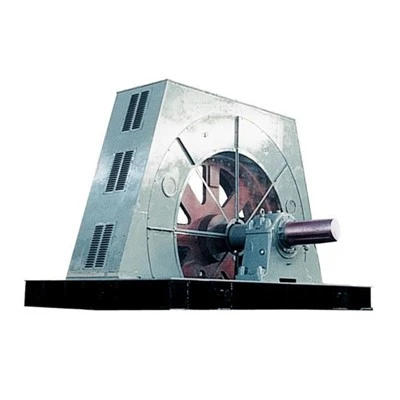
First off, what’s an AC motor? Well, AC stands for Alternating Current. Unlike DC (Direct Current) motors, AC motors work using an alternating current that changes direction periodically. They’re super common in all sorts of industrial and household applications. You’ll find them in everything from big industrial machinery to your home appliances like refrigerators and air – conditioners.
Now, the asynchronous speed. In an AC motor, there are two main types: synchronous and asynchronous. The key difference between them lies in how they interact with the rotating magnetic field created by the stator (the stationary part of the motor).
The synchronous speed of an AC motor is the speed at which the rotating magnetic field in the stator rotates. It’s determined by the frequency of the AC power supply and the number of poles in the motor. The formula for synchronous speed ($N_s$) in revolutions per minute (RPM) is $N_s=\frac{120f}{P}$, where $f$ is the frequency of the power supply in hertz (Hz) and $P$ is the number of poles. For example, in a country where the power supply frequency is 60 Hz, a 4 – pole motor would have a synchronous speed of $N_s=\frac{120\times60}{4}=1800$ RPM.
But here’s where the asynchronous speed comes in. In an asynchronous motor (also known as an induction motor, which is the most common type of AC motor), the rotor (the rotating part of the motor) never rotates at the same speed as the synchronous speed of the stator’s magnetic field. It always lags behind the synchronous speed.
Why does this happen? Well, an asynchronous motor works on the principle of electromagnetic induction. When the stator’s magnetic field rotates, it induces an electromotive force (EMF) in the rotor windings. This induced EMF causes a current to flow in the rotor, which in turn creates its own magnetic field. The interaction between the stator’s magnetic field and the rotor’s magnetic field is what makes the rotor turn.
But for this induction to happen, there has to be a relative motion between the stator’s magnetic field and the rotor. If the rotor were to rotate at the same speed as the stator’s magnetic field (i.e., the synchronous speed), there would be no relative motion, no induced EMF, and no torque to keep the rotor spinning. So, the rotor always rotates at a speed slightly less than the synchronous speed, and this speed is called the asynchronous speed.
The difference between the synchronous speed and the asynchronous speed is known as the slip. Slip ($S$) is usually expressed as a percentage and is calculated using the formula $S=\frac{N_s – N_r}{N_s}\times100%$, where $N_s$ is the synchronous speed and $N_r$ is the asynchronous speed (rotor speed).
Let’s say we have that 4 – pole, 60 – Hz motor with a synchronous speed of 1800 RPM. In a typical industrial asynchronous motor, the slip might be around 3 – 5%. If the slip is 3%, we can calculate the asynchronous speed as follows:
First, we know that $S = 3%=0.03$. Using the slip formula $S=\frac{N_s – N_r}{N_s}$, we can re – arrange it to find $N_r$.
$0.03=\frac{1800 – N_r}{1800}$
Multiply both sides by 1800: $0.03\times1800 = 1800 – N_r$
$54=1800 – N_r$
$N_r=1800 – 54 = 1746$ RPM
As an AC motor supplier, I can tell you that the asynchronous speed is a crucial factor in many applications. For instance, in conveyor systems, the exact speed of the motor is important to ensure that the conveyor moves at the right pace. If the asynchronous speed isn’t appropriate, it could lead to goods being transported too quickly or too slowly.
In fans and pumps, the asynchronous speed affects the flow rate. A motor with the wrong asynchronous speed might not be able to move enough air or water, leading to inefficient operation. And in manufacturing processes, precise control of the asynchronous speed can be the difference between a high – quality product and a reject.
We offer a wide range of AC motors with different asynchronous speeds to meet your specific needs. Whether you need a high – speed motor for a textile mill or a low – speed motor for a mixer, we’ve got you covered. Our motors are designed to be reliable, energy – efficient, and durable.
We understand that choosing the right motor can be a bit confusing, especially when it comes to technical details like asynchronous speed. That’s why our team of experts is always here to help. We can work with you to figure out the best motor for your application, taking into account factors like load, speed requirements, and power consumption.
If you’re in the market for an AC motor, don’t hesitate to reach out. We’re more than happy to have a chat about your requirements and find the perfect motor solution for you. Whether you’re a small business owner looking for a motor for a single machine or a large industrial operation in need of multiple motors, we can provide you with high – quality products and excellent customer service.
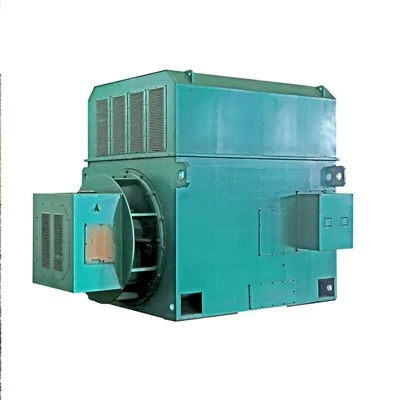
Let’s start a conversation about your AC motor needs. Your next – generation motor solution is just a conversation away. Just drop us a line, and we’ll take it from there.
DC Motor References
- Electric Machinery Fundamentals by Stephen J. Chapman
- Motors and Drives: A Practical Technology Guide by Austin Hughes and Bill Drury
- Induction Motors: Design and Performance by J. B. Gupta
Xian Putai Electric Motor Equipment Co., Ltd.
Xian Putai Electric Motor Equipment Co., Ltd. is one of the most professional ac motor manufacturers and suppliers in China, also supports customized service with low price. Welcome to buy advanced ac motor in stock here from our factory. If you have any enquiry about quotation, please feel free to email us.
Address: Haibo Guangchang Fengcheng Nine Road Economical & Technological Development District Xi’an City Shaanxi Province – China
E-mail: sales@putaimotor.com
WebSite: https://www.putaimotor.com/
