Hey everyone, thanks for stopping by my corner of the web. I’ve been working as a high-purity alumina (HPA) supplier for the past 8 years, and one question I get more than any other—whether it’s from a new lab tech testing materials for semiconductors, a ceramics hobbyist, or even a manufacturing engineer sourcing components for aerospace—this one sticks: “Is high-purity alumina soluble in water?” It’s such a straightforward question, but the answer’s not as simple as a yes or no. Let me break this down like I would for any of my customers, no fancy lab jargon that doesn’t mean anything. High-purity Alumina
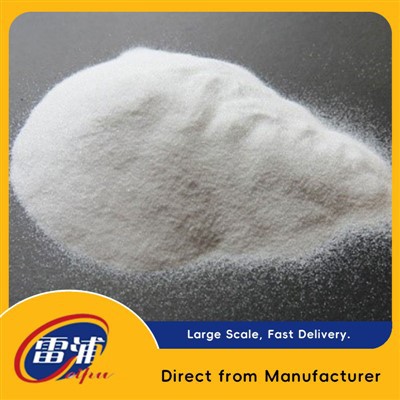
First, let’s get on the same page about what high-purity alumina actually is, because a lot of folks mix this up with regular alumina you find in textbooks. Regular alumina (like the stuff you might use for polishing or basic refractory bricks) has purity levels anywhere from 90% to 98%—it has all sorts of impurities like silica, iron oxides, and other metals that make it react differently. HPA? That’s the 99.99%+ stuff we supply. We’re talking 99.995% or higher, even up to 99.999% for electronic-grade applications. This isn’t the dusty, crumbly alumina from old school science projects—it’s a tightly controlled, refined material used for things like LED sapphire substrates, lithium-ion battery separators, and high-end medical implants. That purity level is non-negotiable for most of our clients, so solubility changes a lot here.
Let’s cut to the chase: No, high-purity alumina is insoluble in pure water. Wait, hold on—don’t stop reading just yet, because that’s not the whole story. If it were just flat-out insoluble, I wouldn’t have to answer this question a hundred times a month. The confusion comes from two places: first, how people test solubility, and second, how HPA interacts with water depending on its form.
First, solubility basics. When we say a substance is soluble in water, that means it breaks apart into individual ions or molecules and disperses evenly—like salt dissolving in water, so you can’t see the grains anymore. Alumina (chemical formula Al₂O₃) has a really strong, stable crystal structure. It’s made of aluminum and oxygen atoms bonded together in a tight, rigid lattice. Pure water is just H₂O, so there’s nothing in there strong enough to pull those bonds apart. Even at room temperature, the amount of alumina that does dissolve in pure water is so tiny it’s almost immeasurable—like less than 0.0001 grams per liter. That’s negligible for any industrial or lab use. You can’t dissolve HPA in water, mix it into a solution, or use it like a soluble salt. That’s the short answer, but let’s get into the nuance because that’s where most folks get tripped up.
What if the water isn’t pure? Oh, right—if you add something acidic or basic, that changes everything. Alumina is an amphoteric material, meaning it reacts with both acids and bases. If you put HPA in a strong acid (like hydrochloric acid, or even weak acids like citric acid if you heat it a little), it will dissolve. Same with strong bases, like sodium hydroxide. But wait—when would a customer need that? Usually not for the core applications HPA is used for. Our HPA goes into things like LED substrates, where you don’t want it dissolving. If it did react with anything, that would mess up the LED crystal structure, or cause defects in the battery separators. So for almost all the reasons our clients buy HPA, solubility in water (pure or otherwise) is a non-issue—because we engineered it not to be soluble when it matters.
Now, let’s talk about the form of HPA, because that’s another big confusion point. HPA isn’t just one physical thing. You can get it as a fine powder, nanoparticles, granules, or even sintered solid pieces. If you have nanoparticle HPA (which is super common for battery materials), people often ask, “If it’s a powder, does it dissolve in water?” No, it just disperses. Dispersing means the tiny particles get suspended in the water, so you can mix them into a slurry, but they’re still individual solid particles—they haven’t broken down into ions. If you let the slurry sit, the HPA will settle to the bottom. That’s not solubility, that’s just suspension. A lot of brand new engineers mix these two up, and I get it—when you’re working with nanomaterials, it’s easy to call anything that mixes with water “soluble.” But for HPA, that’s not the case. I always tell my customers: if your end product needs the HPA to stay in solution, you’ll need to look at a different material. If you need a slurry to coat a separator or press into a shape, HPA disperses just fine, and that’s what most of us use it for.
Wait, let’s test this with an example I saw last month. A customer from a battery startup emailed me saying they were having trouble with their HPA slurry, because some of it was “disappearing” after a week. They thought it was dissolving, but it turned out the pH of their slurry was a little too high (around 12), so a tiny amount of the surface alumina was reacting with the base. The rest of the powder was still solid, just the outer layer was changed. That’s not true solubility of the bulk HPA—just a surface reaction. I walked them back to adjusting the slurry’s pH to neutral, and the problem went away. That’s the kind of thing I see all the time. New customers don’t realize how pH, particle size, and even the crystal phase of HPA can change what happens when you mix it with water.
Speaking of crystal phase—HPA isn’t just Al₂O₃ in one shape. The two main phases we supply are alpha-alumina and gamma-alumina. Gamma-alumina is a finer, more porous form, often used for catalysts or adsorbents. It has a slightly different structure than alpha, and it’s a little more reactive. But even gamma-alumina, the most reactive form we have, is still barely soluble in pure water—still less than 0.001 g/L. The difference is just that gamma has more surface area, so it might adsorb more water molecules on its surface, but it’s not dissolving. Alpha-alumina, which is the phase used for sapphire LEDs and most high-end ceramics, is even more stable—its solubility in pure water is so low it’s basically impossible to measure. That’s why alpha is the go-to for applications where you need the HPA to be inert in water or other liquids.
Now, why does this question even matter so much? Let’s get into the real-world use cases. If you’re making a sapphire substrate for an LED, you grow the crystal from molten alumina—any solubility in water would ruin the crystal’s uniformity. If you’re making a lithium-ion battery separator, you coat a polymer membrane with HPA nanoparticles to keep it stable. If that HPA dissolved in the battery’s electrolyte (which has water traces, even tiny amounts), it would cause shorts or reduce battery life. For medical implants, like hip replacements that use alumina components, it’s critical that the material doesn’t leach into the body’s fluids—so insoluble is exactly what you want. So when a customer asks me about solubility, they’re almost always trying to figure out if their HPA will hold up in their specific application. That’s the context I always stress: it’s not just a yes/no about water—it’s about what you’re using the HPA for.
I’ve also heard a lot of misinformation online—some blog posts say alumina is insoluble, others say it’s slightly soluble, a few even say it dissolves. The confusion comes from people not specifying purity or phase. If you’re talking about 99% alumina with iron impurities, that might react more, but high-purity? No, it’s inert. That’s why I make a point of telling all my customers: when we supply HPA, we test its solubility ourselves every batch. We do the basic water immersion test, check for pH changes, and measure any dissolved aluminum ions. For all our batches, that dissolved amount is way below industry standards—usually less than 1 ppm, which is nothing.
Wait, let’s address a common myth: some folks think because alumina is used in antiperspirants, it must be soluble. No, antiperspirants use aluminum compounds like aluminum chloride or aluminum zirconium—those are totally different from high-purity alumina. That’s a whole other class of materials. I get that all the time too—someone sees “aluminum” and assumes it’s the same as the alumina we sell. Nope, big difference.
So let’s wrap this up with the key takeaways, straight from someone who ships HPA every week:
- High-purity alumina (99.99%+), regardless of phase, is nearly insoluble in pure water. The amount that does dissolve is negligible for all industrial or lab uses.
- It will only dissolve if you expose it to strong acids or bases, and even then, it’s a reaction, not true dissolution in neutral water.
- If you’re mixing HPA powder with water, it will disperse into a slurry, not dissolve. Dispersing is fine for coatings, slurries, and processing—but if you need a true solution, HPA isn’t the material for you.
- The only time solubility matters is if your end product needs the HPA to stay chemically stable in water (or body fluids, electrolytes, etc.). For almost all of our customers, that’s exactly what they want, which is why HPA is such a popular choice.
If you’re here because you’re sourcing high-purity alumina for a project—whether it’s semiconductors, batteries, ceramics, or medical devices—and you’ve got more questions about how it interacts with water, or what purity level is right for your application, don’t overthink it. I’ve helped hundreds of clients work through these exact questions, and we can walk through your specific needs, test samples, and make sure you get the right material. Hit me up to connect and discuss your procurement needs.
Pseudo Boehmite References
- Lide, D. R. (Ed.). (2004). CRC Handbook of Chemistry and Physics (85th ed.). CRC Press.
- Barron, A. R. (2004). Alumina nanoparticles: synthesis, properties, and applications. Journal of Nanoparticle Research, 6(2), 177–195.
- Moss, R. H., & White, D. A. (1977). Solubility of alumina in aqueous solutions at elevated temperatures. Journal of the American Ceramic Society, 60(11-12), 509–513.
- Wang, Y., et al. (2018). Stability of high-purity alumina in aqueous electrolytes for lithium-ion battery separators. Journal of Power Sources, 395, 123–130.
Shandong Leipu New Material Technology Co., Ltd.
With abundant experience, we are one of the most professional high-purity alumina manufacturers and suppliers in China. Please feel free to buy high quality high-purity alumina for sale here and get quotation from our factory. For price consultation, contact us.
Address: Advanced Ceramic Industry Innovation Park, No.125, Liuquan Road, High-tech Zone, Zibo City, Shandong Province
E-mail: 2330389088@qq.com
WebSite: https://www.sdleipu.com/
