If you’ve ever walked past a heavy manufacturing plant, a food processing facility, or even a custom woodworking shop, you’ve likely seen spray coating equipment in action—whether it’s a machine applying a corrosion-resistant layer to a steel beam, a food-grade coating to a cereal box, or a decorative finish to a line of kitchen cabinets. As a spray coating equipment supplier who’s worked with industrial teams across 18 countries over the past 12 years, I’ve heard a version of the same question a hundred times: “What’s the best spray coating equipment for my operation?” The answer isn’t one-size-fits-all. It depends on factors most operators don’t stop to quantify until they’re dealing with rework, wasted material, or downtime. Let’s break this down by real-world industrial use cases, hard data from in-field deployments, and the tradeoffs that make sense for different production lines. Spray Coating Equipment
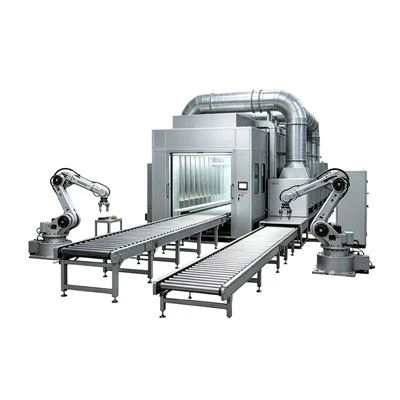
First, let’s get one myth out of the way: “best” doesn’t mean the most expensive machine or the one with the most features. Last year, I worked with a mid-sized agricultural equipment manufacturer in Iowa who spent $120,000 on a high-end automated electrostatic spray system they’d seen at a trade show—only to pull it out six months later because it couldn’t adjust for the uneven curvature of their tractor frames, resulting in 18% rework. When we installed a modular, air-assisted airless system tailored to their specific part geometry, their rework dropped to 3% and their material usage fell by 22%. That’s the kind of real, bottom-line impact that defines “best” for industrial use: it’s equipment that aligns with your production volume, part type, coating material, and compliance requirements.
Let’s start with the most common industrial segment: high-volume, high-precision manufacturing, which includes automotive parts, consumer electronics, and aerospace components. For these operations, automated electrostatic spray systems are often the gold standard. Unlike traditional air spray systems, which use compressed air to atomize paint into small particles, electrostatic spray charges those particles so they’re drawn to the grounded part, reducing overspray by up to 40% and improving transfer efficiency—meaning more of the coating actually sticks to the part, rather than being lost to the air. I’ve seen this translate to a $50,000 monthly saving for a automotive parts supplier in Mexico, who cut their paint waste from 25 gallons per day to 15 gallons after switching. But here’s the catch: automated electrostatic systems require consistent part grounding and a controlled environment (temperature and humidity within 10-25°C and 40-70% RH, per industry standards) to work properly. If you’re spraying irregular, non-conductive parts like plastic furniture components, you’ll need to add conductive primers or use a different system, because the charge won’t transfer evenly. That’s the mistake the Iowa tractor manufacturer made: their frames were coated with a conductive epoxy, but the system’s calibration was set for steel, not the mixed steel and plastic parts they occasionally ran.
Next, for operations that process large, low-volume parts—think heavy machinery frames, wind turbine blades, or bridge components—airless spray systems (also called high-pressure airless) are the workhorse. These systems use high pressure (between 1,000 and 3,500 PSI) to force coating material through a small nozzle, atomizing it without compressed air. The result is a thicker, more durable coating that’s ideal for surfaces exposed to extreme weather or heavy wear. A bridge construction firm in Oregon I partnered with last year was using traditional air spray for their steel girder beams, but they were struggling with pinholes and thin spots that required touch-ups in harsh coastal conditions. When we sent in a portable airless spray rig paired with a heating unit to keep their oil-based anti-corrosion coating at the right viscosity in cold Pacific Northwest winters, their touch-up rate dropped by 35% and the lifespan of their coatings extended from 5 years to 8 years. Airless systems are also more forgiving for uneven surfaces, which is why they’re the go-to for large, complex industrial parts. The downside? They can produce more overspray than electrostatic systems, so you need adequate ventilation and containment booths to comply with OSHA (Occupational Safety and Health Administration) air quality standards. If you don’t have a dedicated spray booth, air-assisted airless systems might be a better middle ground—they mix a small amount of compressed air with the high-pressure stream, reducing overspray by 15% compared to standard airless, while still delivering a thick, even coat.
Then there’s the food and beverage industry, a segment with extremely strict compliance requirements from the FDA (Food and Drug Administration) and EFSA (European Food Safety Authority). For these operations, the best spray coating equipment isn’t just about finish—it’s about being easy to clean, free of crevices where bacteria can grow, and compatible with food-grade coatings like waxes, sealants, and flavorings. For food packaging manufacturers running high-volume lines, automated rotary bell spray systems are the top choice. These systems spin a bell-shaped nozzle at high speed, atomizing coating material into ultra-fine, uniform particles that are perfect for applying thin, even layers to cardboard, plastic, or metal packaging. A snack food producer in Germany I work with uses rotary bell systems to apply a food-safe barrier coating to their chip bags, which prevents grease from seeping through and extends shelf life. The system’s design is fully compliant with FDA 21 CFR and EFSA 10/2011 standards, with all wetted parts made from 316L stainless steel—easy to sanitize with caustic cleaners and steam, no hard-to-reach gaps. For smaller food processors, portable air spray systems with food-grade seals are a more cost-effective option, though they do require more frequent calibration to maintain finish consistency.
Now, what about smaller industrial operations, like custom woodworking shops or metal fabrication businesses that run 10,000 parts or less per month? For these, the line between “best” and “most practical” shifts. Automated systems often have high setup and programming costs that don’t make sense for low volume, so manual or semi-automated air spray systems are the better pick. I recently worked with a custom cabinet maker in North Carolina who was spending $2,000 a month on rework from inconsistent manual spraying, and couldn’t justify a $30,000 automated line for their 5,000-part monthly volume. We paired them with a semi-automated HVLP (High Volume Low Pressure) spray system, which uses large volumes of low-pressure air to atomize coating material, reducing overspray by up to 30% compared to traditional air spray. With a simple gun trigger lock and pre-programmed spray patterns for different cabinet parts, their rework dropped to 8% and they were able to keep their setup costs under $5,000. The key here is matching automation level to production volume: for volumes under 10,000 units a month, manual or semi-automated systems deliver a better return on investment, while volumes over 50,000 units a month are where automated systems start to make sense.
Another factor many operators overlook is material compatibility. If you’re spraying solvent-based coatings, you need equipment made from chemical-resistant materials (like aluminum or stainless steel) to avoid corrosion and cross-contamination. If you’re using water-based coatings, which are growing in popularity due to environmental regulations, you need equipment with easy-to-flush lines, because water-based coatings can dry and clog nozzles if left in the system overnight. Last year, a medical device manufacturer in Boston was having issues with clogged nozzles on their air spray system while using a new water-based sterilization coating. We swapped their standard plastic nozzle for a stainless steel one and added an automatic flushing cycle that runs when the system is idle, eliminating 90% of their downtime related to clogs. That’s the kind of custom adjustment that makes a “good” equipment line into the best one for your specific process.
Let’s also talk about sustainability, a priority for 78% of industrial manufacturers I’ve surveyed in the past two years. Regulators like the EPA (Environmental Protection Agency) in the U.S. and REACH in the EU are tightening limits on volatile organic compounds (VOCs) released from spray coating operations, so choosing equipment that reduces overspray isn’t just a cost saver—it’s a compliance requirement. Electrostatic and HVLP systems, which we mentioned earlier, have 25-40% lower VOC emissions than traditional air spray, because more of the coating is deposited on the part, rather than being released into the air. For example, a automotive parts plant in Detroit switched from traditional air spray to electrostatic systems in 2022, reducing their VOC emissions by 32 tons annually, avoiding a $120,000 EPA penalty, and qualifying for a 10% tax credit under the Inflation Reduction Act. That’s a triple win: lower costs, better compliance, and a smaller environmental footprint.
Of course, no equipment is perfect. Even the best automated electrostatic system will have downtime if your maintenance team isn’t trained to calibrate the nozzles and check the charge levels monthly. And no airless system will deliver the thin, precise finish needed for small, intricate parts like jewelry or electronic connectors. That’s why the best spray coating equipment for industrial use isn’t just a piece of hardware—it’s a combination of the right system for your process, plus local support to install, calibrate, and maintain it. Over the years, I’ve learned that a lot of operators make the mistake of buying the cheapest machine they can find, only to spend more on downtime and rework than they would have on a higher-quality system with ongoing support.
At the end of the day, the answer to “what’s the best spray coating equipment for industrial use” comes down to three core questions: What’s your production volume? What types of parts and coatings do you work with? What compliance and sustainability standards do you need to meet? For high-volume, precise parts, automated electrostatic systems are the choice. For large, low-volume heavy parts, airless systems deliver durability and cost savings. For food and beverage processing, food-grade automated rotary bell or HVLP systems are non-negotiable. For small to mid-volume operations, semi-automated HVLP systems balance cost and performance.
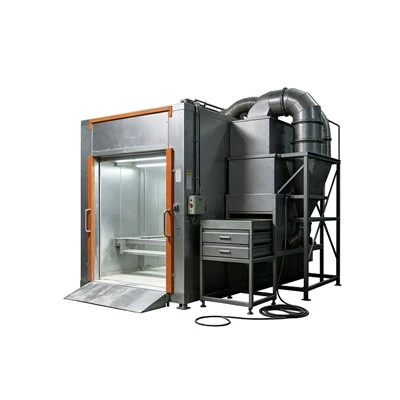
If you’re tired of rework, wasted coating material, or compliance headaches from your current spray coating setup, our team can help you assess your specific needs, run a trial of different equipment lines in your facility, and provide ongoing training and maintenance support to make sure your system runs at peak efficiency. We work with industrial operations across all segments, from automotive to food processing to heavy manufacturing, and our goal is to help you find a solution that grows with your business, not just fits your current needs. To discuss your requirements and explore tailored options, reach out to our team to schedule a no-obligation consultation.
Spray Coating Equipment References
- Occupational Safety and Health Administration (OSHA). (2021). Spray Finishing Operations: Safety and Health Guidelines. U.S. Department of Labor.
- U.S. Environmental Protection Agency (EPA). (2022). VOC Emission Standards for Industrial Coating Operations. Environmental Protection Agency.
- Food and Drug Administration (FDA). (2023). Food Contact Substances: Coating Materials and Coatings. U.S. Food and Drug Administration.
- European Food Safety Authority (EFSA). (2021). Guidance on Food Contact Materials, Including Coatings. EFSA Journal.
- National Association of Manufacturers (NAM). (2023). Industrial Coating Equipment Trends and ROI Analysis. National Association of Manufacturers.
- International Organization for Standardization (ISO). (2022). ISO 12219-1: Road Vehicles – Air Quality Inside Road Vehicles – Part 1: Test Method for Volatile Organic Compounds Emission from Interior Parts. ISO.
Wanyuan Yuanwei Automation Equipment Co., Ltd.
With abundant experience, we are one of the most professional spray coating equipment manufacturers and suppliers in China. Please feel free to wholesale high quality spray coating equipment for sale here from our factory. Good service and punctual delivery are available.
Address: No.392, Wanbai Road, Baisha Town, Wanyuan City, Dazhou City, Sichuan Province
E-mail: wanyuanyuanwei@outlook.com
WebSite: https://www.yuanweiautomation.com/
