If you’ve ever taken a clear photo in low light, had a laser surgery go off without a hitch, or even just used a pair of prescription glasses that don’t leave you squinting halfway through a workday, you’ve interacted with optical precision components—probably without even noticing. As someone who’s been in the precision components game for over a decade, I get it: these tiny, hyper-tailored parts feel like invisible workhorses. But skip past the jargon, and they’re the reason so many tech, medical, and manufacturing tools don’t just “work” but work exactly the way they’re supposed to. Precision Components

First, let’s cut the fluff. Optical precision components aren’t your run-of-the-mill glass lenses you grab at a drugstore. These are parts made to tolerances so tight—we’re talking millionths of an inch—that even a speck of dust would throw them off. We’re talking custom lenses, mirrors, prisms, beam splitters, filters, and even things like fiber optic ferrules. Yeah, ferrules sound random, but stick with me. Every industry that uses light to see, measure, or move stuff relies on these pieces.
Let’s start with the biggest one most people don’t think about: medical devices. If you’ve ever had an endoscopy, that tiny tube a doctor feeds into your throat to check for ulcers or cancer? It’s packed with optical precision components. The endoscope’s front end has a series of small lenses that bounce light down into your digestive tract and carry the image back to a screen—sharp enough for a doc to spot a polyp no bigger than a grain of sand. Even LASIK eye surgery? That uses an excimer laser, which directs a super-precise beam of light to reshape your cornea. The laser’s beam delivery system depends on custom mirrors and beam splitters we make here: they have to redirect the light exactly where it needs to go, no blurriness, no drift. Mess that up, and you get a bad vision correction or, worse, a complication. We’ve supplied parts to a handful of surgical device makers over the years, and hearing that our tiny mirrors help someone get rid of their glasses? That’s the stuff that doesn’t feel like just a job.
Next up: consumer tech, the stuff we interact with daily. Your smartphone’s camera? Let’s be real, it doesn’t have a single lens—it’s got 5 or 6 tiny optical lenses, each polished to a smoothness that’s 100x flatter than a sheet of paper. Without those, you’d get blurry photos, especially in low light. The zoom feature? That relies on precision lens groups that move just fractions of a millimeter to adjust focal length. Even your laptop’s webcam? Same deal. We also make parts for VR and AR headsets, which are blowing up right now. The lenses in a Meta Quest or Apple Vision Pro aren’t off-the-shelf; they’re customized to match the screen’s resolution, so when you’re playing a game or trying on a virtual shirt, the image doesn’t warp or give you a headache. A lot of people don’t realize that a bad headset experience often boils down to cheap optical parts, not the screen itself. That’s where our work comes in: we tweak the curvature of each lens just right, so the virtual world feels seamless, not clunky.
Then there’s industrial manufacturing and automation, a space that’s maybe less flashy but just as critical. Think about a factory that makes car parts—they use laser cutters to slice steel into exact shapes, right? Those lasers need beam collimators, which are optical components that turn a messy, spread-out laser beam into a tight, straight one. A car door panel cut with a wavy edge because the beam was off by a hair? That’s a cost for the manufacturer, and a waste of metal. We supply beam collimators to a bunch of automotive and aerospace factories, and their production lines run faster because our parts don’t fail mid-shift. Even the quality checks on those parts use optical precision tools: machine vision systems, which have high-resolution cameras with custom filters and lenses, spot tiny defects like scratches or misaligned holes that human eyes would miss. No more letting a bad part slide to the customer—all because of a tiny lens we made.
Oh, and let’s not forget renewable energy, a space that’s only growing. Solar panels rely on concentrators in some systems—those are optical lenses that focus sunlight onto a tiny solar cell, boosting efficiency. Concentrators have to be aligned perfectly, so every ray of sunlight hits the cell, not the frame of the panel. We’ve worked on a few projects with solar tech startups that use these; they told us that switching to our precision concentrators bumped their panel output by almost 10% overnight. That’s huge when you’re talking about scaling up renewable energy to replace fossil fuels. Even wind turbines use optical sensors to monitor blade damage; those sensors have prisms that bounce light off the blades, detecting tiny cracks before they turn into big, expensive repairs.
Wait, what about space? Yeah, space. Telescopes like the James Webb Space Telescope? They use ultra-precise mirrors coated with gold, designed to capture infrared light from distant galaxies. Even the smaller CubeSats that universities and startups launch into low Earth orbit use optical components for Earth observation or communication. Those CubeSats are tiny—some are the size of a shoebox—so every component has to be miniaturized, no waste. We make small, lightweight beam splitters for CubeSats that let them send photos and data back to Earth. If those parts are off, the photos are blurry, or the data gets lost in space. It’s a pretty big deal to know your parts are helping us look at galaxies billions of light-years away, or track wildfires from orbit.
Now, let’s be real: this isn’t just “cool parts” for niche industries. The thing that trips a lot of people up is that even small, seemingly trivial optical components have a ripple effect. A company making medical devices can’t sell a product that leaves patients with blurred vision or worse; they need parts that work 100% of the time, 24/7. A smartphone maker can’t ship a phone with a camera that takes grainy photos, not when every other brand is bragging about “pro-grade” cameras. That’s why we don’t cut corners. We test every single component we make—like, every one—for surface quality, alignment, and durability. Even if a client doesn’t ask for it, we run stress tests: expose a lens to temperature swings from -40°F to 180°F, shake it like it’s in a moving truck, check if it still works. Because if a part fails in a factory, that’s a downtime cost that adds up to thousands, maybe millions of dollars. If it fails in a surgery? That’s way more serious.
I’ve seen a lot of suppliers come and go in this space, and the ones that stand out aren’t the ones that charge the least. They’re the ones that get that optical precision isn’t just about specs on a sheet. It’s about listening to what a client actually needs. Last year, a startup making portable laser eye surgery tools came to us; their original parts were too big, so their device was bulky, hard to use in remote clinics. We worked with their engineering team to shrink a mirror group by 30%, without sacrificing precision. That’s the stuff that matters: adapting, not just selling a standard part.
So if you’re reading this, and you’re someone in manufacturing, medical tech, consumer electronics, or any space that relies on light for measurement, imaging, or delivery—chances are, you’re using optical precision components. And if you’ve been having issues with parts that don’t hold up, or don’t fit your exact needs, it’s worth reaching out. We don’t do one-size-fits-all here. We can tweak a lens’s curvature, coat a mirror to block specific wavelengths, or build a custom beam splitter for whatever you’re working on. No jargon, no hidden fees, just parts that do what they’re supposed to, every single time.
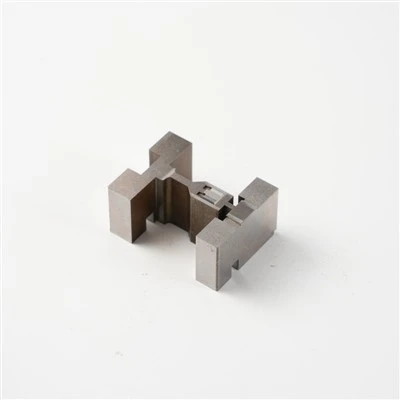
If you’re ready to talk through a project, or just have questions about how optical precision components could make your products better, feel free to reach out and connect for a purchasing conversation. We’re here to help.
Connector Mold References:
- Optical Society of America. (2022). Precision Optics for Industrial and Medical Applications.
- NASA Goddard Space Flight Center. (2021). Optical Components in Small Satellite Systems.
- International Organization for Standardization. (2020). Tolerance Standards for Optical Precision Components.
- Solar Energy Technologies Office. (2023). Optical Concentrators for High-Efficiency Solar Panels.
Dongguan Hezong Precision Technology Co., Ltd.
With abundant experience, we are one of the most professional precision components manufacturers and suppliers in China. Please feel free to buy durable precision components made in China here from our factory. All customized products are with high quality and competitive price.
Address: No.973, Dalang Section of Wozhang Road, Dalang Town, Dongguan City, Guangdong Province
E-mail: postmaster@hezongjingmi.com
WebSite: https://www.hzpre.com/
