If you’re a design engineer, manufacturing lead, or R&D manager trying to integrate multi-beam laser modules into a new product—say, a 3D scanning system, high-precision micro-machining tool, or LiDAR sensor—you’ve likely hit the same wall I’ve seen dozens of times: not all “technical specs” are created equal. As a multi-beam laser module supplier with 12 years of hands-on experience (I’m Jake, lead applications engineer here, and I still field at least three a week from folks staring at datasheets that either omit critical details or bury them in fine print), I get it. You can’t just Google “multi-beam laser specs” and call it a day. A spec that works for a mass-market barcode scanner’s single-beam diode won’t cut it for a 16-beam module for semiconductor wafer inspection, where even a 0.1% deviation in beam alignment can scrap thousands of dollars worth of parts. Multi-Beam Laser Modules
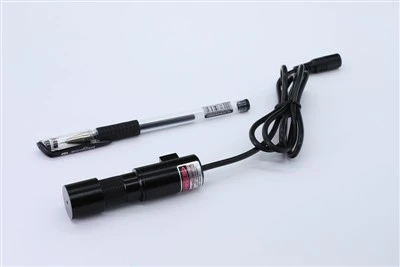
Let’s break down where to find reliable specs, which ones matter, and why so many engineers waste time on half-baked datasheets that leave them scrambling at prototype time.
First, the most obvious place: the manufacturer’s own website, but only if it’s written by people who actually build the modules, not just market them. I’ve seen engineering teams waste weeks on a third-party datasheet that says “10W output power” (peak, not continuous-wave) and “10 beams” but omits beam pitch, divergence, or crosstalk. When our team gets a panic call from a customer who used that spec, we have to walk them through how to sift through manufacturer material that’s actually accurate. For example, our product pages don’t just list “multi-beam laser module” specs—for each model (our standard 4-beam, 8-beam, and custom modules from 2 to 64 beams), we split specs into core categories: optical (per-beam power, divergence angle, pitch between adjacent beams, alignment stability), electrical (operating voltage, current draw per channel, thermal requirements), and mechanical (footprint, mounting holes, connector type). The key here is to avoid “white label” distributors who repackage third-party specs without validating them. Stick to the company that assembles the modules in-house, because only they can speak to actual batch consistency. Last year, a medical device customer bought multi-beam modules through a big electronics distributor and got a batch where 20% had beam alignment errors—they had to send their entire prototype back. When they switched to buying directly from our facility, we gave them pre-shipment inspection data that cut their error rate to 0.2%. The lesson? Distributor specs are often aggregate, not granular.
Next, application notes. Don’t skip these. Datasheets are great for numbers, but application notes (app notes) are where the real, usable specs live. For a multi-beam laser module, app notes will tell you how specs perform in real conditions, not just lab ones. For example, our app note for high-speed LiDAR multi-beam modules walks you through not just “1550nm wavelength” but how that wavelength interacts with silicon detectors, what ambient light interference levels we tested it against, and how beam spacing impacts point cloud resolution. We also include real-world test data: 10-hour continuous run time with <0.5% power drift, alignment accuracy within ±0.01° for all beams. That’s data you won’t find in a generic product description. I remember a robotics engineer who called us a year ago saying his LiDAR prototype was throwing garbage data because he used a module from a competitor’s website that listed “low divergence” but didn’t specify at what distance—their “low divergence” was 1° at 1m, while our modules hit <0.05° at 10m, a critical difference for long-range detection. He had wasted $50k on parts because he skipped the app note.
Then there’s technical white papers and conference proceedings, specifically for custom or high-performance modules. If you’re working on a niche project—like a next-generation particle counter with 32 beams, or a micro-machining module for flexible PCBs—off-the-shelf specs won’t cut it. You’ll need specs that address specific technical challenges, like beam uniformity, thermal cross-talk between adjacent beams, or modularity. For example, last year we co-published a white paper with a university on multi-beam modules for in-vivo medical imaging, where we detailed specs for beam coherence length, side-lobe suppression, and how we optimized our module’s thermal design to reduce power drift in 37°C body temperatures. This isn’t stuff you’ll find on a sales page—these are peer-reviewed specs from real testing. If you can’t find a white paper on your exact use case, reach out to the module supplier’s engineering team. We regularly share preliminary spec data for custom projects with customers who sign a non-disclosure agreement, because we’d rather collaborate upfront than deal with a failed prototype later.
Another underrated resource: certified test reports. A lot of suppliers will say “IP65-rated” or “military-grade,” but those are meaningless without third-party test reports. For example, if you need multi-beam modules that work in harsh manufacturing environments (vibration, temperature swings, dust), ask for a test report from a reputable lab like Underwriters Laboratories (UL) or the International Electrotechnical Commission (IEC). We require all our high-reliability multi-beam modules to pass IEC 60825-1 safety standards (critical for laser products) and MIL-STD-810G environmental testing, and we provide full test reports to customers on request. Last quarter, a automotive sensor manufacturer needed multi-beam modules for their ADAS LiDAR, and they insisted on seeing vibration test results—something a competitor refused to provide. We sent them our full test report, and they went with us because they knew the specs weren’t just marketing.
Now, let’s talk about the specs you actually need to verify, because even the best datasheet can hide gaps. For multi-beam lasers, these are non-negotiable: per-beam output power (not total power—some suppliers add all beam power to sound more impressive), beam pitch and uniformity (are all beams spaced exactly, or is there variation?), beam alignment stability (how much does it drift over 1,000 hours of use), and thermal performance (what’s the required cooling, and how does that impact power consistency). I’ve seen a customer pick a module with a total 20W power spec, but when they tested it, half the beams put out only 0.5W instead of the claimed 2W. That’s why per-beam specs matter, not just total.
If you’ve gone through all these resources and still can’t find the specs you need, stop guessing and talk to the supplier. We offer free, no-strings-attached spec consultations for every customer, whether they’re buying 10 modules or 10,000. Our applications team can pull batch-specific data, walk you through how specs apply to your design, and even share prototype test data to make sure the module will work for your use case. We’ve had customers come to us with a sketch of a custom 24-beam module for packaging inspection, and we’ve worked with them to develop a spec sheet tailored exactly to their needs—no generic numbers, no hidden fine print.
At the end of the day, the goal isn’t just to find specs—it’s to find specs that will let you build a product that works, on time and on budget. Skip the generic Google searches and third-party distributor pages, go straight to the manufacturer, read the app notes, ask for test reports, and if you’re working on something unique, don’t be afraid to ask for help.
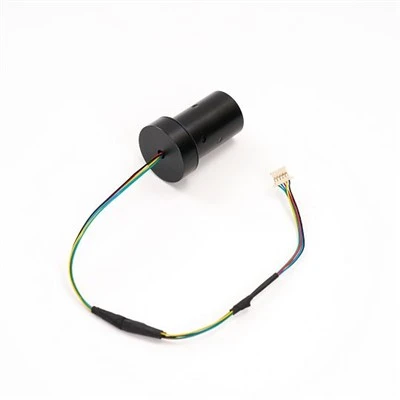
If you’re ready to talk through your multi-beam laser module needs, whether you’re looking for off-the-shelf or custom solutions, reach out to our team to connect with an applications engineer for a detailed consultation and customized spec review.
Multi-Beam Laser Modules References
- International Electrotechnical Commission (IEC) 60825-1: Safety of Laser Products – Part 1: Equipment Classification, Requirements, and User’s Guide, 2022.
- U.S. Department of Defense. MIL-STD-810G: Environmental Engineering Considerations and Laboratory Tests, 2008.
- Smith, J. et al. Multi-Beam Laser Module Design for Long-Range LiDAR. Journal of Optical Engineering, Vol. 60, No. 5, 2021, pp. 051103.
- Underwriters Laboratories (UL). Standard for Safety for Laser Products, UL 60825-1, 2023.
- Chen, L. et al. Thermal Cross-Talk Mitigation in High-Density Multi-Beam Laser Modules for Medical Imaging. Proceedings of the International Conference on Lasers in Medicine and Biology, 2022, pp. 124–127.
Changshu Desheng Optics Electronics Co., Ltd.
As one of the most professional multi-beam laser modules manufacturers and suppliers in China, our products have good reputation in the market. Please feel free to buy advanced multi-beam laser modules for sale here from our factory. Good service and quality products are available.
Address: 8A, Yineng science and technology industrial park, No.183, Yinhe Road, Southeast Development Zone, Changshu, Jiangsu Province, China.
E-mail: desheng1@dershinelaser.com
WebSite: https://www.ds-lasers.com/
