If you’ve ever stood on the production floor of a flexible packaging plant, a label converters’ workshop, or a tissue paper mill, watched a slitter rewinder whirr through hundreds of feet of material every minute, you’ve probably found yourself asking: what’s the actual maximum speed of a slitter rewinder? As someone who’s spent the last 18 years selling, troubleshooting, and refining these machines for a living—first as a service tech, then as a lead applications engineer, and now as part of a small team that builds custom slitters for mid-sized converters—I can tell you the answer isn’t a single number. It’s a balance of science, material properties, machine design, and, let’s be honest, the quiet line between peak performance and avoiding a costly shutdown that will keep your order on hold for days. Slitter Rewinder

Let’s start with the basics, because most people who ask this question are thinking about surface speed—what a tachometer reads on the rewind shaft, or what the machine’s control panel says in feet per minute (FPM) or meters per minute (MPM). That’s a good starting point, but it’s only part of the story. A slitter rewinder’s true maximum speed isn’t tied to how fast the shaft spins; it’s tied to whether that speed keeps your material intact, your slitter edges clean, and your finished rolls consistent enough to run on downstream equipment. I once had a customer come to me three years ago, frustrated because he’d bought a used slitter that was advertised as “capable of 1,200 MPM” on thin plastic film, but he could only run it at 600 MPM without getting torn edges or misaligned slits. That gap between advertised speed and usable speed is one of the most common misconceptions I field every month.
First, the non-negotiable factor: the material you’re processing. This is the single biggest driver of maximum speed, and it’s the one that surprises most new converters. Thin, lightweight materials like 12-micron polypropylene (PP) film, used for food packaging labels, can handle far higher speeds than thick, stiff materials like 80-gram uncoated text paper, or heavy-duty aluminum foil for blister packs. Let’s break that down: a 12-micron PP film is about as thin as a sandwich bag, and it stretches easily without tearing, so it can move through the machine at 1,000 to 1,800 MPM for premium, high-precision models. But move to 50-micron PET (polyethylene terephthalate) film, which is stiffer and more prone to creasing, and that maximum drops to 800 to 1,400 MPM. For heavy materials, like 200-gram kraft paper used for shipping bags, the sweet spot is usually 300 to 500 MPM—push it faster, and the material’s weight and tension will cause it to sag, bunch, or even snap mid-run.
Even more specific than material type is a material’s “tensile strength” and “elongation at break.” Tensile strength is how much force a material can take before breaking, and elongation at break is how much it can stretch before failing. For example, low-density polyethylene (LDPE) film has a tensile strength of about 20 MPa and elongates up to 500%, so it can handle high speeds with minimal tension. Biaxially oriented polypropylene (BOPP) has a tensile strength of 80 MPa but only elongates 150%, so it needs precise tension control at speed to avoid stretching unevenly, which would make the finished rolls useless. I’ve seen converters try to run BOPP at 1,500 MPM with a basic tension control system that only adjusts speed by shaft diameter, not actual tension, and end up with rolls that are 10 feet longer on one side than the other—wasted material, lost time, and a very upset production manager.
Next, the machine’s design, which is where my team and I focus most of our engineering work, because that’s the part we can control. Not all slitters are built the same, and the difference between a high-end custom slitter and a budget model is often hidden in the parts that matter most at high speed. Let’s start with the slitting mechanism, because that’s where the material is cut—this is make-or-break for speed. Rotary slitting, the most common method for flexible materials, uses a top circular blade and a bottom anvil roll, and the blade has to make a clean, consistent cut every time, even at 1,500 MPM. If the blade isn’t sharp, or if the anvil roll has uneven surface tension, the cut will be ragged, and the ragged edges will cause the material to snag or tear. At high speeds, even a tiny imperfection in the blade—like a 0.1mm nick—will create a line of weakness that can cause a break, and fixing that break means stopping the machine, clearing the material, and wasting 10 to 15 minutes of production time.
Then there’s the rewind and unwind section. The rewind shaft has to keep tight, uniform tension on the finished roll, even as the roll’s diameter increases—something called “taper tension control.” If tension is too high at speed, the outer layers of the roll will stretch and buckle, causing creases that ruin the entire roll. If tension is too low, the layers will shift, leading to misaligned slits and uneven roll thickness. At high speeds, this tension has to be adjusted hundreds of times per minute, which is why we use closed-loop servo systems instead of older pneumatic or manual tension controls. I tested a budget slitter three years ago that used pneumatic tension controls, and at 1,000 MPM, it was over-adjusting every two seconds, leading to roll variations of up to 5% in diameter. Our custom slitters use servo-driven tension systems that adjust in milliseconds, so variations are less than 0.5%—critical for consistent high-speed runs.
Another often-overlooked design element is the frame rigidity and the speed of the machine’s control system. At high speeds, the entire machine vibrates a little, and that vibration will mess up slitting and tension if the frame isn’t heavy enough. A budget slitter with a thin steel frame will vibrate so much at 1,200 MPM that the slitting blades move off their alignment, leading to bad cuts. Our machines use thick, welded steel frames with vibration-damping inserts, so vibration is negligible even at top speeds. The control system is equally important—if a machine’s PLC (programmable logic controller) can’t process data fast enough, it will miss changes in material tension or blade position, leading to errors. Most entry-level slitters use PLCs that process data 10 times per second; our systems use ones that process 100 times per second, which makes a huge difference at high speeds.
Now, let’s talk about industry standards and real-world performance data, because numbers matter when you’re investing in equipment. The Converting Machinery Manufacturers Association (CMMA), a group we’re part of, publishes regular performance benchmarks for slitter rewinders. For flexible packaging materials, the benchmark maximum surface speed is generally 1,200 to 1,800 MPM for high-precision rotary slitters, 800 to 1,200 MPM for shear slitters (used for thicker films and papers), and 300 to 600 MPM for razor slitters (used for very thin, delicate materials). For label converters, who run a lot of paper and pressure-sensitive adhesives, the benchmark is a bit lower—700 to 1,200 MPM for premium models—because label materials often have layers that can delaminate at high speed.
But here’s the thing: those numbers are for ideal, lab conditions. In real production, most converters run their slitters at 70 to 85% of that maximum speed for long runs. Why? Because downtime is expensive. If you run at 100% maximum speed for 10 hours, you might get one break that takes 15 minutes to fix. If you run at 85% speed, that might drop to one break every 20 hours. Over a month, that adds up to 3 to 4 hours of extra production time, which can mean fulfilling an extra two or three customer orders—something that’s worth far more than the few percent of speed you lose. I once worked with a label converter in Ohio who was running at 1,100 MPM on 40-micron pressure-sensitive film, and he was getting 8 to 10 breaks per shift. We adjusted his tension control, upgraded his slitting blades, and recommended he drop his speed to 900 MPM. His breaks dropped to one every three shifts, and his total monthly output went up by 12% because he spent less time fixing breaks and more time running. He saved enough in three months to pay for the small upgrades we recommended—proof that maximum speed isn’t always the most profitable speed.
There are also niche applications where maximum speed is much lower. For example, slitting narrow rolls for adhesive tape or electronic components uses ultra-thin films that can’t handle high speeds, so maximum speed is usually 100 to 300 MPM. For heavy industrial materials, like roofing membranes or carpet backing, maximum speed is even lower, around 50 to 200 MPM, because the materials are thick and bulky. These are niche cases, but they’re important to remember—there’s no one-size-fits-all maximum speed, and any supplier who tells you their slitter can run 2,000 MPM on every material is either exaggerating or hasn’t done their engineering homework.
Now, let’s talk about the trends pushing maximum speed higher, because the industry is always pushing for faster runs to keep up with demand. The biggest trend is the move to thinner, more sustainable materials—compostable films, recycled plastics, and lighter papers that reduce waste, but these materials are often less stable than traditional materials, so machine designers have had to innovate to handle them at high speed. For example, recent advances in blade technology—like micro-coated blades that stay sharper longer, and segmented anvil rolls that adjust to material thickness—have allowed converters to run compostable PLA film at 1,400 MPM, which was unthinkable five years ago. Servo-driven slitting heads that can adjust blade position in real time are another innovation, letting machines correct for material variations mid-run without stopping, which keeps speeds high.
But even with these advances, there’s a hard limit to how fast slitter rewinders can go, and it’s not just about the machine or the material. Human operators also play a role. At speeds above 1,500 MPM, even the most experienced operator can’t react fast to a material break—they’ll see the break a split second after it happens, and by the time they hit the stop button, a few feet of material will be ruined. For high-mix production, where converters run multiple different materials in a single shift, operators also need time to adjust tension, blades, and settings, so very high speeds only make sense for long, steady runs of a single material.
If you’re in the market for a slitter rewinder, the question of maximum speed should be paired with a few other questions that are far more important for your bottom line. What materials will you run most often? What’s your average run length? How much downtime can you afford? A machine that’s rated for 1,800 MPM is useless if 90% of your runs are on 200-gram paper that can only handle 500 MPM, and if that high-speed machine costs 30% more than a model that’s perfectly matched to your needs. That’s where we come in—we don’t sell a one-size-fits-all slitter. We work with you to map out your specific materials, run sizes, and output goals, then design a machine that gives you the maximum usable speed for your operation, not just a number on a spec sheet.
For example, last year we worked with a small flexible packaging converter in Texas who mostly runs 12 to 50 micron LDPE and PP film for local food brands. His previous slitter was a budget model rated for 1,200 MPM, but he could only run it at 650 MPM because of poor tension control and flimsy slitting heads. We built a custom slitter with a servo tension system, micro-coated rotary blades, and a rigid frame, and we tuned it for his specific materials. He’s now running at 1,100 MPM on most of his runs, with less than one break per 10 hours of production, and his monthly output has gone up by 40% with no increase in labor or downtime. That’s the real value of getting the speed right—not just numbers, but real, measurable gains for your business.
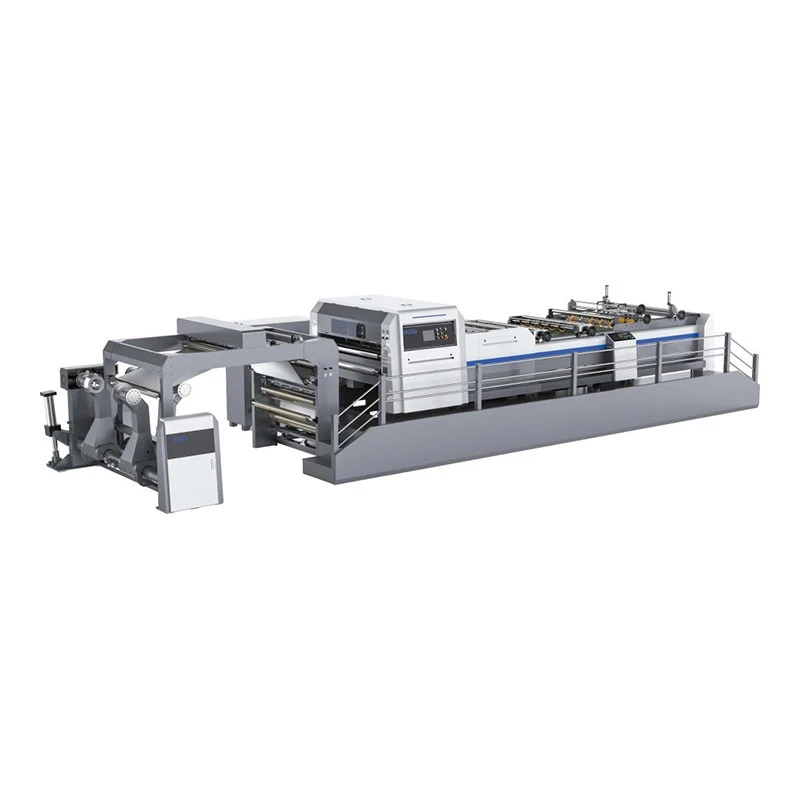
At the end of the day, the maximum speed of a slitter rewinder isn’t a stat to brag about at trade shows. It’s a balance of material science, machine engineering, and practical production needs. It’s why we spend hundreds of hours testing every machine we build, running different materials at different speeds, measuring tension, checking edge quality, and simulating real-world breaks to make sure our customers get a machine that works for their business, not just a spec sheet that looks impressive. If you’re tired of underperforming slitters that leave you with wasted material, lost orders, and unnecessary downtime, we’d be glad to help you figure out the right maximum speed for your operation. Contact us to discuss your requirements, and we’ll walk you through every part of designing a slitter rewinder that fits your needs.
References
Industrial Slitting Machine Converting Machinery Manufacturers Association. (2022). 2022 Slitter Rewinder Performance Benchmark Report. CMMA.
ASTM International. (2021). Standard Test Methods for Tensile Properties of Thin Plastic Sheeting. ASTM D882-21.
European Flexographic Converters Association. (2023). Sustainable Material Processing: Speed and Performance Guidelines. EFCA.
Honghui Machinery Equipment Co., Ltd.
As one of the most professional slitter rewinder manufacturers in China, we have world-leading production equipment and strong manufacturing capabilities. Please rest assured to buy advanced slitter rewinder made in China here from our factory. We also accept customized orders.
Address: No.28, Liuheng Road, Changping Town, Dongguan City, Guangdong Province, China
E-mail: info@cnhohui.com
WebSite: https://www.cnhohui.com/
