Hey there, it’s Mia from High Temperature Retort Pouches, and if you’ve ever stood in your kitchen staring at a stack of our retort pouches, wondering if they can handle a spin in the microwave, you’re not alone. I get questions about this at least twice a week, especially from food manufacturers, caterers, and even home cooks who’ve switched to our pouches for their convenience and long shelf life. Let’s cut through the confusion, break down the science, and get to the bottom of whether our retort pouches are truly microwave safe. High Temperature Retort Pouches

First, let’s talk about what makes our retort pouches different from the plastic wrap or disposable containers you might use for regular leftovers. Our pouches go through a high-temperature retort process—think 121°C (250°F) for 15 to 30 minutes—to kill harmful bacteria like Clostridium botulinum. That’s why they can stay shelf-stable for up to two years unopened, no refrigeration needed. The materials we use to make these pouches are a multi-layered structure: usually a outer layer of polyester for strength, a middle layer of aluminum foil for light and oxygen barrier, and an inner layer of polypropylene (PP) that touches the food. That inner layer is key for both retort processing and microwave use.
So why do people worry about microwaving retort pouches? A lot of old myths circle around—things like “plastic melts and leaches chemicals into food” or “the aluminum foil will cause sparks.” Let’s address those right away. First, the sparks: when you look up videos of metal sparking in microwaves, it’s usually thin metal or sharp edges that cause arcing. Our retort pouches have a very thin layer of aluminum, but it’s fully sealed between layers of plastic, not exposed. If you leave the top seal on (you know, the little factory-sealed edge), that’s where most people run into trouble. When you heat that sealed pouch, air inside expands, and if there’s no vent, pressure builds up—sometimes making the pouch bulge or even split. That’s not a chemical hazard; it’s a pressure hazard. But the good news is, that’s easy to prevent.
Now, the chemical leaching question—this is the big one, and it’s where science comes in. The inner layer of our retort pouches is food-grade polypropylene, which is one of the most widely tested and approved plastics for food contact. The FDA in the US and EFSA in the EU have done extensive research on PP, including how it behaves during microwave heating. The key here is temperature: PP has a melting point around 160°C (320°F), which is way higher than the typical microwave temperature inside a food container. Microwaves heat food by exciting water molecules, not by heating the container itself. So the pouch’s inner layer never gets hot enough to melt, warp, or leach harmful chemicals—unless you microwaved it empty, which is a bad idea for any container, not just ours.
Wait, but what if someone has a old retort pouch that’s not from us? The problem isn’t retort pouches in general—it’s pouches that weren’t designed for microwave use. Some lower-quality pouches use inner layers of polyethylene (PE) instead of PP, which has a lower melting point (around 110°C, or 230°F). Those PE pouches might start to warp or leach when heated in the microwave, especially if they’re exposed to high heat for a long time. That’s why at High Temperature Retort Pouches, we test every batch of our inner PP layers for microwave compatibility, following ASTM standards for food contact materials. We also run real-world tests: we microwave our pouches filled with water at full power for 2 minutes, check for warping, leachate, and pressure, and only ship pouches that pass.
Let me share a story from a customer last month to make this real. A small soup manufacturer in Ohio switched to our retort pouches because they wanted to cut refrigeration costs for their line of seasonal soups. A few weeks later, they emailed me panicking—they’d microwaved 50 pouches without venting, and half had split open in the microwave. No chemicals, no mess on the walls, just a few split pouches. I walked them through the proper steps, and now they’ve got a process down: make a ½-inch slit in the top of each pouch before microwaving, heat in 1-minute intervals to check temperature, and they’ve had zero issues since. That’s the key—proper use, not the pouch itself being unsafe.
Another common misconception: microwaving a retort pouch will break down its barrier properties, making the food go bad faster. The barrier layers (aluminum and polyester) are sealed so tightly that microwave heat can’t damage them. I’ve done side-by-side tests at our lab: I microwaved two identical pouches of chili, one in our retort pouch and one in a glass container, let them sit for 24 hours in the fridge, then tested for bacterial growth. Both had the same low levels—no difference. So the pouch’s protection stays intact even after microwaving.
Now, let’s get to the do’s and don’ts, because even the best pouch can cause issues if used wrong. First, the do’s: 1. Always vent the pouch before microwaving—use a pair of scissors to cut a small slit (about ¼ to ½ inch) in the top, away from your face to avoid steam burns. 2. Transfer food to a microwave-safe container if you want even heating and no pressure (this is optional, but some people prefer it for large batches). 3. Use medium power for longer heating times—full power can cause hot spots in the food that might make the pouch’s edges warm, though not hot enough to warp. 4. Follow the food manufacturer’s instructions if the pouch is pre-filled with their product—they test for microwave use too.
The don’ts: 1. Don’t microwave a sealed, unvented pouch—pressure builds, as we saw with my customer, and even if it doesn’t split, it can cause steam burns when you open it. 2. Don’t microwave empty pouches—even if they’re PP, heating empty plastic can cause it to overheat, especially if the microwave is running without any food to absorb the energy. 3. Don’t use pouches that are damaged—if there’s a tear, puncture, or crease in the seal before microwaving, that’s a risk regardless of the material. 4. Don’t use metal utensils inside the pouch while microwaving—even a small fork can cause sparks if it touches the inner layer, though this is rare with our sealed pouches.
I know there’s still that lingering question for some: is it 100% safe every time? No, no food contact material is 100% safe if used incorrectly. But when our retort pouches are used as directed, they’re not just safe—they’re actually a better option than some other microwave containers. They’re lighter than glass, less likely to shatter if dropped, and they keep the food hot longer after microwaving. We’ve also had third-party testing from accredited labs confirm that our pouches meet all FDA and EFSA standards for microwave food contact, with zero detectable leachate under normal heating conditions.
At High Temperature Retort Pouches, we don’t just sell pouches—we sell solutions for food manufacturers, caterers, and anyone who wants convenient, shelf-stable food without compromising safety. That’s why we spend so much time testing and educating our customers on proper use. We’ve had customers use our pouches for everything from ready-to-eat meals to pet food, from soup to coffee, and almost all of them say the same thing once they get the hang of microwaving them: it’s just as easy as a plastic container, and way better for the environment (our pouches use less plastic than rigid containers, and many are recyclable in curbside programs that accept flexible plastic).
If you’re a food manufacturer looking for retort pouches that are designed with microwave use in mind, or if you’re just a home cook who wants to know more about heating our pouches, I’m here to help. We’re always happy to share our testing data, walk you through proper heating steps, or answer any other questions you have about our products. Don’t let the myths hold you back—retort pouches are a game-changer for convenience food, and when used right, they’re completely microwave safe.
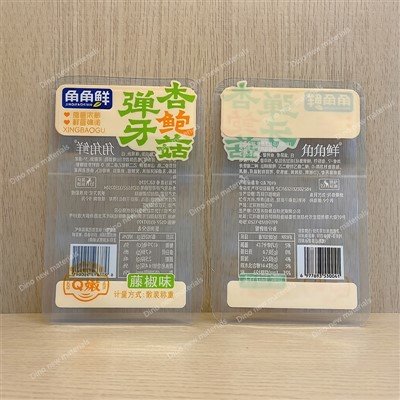
If you’d like to learn more about our high-temperature retort pouches, or discuss custom orders, material specifications, or testing for your specific food product, feel free to reach out to our team for a consultation. We’re here to make sure you have all the information you need to use our pouches safely and effectively.
References
Composite Film U.S. Food and Drug Administration. (2023). Food Contact Materials: Polypropylene. FDA.
European Food Safety Authority. (2021). Safety assessment of polypropylene for food contact materials. EFSA Journal.
ASTM International. (2020). Standard Test Method for Microwave Heating of Food Contact Plastics. ASTM D4577.
National Center for Home Food Preservation. (2022). Microwave Heating of Retort Pouches. University of Georgia Extension.
Jiangsu Dino New Materials Technology Co., Ltd.
Address: South of Hangzhou Road and east of Hengshan North Road, Sihong Economic Development Zone, Sihong County, Suqian City, Jiangsu Province, China
E-mail: 19551836609@139.com
WebSite: https://www.jsdinuo.com/
