Hey there, cable crew and anyone who’s ever stared up at those thick, grey lines strung between towers and thought, “Wait, do those just sit in the sun all day?” As a high voltage cable supplier who’s gotten way too many questions like that over the past 8 years, I’m here to cut through the noise and give you the real lowdown. Spoiler: it’s not a straight “yes” or “no” answer, and there’s way more to it than just “sunlight is bright.” High Voltage Cable
Let me start with a quick story to set the vibe. Last summer, I had a guy from a solar farm shoot me a DM out of the blue—super casual, not the stiff corporate stuff I get from most utility clients. He said they were rushing to install a new string of high voltage cables to connect their solar arrays to the grid, but their contractor forgot to order the UV-resistant stuff. They were working on a tight timeline, so he asked, “Can we just lay these regular cables in the sun for a few weeks until we get the right ones? Won’t hurt ‘em, right?” That question is the exact reason I’m writing this today—because so many people think high voltage cables are these indestructible metal tubes that don’t care about anything, but that’s not even close to true.
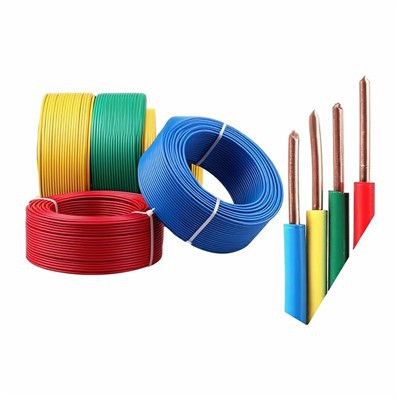
First off, let’s break down what a high voltage cable is made of, because that’s the foundation of everything. If you’ve ever pulled one apart (I’ve done this for testing, don’t judge), there’s a core—usually copper or aluminum, since those are the best at carrying electricity without losing too much energy. Then there’s a layer of insulation, right? That’s the stuff that keeps the current from leaking out and zapping everything nearby. And finally, there’s an outer jacket—this is the part that’s exposed to the elements, whether it’s rain, wind, snow, or sunlight.
Now, sunlight isn’t just light—it’s a mix of visible light, infrared (which is heat), and UV radiation, the stuff that gives you a sunburn if you don’t wear sunscreen. And that UV? It’s the big villain here for cable jackets. Most standard high voltage cable jackets—like the ones we use for indoor installation or underground burial where they’re shielded from sunlight—are made of materials like polyvinyl chloride (PVC) or cross-linked polyethylene (XLPE) that aren’t designed to handle long-term UV exposure.
Wait, let me get specific. PVC jackets are cheap and durable for underground use, but over time, UV rays break down their molecular structure. Think of it like leaving a plastic water bottle out on your patio for a year—suddenly it’s brittle, cracks when you pick it up, and looks all faded and weird. That’s exactly what happens to a non-UV-resistant high voltage cable jacket when it’s left in the sun for weeks or months. The insulation could get damaged too, because if the jacket cracks, moisture gets in, and that’s a recipe for electrical shorts or even fires.
But hold up—doesn’t that mean some high voltage cables are exposed to sunlight? Yeah, definitely. A lot of overhead high voltage lines (though wait, technically those are usually bare conductors, not insulated cables—important distinction) run above ground, and those have to handle sunlight 24/7. But if we’re talking about insulated high voltage cables, the ones we supply for projects that have to be above ground, we make UV-resistant versions for exactly this reason.
What makes a cable UV-resistant, anyway? We add special stabilizers to the outer jacket material—things like carbon black (that’s why a lot of UV-resistant cables are black, by the way) or UV inhibitors that absorb or block those harmful rays. We test these cables too, not just in a lab. We put them in accelerated weather chambers that simulate years of sunlight, rain, and temperature swings in a matter of weeks, then check if the jacket is still flexible and the insulation is intact. Last year, we had a client in Arizona (you know, that sunny desert state) who needed cables for a mountain top substation, and they told us the UV-resistant ones we sent have been out there for 3 years with zero issues, while a competitor’s non-UV-resistant cables they tried earlier cracked within 6 months.
Now, let’s talk about the real-world scenarios where this matters most, because not every project is the same. First, temporary installations—like that solar farm guy I mentioned earlier. If you have to lay a high voltage cable above ground for a week or two, is it a big deal if it’s not UV-resistant? Probably not, as long as you cover it or move it out of direct sun when you can, but don’t make it a habit. Long-term above-ground installations—like the Arizona substation, or power lines in a suburban area where they’re strung on poles but insulated—need UV-resistant cables, full stop. Underground? You can use regular cables, because they’re shielded from sunlight, which saves you money. Underwater? Also, UV isn’t a problem, so you can use lower-cost cables there too.
Wait, I should address a common misconception I hear all the time: people think high voltage cables generate enough heat on their own to protect them from sunlight. No way. Yeah, cables get warm when they’re carrying current, but that heat is internal and not enough to fight UV damage. If anything, the combination of internal heat and external sunlight makes the jacket degrade even faster—higher temperatures speed up the molecular breakdown, so a cable that would last 5 years in the shade might only last 2 in the sun if it’s not UV-resistant.
Let me also throw in a quick note about safety, because that’s what this all comes down to. If a cable’s jacket gets brittle and cracks, the insulation underneath is exposed. That means if the cable rubs against a tree branch or a pole, or gets hit by something, electricity can leak out. That’s a huge fire hazard, especially in dry areas. I saw a news story a couple years back where a brush fire in California was traced back to a faulty high voltage cable that had been exposed to unfiltered sunlight and cracked. No one got hurt, but it burned 10 acres of land and cost the utility company a ton of money to fix. That’s the kind of thing that happens when you skip the UV-resistant part because you think “it’s just a cable.”
Now, as someone who’s been selling high voltage cables for years, I’ll be the first to tell you that I don’t want you overspending on stuff you don’t need. If your cable is going underground, or inside a conduit that’s never going to see daylight, go with the standard version—it’s cheaper and works just fine. But if it’s going to be above ground, even temporarily for a few weeks, or if it’s in a sunny climate, don’t cut corners. The extra cost for UV-resistant cable is nothing compared to the cost of a replacement, a fire, or a project delay that sets you back months.
I get it, when you’re in the middle of a project, you’re juggling 100 things at once, and it’s easy to overlook a detail like UV resistance. That’s why we’re here—my team and I don’t just sell you a cable and disappear. We ask questions: “Where’s this cable going to be installed?” “Will it be above ground or underground?” “What’s the climate like out there?” Because those questions determine exactly what type of cable you need, and we’re not going to upsell you something you don’t need. If you come to us and say “I’m laying this cable in a buried trench,” we’ll tell you the standard cable is perfect, no need to pay extra for UV. If you say “it’s going to be strung on poles in Texas where it’s sunny 300 days a year,” we’ll hook you up with the UV-resistant version that’s built to last.
Another thing I hear a lot: “What about old cables that have been around for decades, sitting in the sun?” I’ve inspected some vintage cables before, and the ones that are still going strong? They’re the ones that were built with UV-resistant jackets, back when people already knew sunlight was a problem. The ones that are brittle and falling apart? They’re the ones from the 70s and 80s made without UV stabilizers. It’s not rocket science—technology has come a long way, but the basics still hold: sunlight = potential damage if your cable isn’t built for it.
Let me wrap this up with a quick takeaway that should stick with you: High voltage cables can be exposed to sunlight, but only if they’re designed to handle it. Non-UV-resistant cables will degrade, crack, and fail way faster if left in direct sun, which leads to safety issues and costly repairs. Whether you’re doing a small residential project or a big utility-scale build, take 2 minutes to check where your cable is going to be installed, and make sure you’re getting the right type—we can help you with that.

If you’re working on a project right now and need to figure out which high voltage cable is right for your needs, or you just have more questions about UV resistance, reach out to our team. We’re happy to walk you through the options, no sales pressure, no confusing jargon. We’ve worked on everything from solar farms to rural power lines to substation upgrades, so we know exactly what works in different scenarios. Don’t take chances with your project—get the right cable for the job, and you’ll save yourself a lot of headaches down the line.
Rubber Sheathed Cable References:
- National Electrical Manufacturers Association (NEMA) Standards for High Voltage Power Cables, 2022
- International Electrotechnical Commission (IEC) 60840: Power Cables with Extruded Insulation for Rated Pressures Above 30 kV Up to 150 kV, 2020
- Journal of Electrical Insulation and Dielectric Phenomena, “UV Degradation of Polymer Cable Jackets for Overhead Applications”, 2019
Hebei Hualun Cable Co., Ltd.
As one of the leading high voltage cable manufacturers and suppliers in China, we offer a wide range of products with superior quality. We warmly welcome you to buy cheap high voltage cable for sale here from our factory. For price consultation, contact us.
Address: XINGBIEYING INDUSTRIAL ZONE, HEBEI PROVINCE CHINA
E-mail: steven@hualunchcable.com
WebSite: https://www.hualuncables.com/
