If you’ve ever stood next to a running centrifugal fan at a manufacturing plant, HVAC facility, or warehouse, you’ve probably noticed the low, steady hum it emits— but you might not have thought much about how that hum translates to power costs. As a centrifugal fan supplier, I talk to customers every week who are either overpaying on energy bills because they’re calculating fan power wrong, or they’re undersizing their electrical supply, leading to costly downtime. Today, I’m breaking down exactly how to calculate centrifugal fan power consumption, why it matters for your operations, and a few common mistakes I see customers make all the time. Centrifugal Fans
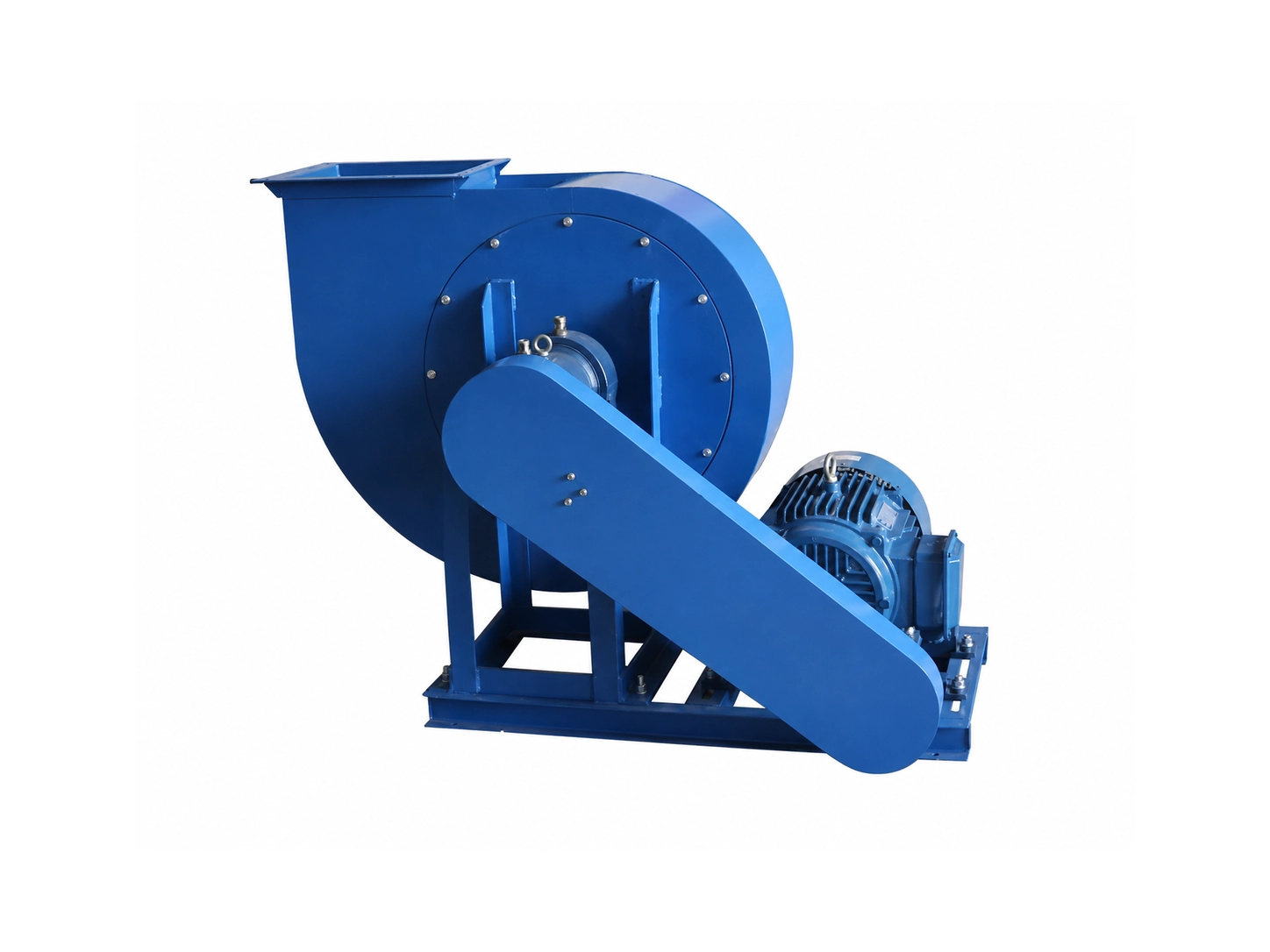
First, let’s get clear on a few basics that keep this whole process from feeling like gibberish. A centrifugal fan moves air by spinning a wheel (the impeller) inside a housing, pushing air outward from the center of the impeller, which creates the airflow and pressure your system needs. Power consumption, simply put, is how much electrical energy the fan uses to do that work. The key here is that power isn’t just a single number you pull off a motor label— it depends on how the fan is actually operating, not just its rated specs. That’s where things get tricky, and why accurate calculation matters. If you miscalculate, you could end up with a motor that’s either too small (it burns out prematurely) or oversized (you’re wasting thousands of dollars a year on unnecessary energy).
Let’s start with the core formula. The theoretical power required to move air through a centrifugal fan is called air power (or fluid power), and it’s the starting point for all calculations. The formula for air power is straightforward: Air Power (W) = (Pressure × Flow Rate) / 3,600. Wait, let’s explain each part here. Pressure, in this case, is total pressure, which for centrifugal fans is a mix of static pressure (the pressure that pushes air through ducts, filters, and equipment) and velocity pressure (the pressure that moves air itself). Flow rate is the volume of air the fan moves, measured in cubic feet per minute (CFM) in the U.S., or cubic meters per hour (m³/h) in many other regions. The 3,600 is a conversion factor that turns units from feet per minute to miles per hour and minutes to hours, which standardizes the result to watts for electrical power.
But here’s where real-world numbers differ a lot from theory: no fan is 100% efficient. That’s why we need to account for fan efficiency and motor efficiency to get the actual power you’ll pay for. The formula for brake horsepower (BHP), which is the power the fan shaft needs to deliver, is: BHP = (CFM × Total Pressure in Inches of Water Gauge, or “inches WG”) / (6,356 × Fan Efficiency). Once you have BHP, you can calculate the actual electrical power your motor will draw, which is what shows up on your utility bill. That formula is: Electrical Power (kW) = (BHP × 0.7457) / Motor Efficiency. Let’s break these down with a concrete example, because numbers make this way easier to follow.
Say you have a ventilation system in a warehouse that needs 10,000 CFM of airflow, and the total static pressure required to push that air through ducts, air filters, and exhausts is 2 inches WG (for most HVAC and industrial applications, total pressure is almost always expressed in inches WG for smaller systems). Let’s use typical efficiency values for a standard centrifugal fan: 70% fan efficiency (that’s a middle-of-the-road number for a common backward-inclined blade fan, which is one of the most popular types for general industrial use) and 90% motor efficiency (standard for a premium efficiency motor, which most facilities use these days to cut energy costs).
First, calculate BHP: BHP = (10,000 × 2) / (6,356 × 0.70) = 20,000 / 4,449.2 ≈ 4.495 BHP. Next, convert that to electrical power: (4.495 × 0.7457) / 0.90 ≈ (3.353) / 0.90 ≈ 3.725 kW, or about 5 horsepower. That means your fan will draw roughly 3.7 kW every hour it runs. If your electricity cost is $0.12 per kWh (a common average in the U.S.), that fan will cost you about $0.45 per hour to operate. Running it 24/7, that’s around $3,942 per year just for power.
But wait— this is a baseline calculation, and there are lots of variables that can shift this number, for better or worse. The biggest one is fan efficiency. A high-efficiency centrifugal fan can have an efficiency of 85% or higher, instead of 70%. If we use that, the same 10,000 CFM / 2 inches WG example gives BHP = 20,000 / (6,356 × 0.85) = 20,000 / 5,402.6 ≈ 3.702 BHP, which translates to about 2.9 kW per hour— a 22% reduction in power use, and almost $870 per year in savings. That’s why choosing the right fan, not just a cheap one, matters so much.
Another big variable is how the fan is operating, not just its rated specs. Most systems don’t run at 100% airflow 100% of the time. For example, an office building might need 10,000 CFM only during work hours, and half that at night. Or a dust collection system might have filter pressure that increases over time, which raises the required total pressure. If you size your fan for peak demand, it will be oversized most of the time, wasting energy. That’s where affinity laws come in— they let you adjust power consumption when airflow or pressure changes, which is critical for variable-speed applications. The affinity laws for centrifugal fans state that when you change the fan’s impeller speed: airflow changes proportionally, pressure changes with the square of the speed, and power changes with the cube of the speed. So if you run your fan at 80% of its rated speed, power drops to 51% (0.8 cubed) of the full-speed power, instead of 80%— that’s a huge energy saving. That’s why variable frequency drives (VFDs) are so popular; they let you adjust speed to match actual demand, cutting power costs dramatically.
Now, let’s talk about common mistakes I see customers make when calculating centrifugal fan power, because these are the issues that lead to headaches and extra costs. First, mixing up static pressure and total pressure. I can’t tell you how many times a customer comes to me saying they calculated power wrong because they used only static pressure, not including velocity pressure. Total pressure is the correct number to use for fan power calculations, because velocity pressure is the energy that’s moving the air, not just the pressure holding it in place. Using the wrong pressure number can make your power calculation off by 10-15% easily.
Second, ignoring system resistance. A fan’s power isn’t just based on its own specs— it’s based on the entire duct system, including filters, dampers, bends, and equipment. If you install a 2-inch MERV 13 air filter in your system, that adds about 0.5 inches WG of pressure drop, which your fan has to overcome. If you didn’t account for that when calculating power, you’ll end up with a motor that’s too small, which will overheat and fail faster, or draw way more power than expected because the fan is working harder to push air through the extra resistance.
Third, not accounting for efficiency correctly. Some manufacturers rate fan efficiency at peak load, but if you run the fan at part load, efficiency drops. For example, a fan might be 80% efficient at 100% airflow, but only 65% efficient at 50% airflow. If you size your fan for full load and run it at part load, your power calculation will be way too low. That’s why it’s important to look at the fan’s efficiency curve, not just the peak efficiency number, when doing your calculations.
Fourth, forgetting motor power factor or drive losses. When you calculate electrical power, you might only use the motor efficiency, but variable frequency drives also have their own losses— usually 2-5%— that add to your total power use. If you’re using a VFD to adjust fan speed, you have to include those losses in your calculation to get an accurate number.
So, what do you need to do to get an accurate, realistic power calculation for your centrifugal fan? Let’s walk through the step-by-step process I recommend to all my customers:
-
Define your actual required airflow and pressure: Don’t use design values that are overestimated for safety. Measure your system’s real needs— how much air do you actually need, and what pressure is required to move that air through your specific ducts, filters, and equipment? Tools like flow hoods or pressure gauges can help you get accurate numbers, instead of relying on rough estimates.
-
Choose the right centrifugal fan type: Backward-inclined, backward-curved, or airfoil blades? Airfoil blades are the most efficient for high-flow, low-pressure applications, while backward-inclined blades are better for higher pressure, smaller airflow. Matching the fan type to your application will give you the highest efficiency, which directly cuts power use.
-
Use the fan’s actual efficiency curve, not just a peak number: Every centrifugal fan has an efficiency curve that shows how efficiency changes at different flow rates. This is available from the manufacturer (that’s me, by the way— I’d be happy to provide the curve for any of our fans for your specific application). Using this curve will give you a much more accurate power calculation than using a generic average efficiency.
-
Account for all system losses: Duct bends, filters, dampers, and any other components add pressure drop. The Air Movement and Control Association (AMCA) has standard tables for calculating pressure drop from common components, so you don’t have to guess.
-
Factor in variable operation: If your fan will run at different speeds or different airflow levels, use the affinity laws to adjust your power calculation. For VFD applications, also account for drive losses to get a realistic number.
-
Verify your calculation with real-world data: Once your fan is installed, monitor its power use with a power meter for a week or two. Compare that to your calculation to make sure it’s matching, and adjust if needed. This also helps you catch any issues like clogged filters or duct leaks that are making the fan work harder.
As a centrifugal fan supplier, this is exactly what I do for my customers— I don’t just sell a fan and walk away. I help them run the numbers correctly, so they don’t end up with an overpriced fan that wastes energy, or an undersized fan that causes downtime. For example, a manufacturing client of mine last year was using a 10,000 CFM centrifugal fan to run their dust collection system, and they were paying over $6,000 a year in power. They had calculated power incorrectly by using a generic efficiency number, not accounting for a new set of high-efficiency filters they’d installed. We swapped their old fan for a high-efficiency airfoil blade centrifugal fan, adjusted the VFD speed to match their actual 10,000 CFM demand, and cut their power cost by 35%— that’s over $2,100 a year in savings, no extra work on their end.

At the end of the day, calculating centrifugal fan power consumption isn’t just a math exercise— it’s about understanding how your fan works with your entire system, to save energy, avoid downtime, and keep your operations running smoothly. If you’re unsure about your own fan’s power calculation, or you’re looking for a centrifugal fan that’s efficient enough to cut your energy costs, don’t hesitate to reach out to discuss your needs. I’m here to help you get the right fan for your application, with accurate power numbers that fit your budget.
Explosion Proof Fans References
- AMCA International. (2020). AMCA Standard 210: Laboratory Methods of Testing Fans for Certified Aerodynamic Performance Rating.
- McQuiston, F. C., Parker, J. D., & Spitler, J. D. (2019). Heating, Ventilating, and Air Conditioning: Analysis and Design (7th ed.). John Wiley & Sons.
- European Committee for Standardization. (2018). EN 13445: Ventilation for Buildings – Industrial Fans.
- Miller, T. J. (2016). Fan Handbook: Selection, Application, and Design (2nd ed.). CRC Press.
- U.S. Department of Energy. (2021). Industrial Motor and System Efficiency Guide: Centrifugal Fan Power Calculations and Optimization.
Shandong Qiyue Fan Co., Ltd.
With abundant experience, we are one of the most reliable centrifugal fans manufacturers and suppliers in China. Please feel free to wholesale high quality centrifugal fans made in China here from our factory. We also accept customized orders.
Address: Dongchen Industrial Park, Zhoucun District, Zibo, Shandong, China
E-mail: sales@qiyuefan.com
WebSite: https://www.qiyuefan.com/
