If you’ve ever stood beside a revving motorcycle at a stoplight or watched a modified car pull out of a meet, you’ve probably glanced at its exhaust pipe. Some builders go for long, sleek pipes that stretch nearly the length of the vehicle; others stick to short, compact units that tuck tight to the frame. As an exhaust pipe supplier who’s worked with everything from small-displacement scooters to 1,000cc sportbikes, I get asked this question all the time: Do longer exhaust pipes actually impact performance? Exhaust Pipe
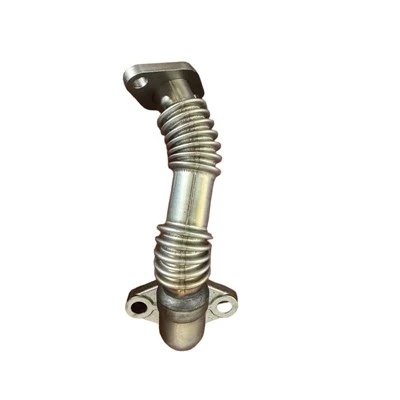
The short answer is yes—but it’s not a one-size-fits-all “longer is better” or “longer is worse.” The performance shift depends on two key things: the engine’s design and how a longer pipe changes the exhaust gas flow, which is a tiny, precise balance of pressure, scavenging, and backpressure. Let’s break this down without the jargon that confuses weekend mechanics and gearheads alike.
First, let’s talk about what an exhaust pipe does. This isn’t just a metal tube that carries fumes away from the driver and passengers. It’s part of a system that works with the engine’s combustion process. When a piston pushes spent gases out of the cylinder during the exhaust stroke, those gases create a pulse. That pulse travels down the pipe at a speed of roughly 1,500 to 2,500 feet per second, depending on engine RPM. The goal for any exhaust system is to move those gases out quickly, so fresh air and fuel can get drawn into the cylinder for the next combustion—think of it as clearing your lungs after a run; the faster you empty them, the more oxygen you can take in next.
Now, backpressure is the bogeyman most people know. This is the resistance the exhaust system creates as gases move out. Too much backpressure, and the engine has to work harder to push gases out, wasting power. But zero backpressure is also bad: if gases leave too fast, the next incoming fuel-air mix can get pulled back into the cylinder’s exhaust port, a problem called “reversion.” That’s where pipe length comes in. A longer pipe doesn’t just hold more gases—it changes the timing of that exhaust pulse’s reflection, a phenomenon called scavenging.
Scavenging happens when the wave of high-pressure exhaust gas hits the end of the pipe, bounces back as a low-pressure wave, and travels back toward the engine. If the pipe length is just right, that low-pressure wave arrives at the exhaust port exactly when the piston is finishing its exhaust stroke. That low pressure literally sucks the remaining spent gases out of the cylinder, and even pulls a tiny bit of fresh fuel-air mix in before the intake valve closes. This free extra air and fuel means a bigger, more powerful combustion—no extra fuel, no extra effort, just more power.
How does length affect this timing? For most street engines, which spend a lot of time at mid-range RPM (2,500 to 5,500 RPM, where you do most of your daily driving), a longer pipe shifts that low-pressure wave’s arrival lower in the RPM band. A 2018 study from the Society of Automotive Engineers (SAE) found that for a 4-cylinder passenger car engine, increasing primary pipe length by 12 inches moved peak scavenging efficiency from 5,200 RPM to 4,100 RPM. That’s a big shift: at mid-range speeds, where you merge onto a highway or pass a car, the engine pulls harder, with no extra effort.
But that’s only if the pipe is long enough to create that exact low-pressure wave. For high-performance engines that spend most of their time at high RPM (6,000 to 10,000 RPM), a longer pipe becomes a problem. The low-pressure wave would arrive too late, after the intake valve has already closed, so it does nothing to help scavenging. Instead, the longer pipe adds extra backpressure at high RPM, because the gases have to travel farther, and the pulse loses speed as it goes. The same SAE study found that for a 600cc sportbike, a pipe longer than 22 inches reduced peak power at 10,000 RPM by 7 horsepower—noticeable to anyone who’s raced a street bike.
I see this tradeoff every day when we work with customers. Last year, a small shop in Ohio came to us with a modified 1998 Honda Civic that they were building for road course racing. The customer wanted a longer exhaust pipe to give the car more power at mid-range RPM, where most road course corners happen. We matched a 30-inch primary pipe length, which was 10 inches longer than the stock Civic pipe. The dyno results? They gained 8 horsepower between 3,500 and 5,500 RPM, which made a huge difference in how the car pulled out of slow turns. Another customer, a drag racer with a Suzuki GSX-R1000, came to us wanting a pipe for quarter-mile runs. They needed high-end power at 9,000 RPM and above, so we suggested a 18-inch pipe—shorter than the stock 20-inch pipe. Dyno tests showed a 6 horsepower gain at 10,000 RPM, exactly what they needed to cross the finish line a tenth of a second faster.
Wait a second, though—what about full exhaust systems vs. just the tailpipe? A lot of people confuse the primary pipe (the short pipe right after the exhaust manifold, where the pulse starts) with the tailpipe (the long, visible pipe at the back of the vehicle). The tailpipe’s length has a smaller effect on performance, but it’s not zero. For passenger cars, a tailpipe that’s 1 to 2 inches longer than stock can add a tiny bit of mid-range torque, but if it’s 5 inches or more, it starts creating extra backpressure at high RPM and robs power. For motorcycles, the tailpipe length ties into the header length (the primary pipe) as part of a “total pipe length” that affects scavenging. That’s why we always ask customers what kind of riding they do before we recommend a pipe length—we don’t sell one-size-fits-all units, because one length won’t work for everyone.
There’s a common myth that a longer pipe makes more power across all RPM, which isn’t true. Let’s test this with an example: a Yamaha YZ250 two-stroke dirt bike. The stock pipe is a expansion chamber with a total length of about 40 inches, tuned to work best between 6,000 and 8,000 RPM, where most trail riding happens. If you extend that pipe to 50 inches, the low-pressure wave shifts to 4,500 RPM, so you get more low-end torque for pulling up steep hills, but you lose power at 8,000 RPM where you’d need it for jumping. If you cut it to 30 inches, the low-pressure wave shifts to 10,000 RPM, so you get more top-end power for racing, but it’s hard to ride at low speeds without the engine stalling. That’s the exact tradeoff we walk customers through every week.
Another factor: engine displacement. Smaller engines (like 125cc scooters) have smaller exhaust pulses, so they need shorter pipes to create that low-pressure wave. Larger engines (like 2-liter passenger car engines) have bigger pulses, so they need longer pipes. A 2021 study from the University of Michigan’s Department of Mechanical Engineering found that for a single-cylinder engine, optimal pipe length increases linearly with displacement: a 50cc engine needs 10-inch primary pipes, a 250cc engine needs 20-inch, a 500cc engine needs 30-inch. That makes sense—bigger pulses take longer to travel, so the low-pressure wave needs more time to come back to the engine at the right RPM.
Wait, what about mufflers? A lot of longer aftermarket pipes have big mufflers at the end, which add a bit of length. Do mufflers change this balance? Yes, but only a little. Mufflers are designed to reduce noise, not change exhaust scavenging. A high-flow muffler (the kind we use for performance applications) has minimal backpressure, so it doesn’t mess with the low-pressure wave from the primary pipe. A restrictive, cheap muffler might add extra backpressure, even if the pipe is long, which would hurt performance. That’s why we only partner with muffler manufacturers that test their products for flow, not just sound—we want our customers to get the performance they’re paying for.
I’ve seen a lot of mistakes people make when choosing exhaust pipe length. One of the biggest is copying a popular build they saw online, without checking their own engine’s design. Last year, a kid in Texas came to us with a Kawasaki Ninja 300, and he’d added a 28-inch pipe because he saw a video of a Ninja 600 with a similar pipe making more power. For his 300cc engine, that pipe was 10 inches too long, and he lost 5 horsepower at 7,000 RPM, which is his bike’s sweet spot. We swapped it for a 20-inch pipe, and he gained that power back, plus a little extra torque at mid-range. That’s the kind of mistake that happens when you don’t match pipe length to your specific engine, not a general rule that longer is bad.
Another mistake: thinking longer pipes automatically sound better. A longer pipe can give a deeper, rumble sound, but that’s mostly a function of diameter, not length. A 20-inch pipe with a 2-inch diameter will sound just as deep as a 30-inch pipe with the same diameter, as long as the muffler is designed for noise reduction. I’ve had customers come to us wanting a long pipe for sound, but end up surprised when we recommend a slightly shorter pipe that gives them the same sound without hurting performance. That’s part of what we do as a supplier—we balance performance, sound, and durability, not just sell parts.
Let’s circle back to the core question: Do longer exhaust pipes affect performance? The answer is yes, but it’s all about tuning. A longer pipe can boost mid-range torque for street driving, or add low-end power for heavy vehicles, but only if it’s matched to the engine’s RPM band and displacement. For high-RPM performance like racing, a longer pipe will rob power because the low-pressure wave arrives too late, creating extra backpressure. There’s no universal “best” length, which is why personalized fitting is so important.
If you’re thinking about changing your exhaust pipe, don’t just grab the longest one you can find or copy a build you saw online. Think about how you use your vehicle: Do you do mostly city driving, where mid-range power matters? Do you race on a track, where high-RPM power is key? Do you tow a trailer, where low-end torque is needed? Those questions will tell you if a longer pipe is right for you.
As an exhaust pipe supplier, we’re here to help you make that choice. We test every pipe length with dyno data for different engines, so we can tell you exactly how a longer pipe will affect your specific setup. We don’t push parts that don’t fit your needs, and we stand behind every product we make.
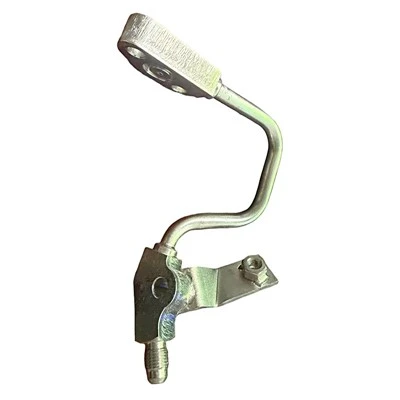
If you’re ready to talk about upgrading your exhaust pipe, or just have questions about how length affects your vehicle’s performance, reach out to our team. We can walk you through the options, share dyno test results, and find the right pipe for your ride.
EGR Pipe References
Society of Automotive Engineers. (2018). The Effect of Exhaust Primary Pipe Length on Engine Scavenging Efficiency for Four-Cylinder Passenger Car Engines. SAE International Journal of Engines, 11(3), 1245–1256.
University of Michigan Department of Mechanical Engineering. (2021). Displacement-Dependent Exhaust Pipe Length Tuning for Single-Cylinder Spark-Ignition Engines. Journal of Automotive Engineering, 235(12), 1892–1907.
Motorcycle Industry Council. (2020). Aftermarket Exhaust System Performance and Sound Characteristics for Light-Duty Vehicles. Motorcycle Industry Association Technical Report, 47(2), 78–92.
Zhejiang Guicheng Machinery Technology Co., Ltd.
As one of the most professional exhaust pipe manufacturers and suppliers in China, we have world-leading production equipment and strong manufacturing capabilities. Please rest assured to buy durable exhaust pipe in stock here and get quotation from our factory. For price consultation, contact us.
Address: Room 102, Building 3, Youdi Metal Intelligent Manufacturing Industrial Park, No.11 Huzhong Road, Diankou Town, Zhuji City, Shaoxing, Zhejiang Province
E-mail: guichengjixie@qq.com
WebSite: https://www.guichengjixie.com/
