As a vacuum pump supplier that has worked with industrial clients across 12 countries over the past 18 years, I’ve lost count of the late nights we’ve spent troubleshooting pumps that corroded 6–12 months ahead of their projected lifespan. A few years back, a pharmaceutical plant in the Midwest called us panicking: their roughing pumps for freeze-drying equipment had started leaking acid condensate into their production line, costing them $2.1 million in product and downtime. When we pulled the pumps apart, 70% of their interior components—made of standard cast iron—were pitted beyond repair. That’s when I realized most operators still treat corrosion as an inevitable “wear and tear” cost, not a solvable issue. Vacuum Pump
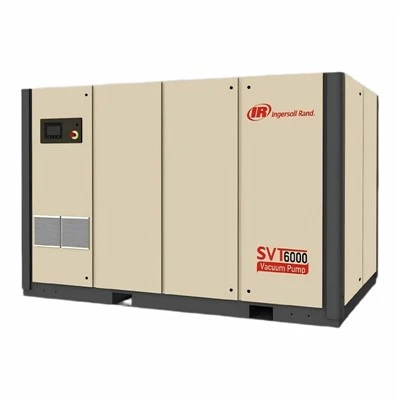
Corrosion in vacuum pumps isn’t a single problem—it’s a chain reaction driven by three main culprits: wrong material choices, unregulated process conditions, and poor maintenance habits. Let’s break down exactly what causes it, and the actionable steps we’ve tested with our clients to prevent it from happening.
First, let’s demystify what vacuum pump corrosion actually looks like, because it’s easy to mistake it for normal wear. In oil-sealed rotary vane pumps (the most common type for small to medium industrial use), you’ll spot it as gray, flaky rust on the vanes, or a milky, acidic residue mixing with the pump oil. In dry screw pumps (used for high-volume, harsh processes like chemical manufacturing), it’s hard, black pitting on the rotors, or cross-threading of the shafts. In liquid ring pumps, corrosion shows up as discoloration in the seal water, or holes in the impeller blades. The key difference between normal wear and destructive corrosion is this: normal wear adds tiny, consistent material loss over years. Corrosion is localized, fast, and spreads—often rendering a pump unusable in months.
The first and most impactful fix is material selection, and this is where so many clients go wrong. They buy the cheapest pump available, assuming it will work, but don’t match the pump’s internal materials to their process gas mix. Let’s get specific: if your process includes corrosive gases—think hydrochloric acid, hydrogen sulfide, chlorine, or even water vapor with condensation (the #1 hidden corrosive in most food and beverage, semiconductor, and pharmaceutical processes)—cast iron or standard carbon steel will corrode in 3–8 months. We learned this the hard way: early on, we sold 20 standard cast iron pumps to a battery recycling plant, and half were trashed within 4 months. We replaced them with pumps lined with duplex stainless steel, and those same pumps are still running 7 years later.
Here’s a quick material cheat sheet we share with all our clients: for mild corrosives (low levels of water vapor, weak acids), ductile iron with a phosphate coating works. For moderate corrosives (refrigerant gases, mild organic acids), 316 stainless steel is a must—it resists pitting and crevice corrosion better than standard steel. For harsh corrosives (hydrochloric acid, chlorine, hydrogen sulfide), go with alloy materials like Hastelloy C or titanium. Yes, these cost 20–30% more upfront, but the math checks out: a pump that runs for 7 years instead of 1 will save you $15,000–$20,000 in replacements and downtime over that period. We even offer a “material compatibility test” for free to new clients: just send us a sample of your process gas mix, and our engineers will tell you exactly which alloy works best, no guesswork.
The second big driver of corrosion is unregulated process conditions, specifically condensation. Most vacuum pump failures I see are tied to condensation that forms inside the pump when gas cools below its dew point. Let’s explain that simply: if your process gas is 120°F when it enters the pump, but the pump’s internal temperature drops to 80°F, the water vapor or acid in the gas condenses into a liquid. That liquid sits on the pump’s internal metal parts and eats away at them—especially if the liquid has a pH below 7 (acidic) or above 9 (alkaline).
So how do you prevent condensation? Two key adjustments. First, maintain the pump’s inlet temperature 10–15°F above the dew point of your process gas. For most pharmaceutical freeze-drying processes, that means keeping the inlet at 110–120°F, not 90°F. We worked with a semiconductor fab last year that was seeing corrosion 6 months in just because their inlet was 20°F too cold. We added a simple inline heat exchanger to their pump inlet, and the corrosion stopped completely. Second, install a gas analysis sensor on your pump to track dew point in real time. The sensor sends a signal to a small control module that adjusts the heat exchanger automatically—no manual checks needed. It’s a $1,200 add-on, but it eliminates 80% of condensation-related corrosion, per our data.
Another process condition to watch is partial pressure of corrosive gases. If your process has high levels of acid vapor, running the pump at a higher vacuum (lower pressure) will concentrate those vapors, making them more corrosive. We usually advise clients to size their pump for the pressure you actually need, not the absolute minimum. For example, a chemical plant that needed a vacuum of 20 mTorr was running their pump at 10 mTorr to save energy—but the higher vacuum doubled the corrosion rate. Adjusting the setpoint to 20 mTorr reduced acid concentration in the pump by 40%, and extended the pump’s lifespan by 18 months.
Third, maintenance habits are where most clients drop the ball, even if they have the right materials and process controls. Let’s talk about pump oil for oil-sealed pumps first—old, contaminated oil is a corrosive nightmare. If you don’t change your pump oil every 500–1,000 hours (or every 3 months, whichever comes first), acid byproducts from the process will dissolve into the oil, creating a corrosive sludge that eats away at the vanes and seals. We have a client in craft brewing that was changing their oil every 6 months, and their pumps were corroding every 10 months. We told them to switch to a synthetic oil designed for corrosive gases, and change it every 700 hours. After 2 years, their pumps are still running, and they’ve cut their maintenance pump purchases by 60%.
For dry pumps (dry screw, dry claw), maintenance is even simpler, but often overlooked. Dry pumps rely on clearances between rotors and the pump housing—if dust, sludge, or corrosive residue builds up in those gaps, it can scratch the rotors and create crevices where corrosion starts. The fix here is a weekly “flush” with a neutral gas (like dry nitrogen) to blow out residue, and a deep cleaning every 6 months with a non-abrasive solvent. We recently had a client in agricultural chemical manufacturing that skipped this cleaning, and their dry screw pumps had 1/8 inch of pitting on the rotors after 18 months. After implementing the weekly flush and 6-month clean, the pitting stopped.
One more maintenance tip: add inline filters on the pump inlet. Particulates from your process (like metal shavings in semiconductor manufacturing, or grain dust in food processing) can scratch internal surfaces, creating tiny cracks where corrosion starts. A 5-micron inlet filter costs $50 a year to replace, and it prevents 90% of surface damage that leads to corrosion. We include these filters as standard on all our industrial pumps, but we always remind clients to replace them every 2,000 hours—another small step with a big payoff.
Wait, let’s address a common myth I hear all the time: “If I use a coated pump, I don’t have to worry about corrosion.” Coatings like PTFE or ceramic sound perfect, but they’re not a silver bullet. If the coating chips or scratches during installation, or from process particulates, the exposed metal underneath will corrode 10 times faster than uncoated metal. We saw this with a food processing client that bought a PTFE-coated liquid ring pump. After 3 months, a small chip from a valve part exposed the cast iron inside, and corrosion spread to 40% of the impeller in another 2 months. So coatings are great for mild environments, but in harsh processes, they’re best used as a backup to alloy materials, not a replacement.
Let’s also cover emergency fixes if you already have corrosion in your pump. If you catch it early (before pitting deeper than 0.01 inches), you can sand the corroded area with a non-metallic pad, and recoat it with a high-temperature epoxy designed for vacuum pumps. But if pitting is deeper than 0.02 inches, the only fix is replacing the affected part—don’t try to patch it; the corrosion will spread through the hole in 2–3 months. We have a repair team that works on corroded pumps, but 9 out of 10 times, replacing the component is cheaper than patching it.
Now, let’s put all this into a real-world example to show how it works. Last year, a pharmaceutical client reached out with a problem identical to the Midwest plant I mentioned earlier. Their roughing pumps for a freeze-drying line were corroding every 7 months, costing them $120,000 a year in replacements and downtime. Here’s what we did:
- We swapped their standard cast iron pumps for 316 stainless steel pumps, sized for their actual inlet pressure (not the minimum they’d been using).
- We added an inline heat exchanger to keep the inlet 15°F above the dew point of their process gas (which is 105°F, so we set the heat exchanger to 120°F).
- We sent them a free sample of synthetic pump oil for corrosive gases, with a schedule to change it every 700 hours, and gave them a 5-micron inlet filter to replace monthly.
Eighteen months later, they called to say those same pumps are still running, no corrosion, and their maintenance costs for vacuum pumps are down 85%. That’s the impact of these steps, not just guesswork.
I want to be clear: I’m not here to sell you a pump you don’t need. We’ve seen so many clients waste money on overpriced pumps or skip simple steps that prevent corrosion. If you’re unsure what’s causing your pump corrosion, or you want to test which materials work for your process, our team is here to help. We don’t do one-size-fits-all solutions—we work with you to audit your process, identify the corrosion culprits, and put together a plan that fits your budget.

If you’re tired of replacing corroded vacuum pumps every year, or you’re looking to extend the lifespan of your current equipment, reach out to our team for a no-obligation consultation. We’ll walk through your process, share our data from hundreds of client cases, and help you pick the right steps to stop corrosion for good.
Electric Air Compressor References:
- ASTM International. (2019). Standard Guide for Selection of Materials for Vacuum Pump Components Exposed to Corrosive Gases. ASTM E2520-19.
- The Vacuum Society. (2021). Corrosion in Vacuum Pump Systems: Causes and Mitigation Strategies. Journal of Vacuum Science & Technology A.
- Dupont, D. (2020). Material Compatibility for Industrial Vacuum Systems: A Practical Guide. Industrial Corrosion Solutions Report.
Jiangxi Fuze Power Equipment Co., Ltd.
With abundant experience, we are one of the most professional vacuum pump manufacturers and suppliers in China. Please feel free to buy customized vacuum pump made in China here from our factory. For quotation, contact us now.
Address: 1st Floor, Factory Building No. 2, Optical Base, Shangrao Economic Development Zone, Jiangxi Province
E-mail: fuzedongli@163.com
WebSite: https://www.jxfzpower.com/
