When I first started our scenic area sightseeing shuttle business 12 years ago, the question we heard most wasn’t about fuel efficiency or seating capacity—it was “how do you make sure shuttles don’t get lost in those big parks?” Back then, our answer was clunky: we’d use paper maps and radio check-ins every hour, which worked, but left a lot to be desired for both operators and guests. Today, as a supplier of electric and hybrid sight-seeing shuttles for parks, national reserves, and urban leisure districts, that question has shifted: are our shuttles tracked by GPS? And more importantly, how does that tracking benefit everyone—from us as a provider to the guests who ride them? Scenic Area Sightseeing Shuttle

Let’s cut through the noise first: yes, every single one of the shuttles we manufacture and install for scenic areas comes with standard, real-time GPS tracking capability. But it’s not just a basic “where is the bus” tool we bolt on as an afterthought. For us, as someone who’s built hundreds of these vehicles, GPS tracking is integrated into every system—from the shuttle’s battery management to the park’s guest app—because that’s what scenic areas actually need. Let’s break down why that matters, and how it’s not just a tech gimmick, but a core part of what makes our shuttles work.
First, let’s talk about the operator side, because that’s where most of the value starts. A scenic area isn’t a city with fixed, rigid bus routes. A national park might have a loop that changes based on seasonal trail closures or wildlife sighting events. A coastal park might add a stop at a new beach access point during summer. Before GPS, managing those routes meant dispatching drivers over two-way radios, chasing down why a shuttle was 10 minutes late because a deer wandered onto the road, or having empty shuttles sitting at a far end of the park while guests waited at the main entrance. With GPS tracking, park managers can see every shuttle’s location at any second, adjust routes on the fly, and reallocate vehicles where they’re needed most. For example, last summer, one of our clients in the Great Smoky Mountains reported that their usual loop was backed up because of a fallen tree across a side road. Their dispatch team pulled up the GPS data, rerouted two shuttles to a alternate path, and cut wait times at the main visitor center by 15 minutes. That’s not just efficiency—it’s keeping guests happy and reducing frustration when they’re spending a day exploring.
But here’s the part most people don’t talk about: GPS tracking for these shuttles isn’t just about operations—it’s about safety. Scenic areas have unique safety challenges: narrow mountain roads, uneven terrain, extreme weather, and guests who might wander into areas they shouldn’t. Our GPS system is linked to each shuttle’s telematics, which means if a driver hits a sudden hard stop (like to avoid a bike that wandered onto the path) or veers off the designated route, an alert pops up for both the park’s on-site safety team and our 24/7 support center. A few years ago, a shuttle in a Redwood National Park got a flat tire on a remote section of the park. The driver was okay, but they couldn’t get a cell signal to call for help. Thanks to our GPS, the park’s maintenance team was able to locate the exact spot within 90 seconds, and a repair truck was on site in under 20 minutes. That’s the kind of safety benefit that can’t be overstated, especially in areas where emergency response is farther away than a city block.
Now, let’s address the question we get from guests sometimes: “does the shuttle’s GPS track me?” The short answer is no. The tracking is tied to the vehicle, not the individual rider. Our system doesn’t collect any personal data about who’s on the shuttle, and it doesn’t share location data with third parties unless the park explicitly opts in for things like guest route planning apps. In fact, one of our clients in a historic downtown district uses the shuttle’s GPS to power their own visitor app, which shows real-time shuttle arrivals at each stop—so guests don’t have to stand in the sun waiting for a ride. That app uses the shuttle’s location, not any personal information, so it’s a safe, useful tool that makes the whole experience better.
But how did we get here? When we first launched our shuttle line in 2011, GPS was an add-on feature—park managers would ask for it, and we’d install a basic unit. Back then, it was mostly for theft prevention, which makes sense: shuttles are a big investment, and leaving one parked overnight in a remote lot can be a risk. But as we worked with more and more scenic areas, we realized the add-on was solving a tiny fraction of the problem. Parks needed more than just knowing if a shuttle was stolen; they needed to know if it was running on time, if a driver was taking a longer route than planned (which could mean they were lost or having an issue), and how they could adjust for peak times like weekends or holidays. So we started investing in our own GPS-integrated telematics system, working with a team of engineers who specialize in both electric vehicle tech and the unique needs of outdoor leisure spaces.
Today, every shuttle we deliver comes with three key GPS-enabled features: real-time location sharing for park management, driver alert systems for safety, and integration with the park’s guest communication tools. For example, our electric shuttles also use GPS to optimize battery use—if a shuttle is approaching a hill, the system adjusts power to save battery, which means less downtime for recharging and more time on the route. That’s a feature that park operators love because electric shuttles are a big part of their sustainability goals, and GPS helps make those goals a reality.
We’ve had some clients come to us in the past who were wary of GPS tracking. They worried about cost, or about privacy, or about relying on tech that might fail in a remote area. Let’s address those concerns head-on. First, our GPS system is built to work even in areas with limited cell signal—we use a mix of satellite and local radio beacons that are installed at key points in the park, so even in the deepest woods, we can track a shuttle’s location. Second, the cost of GPS integration is built into the shuttle’s base price now—we don’t charge extra for it, because it’s become as essential as the steering wheel or the brakes. And third, privacy: we have strict policies that we share with every client that GPS data is only used for operational and safety purposes, never for marketing or individual tracking.
Over the years, we’ve seen how GPS tracking has transformed the scenic shuttle industry. Ten years ago, if you asked a park manager what their biggest challenge was, they’d talk about wait times or operational delays. Today, they talk about how GPS helps them create a better experience for guests, reduce their environmental impact, and keep everyone safe. Last year, a client in the Blue Ridge Mountains told us that since they installed our GPS system, guest satisfaction scores for the shuttle service went up 28%. That’s not because we added a cool tech feature—it’s because the feature solved real problems: long wait times, confused guests, and safety concerns.
Looking ahead, we’re already working on the next version of our shuttle system, which will add more GPS-enabled features, like predictive maintenance alerts. The system will use location data to track things like brake wear or battery health, so we can fix issues before they cause a shuttle to break down on the route. For scenic areas, where every minute of operation matters, that’s a game-changer. We’re also exploring ways to use GPS to create more personalized guest experiences, like sending a push notification to a hiker when the next shuttle to the trailhead is arriving, so they can time their hike better.
At the end of the day, our job as a scenic area shuttle supplier isn’t just to build a vehicle that can carry people around a park. It’s to build a system that works for everyone: the park managers who need to keep operations running smoothly, the drivers who need to feel safe and supported, and the guests who just want to relax and enjoy the scenery without worrying about wait times or getting lost. GPS tracking is just one part of that, but it’s a critical part.
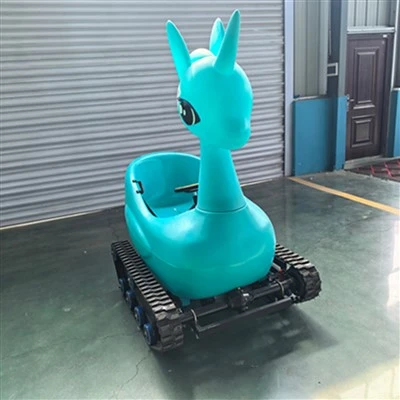
If you’re a scenic area operator looking to upgrade your shuttle fleet or learn more about our GPS-integrated systems, we’d be happy to walk you through how our technology works, answer any questions you have, and help you find the right solution for your space. We’ve worked with parks, historic districts, and coastal areas across the country, and we know firsthand what works for different types of scenic spaces. Reach out to us to start a conversation about how we can help your shuttle service run better, safer, and more efficiently.
All-Terrain Tracked Vehicle References
National Park Service. (2022). Scenic Transportation: Balancing Access and Sustainability. U.S. Department of the Interior.
Sustainable Transportation for Parks. (2021). Telematics and GPS Integration for Outdoor Leisure Spaces. Journal of Transportation and Environment.
Electric Shuttle Systems. (2023). Battery Optimization for Electric Sightseeing Vehicles. International Journal of Sustainable Transportation.
Shandong Feiteng Intelligent Technology Co., Ltd.
As one of the most professional scenic area sightseeing shuttle manufacturers and suppliers in China, we’re featured by quality products and good price. Please rest assured to buy discount scenic area sightseeing shuttle in stock here from our factory. If you have any enquiry about cooperation, please feel free to email us.
Address: Development Zone, Yangdian Town, Wenshang County, Jining City, Shandong Province, China
E-mail: 15264728190@163.com
WebSite: https://www.tongxingplay.com/
