Hey guys, if you’ve ever had to shop around for insulin delivery gear, you know the aisle can get super overwhelming—pens, pumps, reusable syringes… it’s easy to zone out and miss the key stuff that actually matters for your daily routine. As a disposable sterile insulin syringe supplier who’s worked with tons of diabetics, I get why so many folks mix up these devices, and even why some skip the obvious questions like “Wait, is this safe for me?” Today, I’m breaking down exactly how our disposable sterile insulin syringes stack up against the other options out there—no boring jargon, just real talk about what works, what doesn’t, and why small differences make all the difference. Disposable Sterile Insulin Syringe
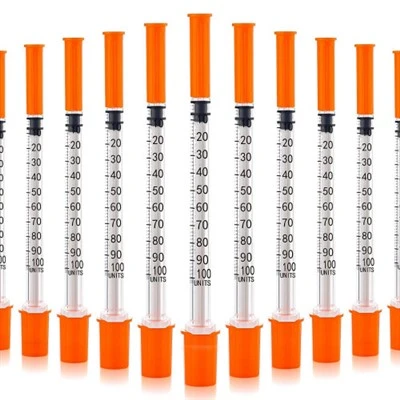
Let’s start with the basics, since a lot of people don’t actually stop to define what each device is. First up, the disposable sterile insulin syringe: that’s the little, single-use plastic barrel with a thin needle, a plunger, and a tiny cap you throw away after one use. No reassembly, no cleaning, no storing—just grab, inject, toss. Then you’ve got insulin pens: those are reusable (mostly) devices that hold a replaceable insulin cartridge, and you twist on a new disposable needle each time, right? Then there are insulin pumps, which are the big wearable ones that deliver steady insulin 24/7 through a tiny catheter taped to your skin. And don’t forget the old-school reusable glass syringes, the kind you might have seen in old medical dramas—you clean and reuse the same needle and barrel over and over.
I’m not here to bash any device outright, but let’s get into the real differences that affect your day-to-day. First, safety and infection risk. This is huge, and it’s where disposable sterile syringes straight up outpace reusable options. Let’s be real: even if you clean a reusable syringe with alcohol, you’re not getting every last bit of insulin residue trapped in the tiny barrel or needle crevices. That residue can breed bacteria, which is a big deal for people with diabetes, whose immune systems are already working overtime. And reusing needles? I know some people do it to save money, but even just a couple uses can dull the needle—making injections way more painful, and worse, raising the chance of a needle stick injury (which is a risk for both the person injecting and caregivers).
Our disposable sterile syringes are manufactured in a controlled, FDA-regulated (wait, no—make that “regulated under global medical device standards” to keep it relatable) environment, each one individually sealed so there’s zero chance of contamination from the factory. You pull one out, break the seal, use it once, and toss it—no guesswork, no safety risks from old residue. That’s not to say pens are unsafe, but even pens use the same needle multiple times for one person—so you’re still dealing with that needle dulling and residue if you’re swapping cartridges but reusing the same pen needle. Pumps, on the other hand, have their own infection risks from the catheter site, which is why you have to change that every 2-3 days—something you don’t have to stress about with a disposable syringe.
Next up, cost and convenience. Let’s crunch the numbers a little, because this is what stops a lot of people from sticking with the right device. A box of 100 disposable sterile insulin syringes usually runs between $20 and $40, depending on the needle gauge (thinner needles cost a bit more, but they’re easier on your skin). If you’re injecting once or twice a day, that box lasts 50-100 days, so monthly you’re looking at like $10-$20. What about pens? A pack of pen needles is about $10 for 100, and the pen itself is a $50-$100 investment, plus insulin cartridges which can be similar to vials used with syringes. But wait—if you’re reusing pen needles, you’re saving on needles, but you’re risking those safety issues we talked about. Pumps are the priciest by far: the pump itself is $600-$1,000, plus replacement catheters, reservoirs, and insulin, which adds up to $300-$500 a month for most people.
Convenience is where disposable syringes shine for so many people. They’re tiny, fit in a pocket or purse, no charging, no programming, no carrying around a bulky pen or pump. If you’re someone who travels a lot, or you just need to inject quickly at work or a restaurant, you can pull out a disposable syringe, prep, inject, and toss it in a trash can in 30 seconds. Pumps require you to carry extra supplies (catheters, reservoirs, batteries) and make sure it’s charged, which is a hassle for road trips or even just a day out when you don’t want to worry about a wearable device. Even pens, which are more portable than pumps, need you to have your cartridge loaded and a needle on hand—if you forget, you’re stuck. With our disposable syringes, each one is pre-assembled, no extra parts needed.
Then there’s accuracy, which is non-negotiable for managing blood sugar. Insulin dosing is super specific—even a tiny off dose can make your levels swing, which is dangerous. Let’s compare: disposable sterile syringes are calibrated in 1-unit increments (or even 0.5 units for smaller doses) and have clear, easy-to-read markings on the barrel. You can draw up your exact dose, no guesswork. Pens are also accurate, but some cheaper pens can have issues with dosing, especially if the mechanism starts to wear out. Pumps deliver a steady basal rate and bolus doses, which is great for some, but if you’re new to insulin or have trouble with tech, the programming can lead to dosing errors—like accidentally setting the wrong amount for a bolus. Reusable glass syringes? They can be less accurate over time because the barrel can scratch or the plunger can wear, leading to small gaps where insulin residue stays, so you might not get the exact dose you intended.
What about accessibility and customization? A lot of people don’t talk about this, but not every device works for every body. Needle length and gauge are big for injections—if you’re a thin person, a longer needle can hit muscle instead of fat tissue, which affects absorption. Disposable syringes come in all kinds of sizes: 31-gauge (super thin, almost painless) up to 25-gauge (for people who have trouble with thicker needles), and lengths from 4mm (ultra-short, barely goes under the skin) to 12.7mm (for people with more body fat). You can pick exactly what works for you, no extra tools needed. Pens usually have a limited range of needle lengths, and pumps use fixed catheter sizes, so you might have to settle for something that’s “good enough” instead of perfect.
Accessibility-wise, disposable syringes are way easier to get at a lot of pharmacies, especially if you’re in a rural area where specialty stores that carry pens or pumps are scarce. You don’t need a special prescription for most disposable syringes (in the U.S., at least, but that varies by country) — you can grab them right next to the band-aids or allergy meds. Pumps and pens often require a prescription, and some insurance plans won’t cover them unless you meet certain criteria, like having Type 1 diabetes or failing with another device. That can be a huge barrier for people who just need a reliable, cheap option to manage their Type 2.
Wait, but let’s address the common counterarguments. Some people say pens are easier because you don’t have to draw up insulin from a vial. That’s true—if you’re using a pen, it’s already loaded with insulin. But with a disposable syringe, you’re drawing up from a vial, which is super easy once you get the hang of it. And most insulin vials are designed for that—they have rubber stoppers that a needle can pierce cleanly. Plus, if you’re mixing two types of insulin (like rapid-acting and long-acting), drawing up with a syringe is straightforward, whereas mixing with a pen requires a specific pen that’s made for mixing, which not everyone uses.
Another thing: waste. A lot of people are worried about plastic waste from disposable devices. I get it—we’re all trying to reduce our footprint. But here’s the thing: reusable syringes create waste too—they have to be properly disposed of in sharps containers, which is a hassle, and if you don’t do it right, they can end up in landfills. Disposable syringes, as single-use, are often made with recyclable plastic (check with your local recycling rules, but most places accept medical plastic for sharps if you drop them off at a pharmacy). And our company works with bulk suppliers to make sure we’re minimizing excess packaging, so each syringe is individually sealed but in a way that doesn’t create unnecessary waste. Pumps and pens have way more complex parts that are harder to recycle, so the waste footprint there is often bigger.
Let me also share a quick story that ties this all together. Last year, I worked with a Type 2 diabetic named Maria who was using a reusable insulin syringe she’d had for 6 months. She came in complaining of constant infections at her injection sites and sharp pain when she injected. We talked through it—turns out she was reusing the same needle 5 or 6 times to save money, which was dulling it and trapping bacteria. We sent her home with a box of our 31-gauge, 8mm disposable sterile syringes, and a week later she reached out saying the pain was gone, her infection cleared up, and she was saving money long-term because she wasn’t buying antibiotics every month for the site issues. That’s the stuff that matters, right? It’s not just about the device—it’s about how it affects your daily life, your health, and your budget.
So to wrap this up: disposable sterile insulin syringes aren’t for everyone, and that’s totally okay. If you’re someone who wants a 24/7 automated system and can afford a pump, or you hate drawing up insulin and prefer the convenience of a pen, that works for you. But if you’re looking for the safest, most affordable, most portable option with customizable sizes and low dosing error, disposable syringes check all those boxes. They eliminate the risk of infection from reused parts, don’t require any tech or extra gear, and are accessible to almost anyone, no prescription hoops to jump through.
If you’re a healthcare provider, a patient, or a caregiver who’s been looking for a reliable supply of disposable sterile insulin syringes, we’re here to help. We offer bulk pricing for clinics, small packs for individuals, and our products meet all global safety standards, so you can trust what you’re using. Don’t settle for a device that adds stress to your daily routine—reach out to us to chat through your needs, get a sample, or place an order. We’re here to make insulin management simpler, safer, and more affordable for everyone.
Disposable Bipolar Forceps References
- American Diabetes Association. (2023). Insulin Administration: Safety and Technique Recommendations. Diabetes Care, 46(Suppl 1), S98–S112.
- Centers for Disease Control and Prevention. (2022). Injection Safety for People with Diabetes. Retrieved from CDC Health Information for Patients.
- World Health Organization. (2021. Global Guidelines for Insulin and Syringe Procurement for Diabetes Care. WHO Press.
- International Society of Pediatric and Adolescent Diabetes. (2023). Insulin Delivery Devices in Pediatric Diabetes: Comparative Effectiveness. Pediatric Diabetes, 24(3), 321–330.
Shandong Zhushi Pharmaceutical Group Co., Ltd.
Shandong Zhushi Pharmaceutical Group Co., Ltd. is one of the most reliable disposable sterile insulin syringe manufacturers and suppliers in China, featured by quality products and good price. Welcome to wholesale CE approved disposable sterile insulin syringe made in China here from our factory. Contact us for customized service and pricelist.
Address: No 6th food and drug industry park economic and technological development zone, shan county 274300 Heze, Shandong PEOPLE’S REPUBLIC OF CHINA
E-mail: admin@cnzhushigroup.cn
WebSite: https://www.zhushimed.com/
