Hey everyone, if you’ve spent any time in the boring welding game, you know that getting the voltage right isn’t just a small detail—it’s the make-or-break between a weld that lasts 10 years and one that craps out after 6 months. As someone who’s been supplying boring welding equipment and consulting shops on this exact stuff for over a decade, I get how confusing it can be: there’s a million forum threads saying “30V is the sweet spot” and another guy swearing 45V is the only way. Let’s cut through the noise and talk about what actually works, no jargon nonsense. Boring Welding
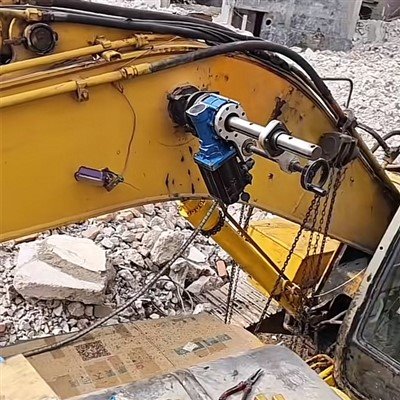
First off, let’s ground this in what boring welding even is, because a lot of folks new to the industry mix it up with regular arc welding. Boring welding is specifically for surfacing or repairing large, round components—think drill pipe, boring mill tools, large-diameter pipe for construction, even the rollers on heavy mining equipment. These parts take way more abuse than your average car door or pipe fitting. They’re scraping against rock, constant high pressure, extreme temperature swings. So the weld can’t just stick; it needs to be hard, wear-resistant, and bond deep enough to not flake off. That’s why voltage isn’t a one-size-fits-all number here. It ties directly to the type of wire you’re using, the material of the base component, and the amperage you’re running.
Wait, let’s keep it real. I see guys all the time grab a welder, crank up the voltage to whatever their buddy told them, and then wonder why their welds are full of porosity or have that “crusty” look. Here’s the thing: voltage controls the length of your arc. Too low, and your arc is short, stumpy, and doesn’t penetrate enough. Too high, and the arc is all floaty, you’ll spray half the weld material into the air, and end up with a thin, weak bead that won’t stand up to the job. For boring welding, most guys use solid carbon steel wire, flux-cored wire, or hardfacing wire—those are the three main types, and each needs its own voltage range.
Let’s break it down by wire type, because that’s the starting point everyone should check first. If you’re using solid carbon steel wire (like ER70S-6, super common for general boring repairs), you’re looking at a voltage range of 24V to 28V. Yeah, that’s tight. Why? Because solid wire runs on a relatively flat volt-amp curve—so if your amperage is set right (which is usually 180A to 250A for most standard boring jobs), voltage needs to match that curve. Too low on this range, and your bead is narrow, doesn’t fuse to the base metal, and you’ll get gaps where dirt and moisture get in. Too high, and you’re wasting wire, your spool will empty way faster, and the weld will be soft—useless for a part that’s digging into rock.
Now flux-cored wire, which is popular for heavy-duty boring work, like on mining rollers or large drill tools. Flux-cored has that core of flux that creates a gas shield, so you can go a bit higher here. Most guys run 28V to 32V for flux-cored, usually paired with amperage from 250A to 350A. I’ve seen a lot of guys mess this up: they use flux-cored with the same voltage as solid wire, and the result is a porous weld that looks like Swiss cheese. The extra voltage here helps the flux burn properly, creates a thicker shield, and gives a deeper penetration. That’s exactly what you want when you’re welding a 10-inch diameter boring roller—you need that penetration to go through the old worn surface and bond to the solid base metal below.
Then there’s hardfacing wire, which is the big one for boring tools that take the most wear. Hardfacing is for when you’re building up a surface that needs to resist abrasion—like the teeth on a boring cutter. That’s where voltage gets a little tricky, because hardfacing wires can be high-carbon, chromium, or even tungsten carbide mixed in. For most standard hardfacing (like chromium-molybdenum), you’re looking at 30V to 34V. If it’s a tungsten carbide composite wire, you might push that to 32V to 36V, but not higher. Wait, why not higher? Tungsten carbide is brittle by nature—too much voltage makes the arc too hot, and you’ll crack the hardfacing layer after a few uses. I’ve had customers call me panicking because their hardfaced cutter shattered after one shift, and 9 times out of 10, they cranked the voltage too high to “make it go faster.” Newsflash: faster isn’t better here. Cracks are a way bigger repair headache than taking an extra 10 minutes to get the voltage right.
Okay, so wire type is the first factor, but there’s more. Let’s talk about base material. If you’re welding on mild steel (most common for new boring tools or repair parts), you can stick to those ranges I mentioned. But if you’re working on alloy steel, like the stuff used in high-pressure drill pipe, you need to bump voltage a little—like 1V to 2V. Alloy steel has a higher melting point, so you need that extra voltage to get the weld to flow and bond properly. On the flip side, if you’re welding on cast iron, which is super common in old boring mill parts, you want to drop voltage by 1V to 2V. Cast iron is brittle and melts easily, too much voltage will cause it to crack or get too hot, warping the whole part. I learned that the hard way—12 years ago, a customer brought in a 50-year-old boring head made of cast iron, cranked voltage to 28V, and halfway through the weld, the head split right down the middle. Cost him thousands, and I had to explain why my earlier tip for steel didn’t apply here. Ouch.
Another big thing people sleep on: wire feed speed. Wait, how is that related to voltage? Let’s keep it simple—voltage and wire feed speed (WFS) work hand in hand. If your WFS is too high for the voltage, you’ll get a “stiff” arc, spatter everywhere. If WFS is too low, the arc is long and unstable. For boring welding, most of the time, your WFS should be around 7 to 10 m per minute (that’s 23 to 33 feet per minute, if you use imperial). And for every 1 m per minute of WFS change, you need to adjust voltage by about 0.5V. So if you bump WFS from 8 to 9 m per minute, add 0.5V. If you drop WFS to 7 m per minute, subtract 0.5V. It’s a tiny adjustment, but it makes all the difference. I always tell my customers to test this on a scrap piece of the same material they’re working on first. Weld a 1-inch bead at 26V, 8 m per minute, then another at 27V, same WFS, and look at the difference. One will be smooth, uniform, no spatter. The other might be lumpy or have gaps. That’s how you don’t guess.
Wait, let’s address a common myth: higher voltage = faster welding. Yeah, technically you can weld faster with higher voltage, but for boring welding, speed is the enemy of quality. These parts are large, so you might think rushing through saves time, but a bad weld will fail, and you’ll end up reworking the whole part (or worse, the part breaks mid-job and you have to tow the whole rig back to the shop). I had a customer last year who tried to cut corners on a 12-foot drill pipe repair. He cranked voltage to 35V, welded twice as fast, and the weld cracked after 3 days of drilling. He ended up having to replace the whole pipe, which cost him $12k. If he’d taken his time, used the right 27V, it would’ve lasted 2 years. That’s the kind of story I hear all the time, so I make sure to drill that into every customer I work with.
Now, how do you actually measure this stuff? A lot of cheap welders have shitty voltage meters that are off by a volt or two, so don’t rely on the machine’s display. Use a digital multimeter to check the actual voltage at the welding lead, not at the machine. That’s a pro tip. Wires can have voltage drop over long distances, especially if you’re running a 50-foot lead for large boring jobs. If your lead is longer than 25 feet, you’ll need to add 1V to 2V to compensate for the drop. That’s another mistake guys make—they plug in the machine, set 26V, run a 100-foot lead, and end up with 24V at the weld, which is too low. Trust me, I’ve seen this so many times.
What about when things go wrong? If your weld is porous, what does that mean? Usually too high voltage, or not enough gas shielding. If your bead is narrow and doesn’t penetrate, that’s too low voltage. If you see spatter all over the place, that’s a bad voltage-WFS match. Those are quick checks you can do on the job, no fancy lab required.
Wait, let’s wrap this up with what I tell every new shop that comes to me asking for boring welding equipment. The suitable voltage isn’t a static number—it’s a range that depends on wire type, base material, wire feed speed, and even your lead length. But as a general rule, for most standard boring jobs (repairing drill pipe, boring mill tools, large rollers), stick to 24V to 28V for solid wire, 28V to 32V for flux-cored, and 30V to 34V for hardfacing wire. Test on scrap first, adjust for your material and lead length, and don’t chase speed over quality.
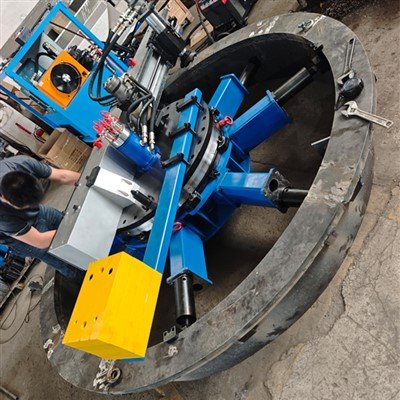
At the end of the day, boring welding is our bread and butter. We supply gear to shops all over, and half the calls I get aren’t about the equipment itself—they’re about getting the voltage right so their welds hold up. If you’re looking to upgrade your boring welding setup, or just want to run a test on your next job to make sure you’re not messing up the voltage, hit me up. We can walk through your specific part, wire type, and material to get you set for success.
Flange Facer References
- Welding Handbook, Volume 4: Welding Processes, American Welding Society, 2021
- Hardfacing for Heavy Equipment Repair, Boring & Drilling Magazine, 2022
- G. Krauss, Steels: Heat Treatment and Processing Principles, ASM International, 2015
- Practical Boring Welding Techniques, Industry Trade Association for Heavy Construction, 2020
Shangqiu JDA Machinery Technology Co., Ltd.
As one of the most professional boring welding manufacturers and suppliers in China, our products have good reputation in the market. Please rest assured to buy cheap boring welding for sale here from our factory. Quality products and reasonable price are available.
Address: No.55 Pingyuan Middle Road, Liangyuan District, Shangqiu, Henan, China
E-mail: sales@jdamachines.com
WebSite: https://www.jda-machines.com/
