If you’ve ever walked past a construction site with that earthy, dusty air or seen a lake that’s lost its bright, clear blue, you’ve seen why environmental protection isn’t just a buzzword—it’s the backbone of keeping our planet livable. And let’s be real: you can’t fix what you don’t measure, right? That’s where physical property testing equipment in the environmental protection industry comes in. I’m not here to ramble about fancy jargon or fake stats (we’ve all sat through those presentations), I’m here to tell you what actually gets used, how it matters, and why picking the right gear isn’t just a nice-to-have—it’s a must for anyone serious about cutting pollution. Physical Property Testing Equipment
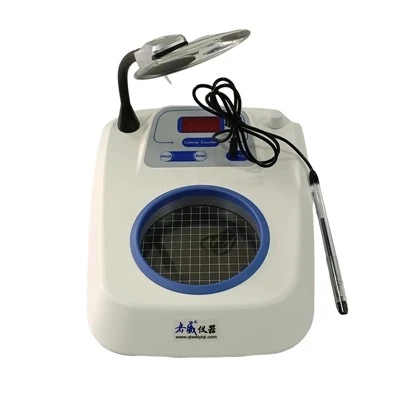
Let’s start with the basics: what even is physical property testing for environmental stuff? It’s all about measuring the physical traits of air, water, soil, and waste—no chemistry set magic required (well, mostly). We’re talking things like particle size, density, viscosity, moisture content, and how well things filter. Think of it as giving Mother Earth a full physical: you need to check her vitals before you can treat what’s ailing her.
First up, air. When we talk about air pollution, most folks picture smog or wildfire smoke, but the tiny stuff—particulate matter (PM) —is the real villain. PM2.5 and PM10 are the ones that get deep into your lungs, so you need gear that can count them accurately. That’s where particulate matter samplers come in. These aren’t your high school lab test tubes, trust me. A lot of industrial facilities use gravimetric samplers: they suck air through a tiny filter for 24 hours, then weigh the filter before and after to get the mass of particles in a known volume of air. But wait, there are also real-time PM monitors—those are the ones that give you readings on your phone (no, you’re not imagining that “bad air day” alert). We supply both, because gravimetric is still the gold standard for regulatory reports, but real-time is perfect for on-site workers who need to adjust systems now if pollution spikes.
Another air staple: gas analyzers. No, not the ones that tell you if your car’s tailpipe is faulty (though some overlap). Environmental gas analyzers measure things like sulfur dioxide (SO2), nitrogen oxides (NOx), carbon monoxide (CO), and volatile organic compounds (VOCs) from factories, landfills, and power plants. These are critical because they’re regulated to the nth degree—miss a reading and you’re looking at fines. The cool part? Newer models are portable, so you can walk around a factory’s emission stack without having to bring a whole lab truck. We’ve had clients use our portable VOC analyzers to track leaks from underground storage tanks, which saved them from wasting millions in unnecessary upgrades.
Now, let’s switch to water—probably the most talked-about environmental medium, and for good reason. You can’t drink dirty water, and fish can’t live in it. The first physical test you need for water is turbidity. Turbidity is just how cloudy water is—caused by sediment, algae, or tiny particles. Think of it as the “cloud score” of water: high turbidity means your water treatment plant has to work extra hard to filter it, and it can harbor bacteria. Turbidity meters are super common—they shine a light through a water sample and measure how much light scatters back. We supply both bench-top ones for lab testing and inline meters that sit in pipes 24/7, alerting operators if something’s wrong before it hits the river.
Next, pH meters? Wait, is pH physical or chemical? Okay, fine, it’s both, but hear me out—physical property testing often wraps in key chemical metrics that drive physical processes. For example, if water’s too acidic, it will corrode pipes and mess with how well filters work. So pH meters are non-negotiable. But water also needs its density tested, especially in treatment plants that use sedimentation tanks. Density of sludge (the gunk left after treatment) tells you how much water is mixed in—if it’s too watery, you’re wasting energy drying it; if it’s too thick, the tank clogs. Sludge density meters are big in municipal wastewater facilities, and we’ve helped several plants cut their drying costs by 15% just by switching to more accurate density monitors.
Then there’s soil—you can’t have a healthy planet without healthy soil, but contaminated soil is a huge problem from old industrial sites, mines, or even overuse of pesticides. The big physical test for soil is particle size distribution. Why? Because particle size affects how water infiltrates, how nutrients move, and how well contaminants leach into groundwater. For example, sand has big particles, so water moves through fast; clay has tiny particles, so water sticks around. To test this, you use a sieve shaker—stack different-sized sieves, pour soil on top, shake it for a set time, and weigh what’s left in each sieve. Simple, but so important. We also supply laser diffraction particle size analyzers, which are faster and more accurate, perfect for labs that test hundreds of soil samples a week. Last year, we worked with a team remediating a old steel mill site—they found that using our particle size data let them design a soil cover that cut rainwater runoff and contaminant leaching by 40%. Game. Changer.
Waste is another big one in environmental protection—we’re talking about managing trash, industrial waste, and hazardous materials. Physical testing here is all about how to handle and dispose of waste safely. For example, waste density: if you have to haul a truckload of waste, you want it as dense as possible to cut costs, but you also have to make sure it’s compacted without releasing toxic fumes. Waste density testers measure how much space a given mass of waste takes up, which is key for landfills and recycling centers. Then there’s leachate testing—leachate is the nasty liquid that drips through landfills, and you need to make sure it’s contained and treated properly. Some of our clients use permeameters to test how well a landfill’s liner prevents leachate from seeping into groundwater. That’s not something you want to mess up—one leak can contaminate an aquifer for decades.
Wait, let’s talk about why the equipment actually matters beyond just numbers. A lot of small businesses or new environmental teams I talk to think “any tester will do” or “we can use old gear.” But here’s the thing: regulatory bodies like the EPA (in the US) or EU EEA require specific accuracy for testing. If your particulate sampler is off by 10%, you could be reporting wrong data and getting fined, or worse—you’re letting pollution slip because your numbers don’t reflect reality. That’s why our equipment is calibrated to meet ISO standards, and we provide on-site training so your team doesn’t just know how to press a button, but understands what the numbers mean. I had a client who was using a cheap PM monitor and thought their factory’s emissions were within limits, but our gear showed they were 20% over. They fixed their system, avoided a $50k fine, and reduced their pollution output by 30% in six months. That’s the kind of impact we’re talking about.
Another thing I love about this industry: it’s constantly evolving. We don’t just sell equipment—we work with our clients to adapt to new challenges. For example, during the pandemic, a lot of food processing plants had to test water for sanitizer residues, so we helped them modify their existing turbidity meters to track those levels without buying new gear. Or when wildfires got worse on the West Coast, we upgraded our particulate samplers to handle the extreme ash particles that are bigger than normal, but still get counted correctly. It’s not one-size-fits-all, which is why we offer custom solutions too, not just off-the-shelf gear.
I know this might sound like a sales pitch, but let’s be real—you don’t have time to waste on gear that breaks, gives bad data, or takes forever to use. Whether you’re a municipal wastewater plant needing to test daily turbidity, a construction company remediating a contaminated site, or a factory trying to cut its carbon footprint, the right physical property testing equipment is your first line of defense. You can’t protect what you don’t measure, and you can’t measure with gear that’s unreliable.

If you’re in the market for testing equipment, or you’ve been having issues with your current setup, reach out to our team to chat. We don’t do pushy sales calls—we’ll listen to your needs, show you what works for your budget, and even walk you through how to use it so you get the most out of it. The planet’s counting on us to get this right, and having the right tools is the first step.
Shaker References
- American Industrial Hygiene Association (AIHA). Air Sampling and Analysis for Environmental Protection. 2021.
- Water Environment Federation (WEF). Physical Property Testing in Wastewater Treatment. 2022.
- United States Environmental Protection Agency (EPA). Soil Contamination Testing Methods: Physical Properties. 2020.
- International Organization for Standardization (ISO). ISO 14644: Cleanrooms and Associated Controlled Environments. 2015.
- Waste Management World Magazine. Physical Testing for Industrial Waste Disposal. 2023.
Hangzhou Qiwei Instrument Co., Ltd.
Hangzhou Qiwei Instrument Co., Ltd. is one of the most reliable manufacturers and suppliers of physical property testing equipment in China, featured by quality products and good service. Please rest assured to buy bulk durable physical property testing equipment in stock here from our factory. We also accept customized orders.
Address: Room 101, Building 25, No. 488-1, Donghu North Road, Linping District, Hangzhou City, Zhejiang Province, China
E-mail: info@qiweilab.com
WebSite: https://www.qiweilab.com/
