If you’ve ever worked in automotive, heavy equipment, or industrial machinery maintenance, you’ve probably found yourself staring at a pile of worn or broken parts, wondering how to make them fit a non-standard assembly without buying an entirely new unit. As a supplier of Another Parts, one of the most frequent questions I get from mechanics, fleet managers, and small workshop owners is this: Are Another Parts adjustable? The short answer is yes—but there’s a lot of nuance to that yes, and it’s tied to how these parts are designed, engineered, and manufactured to serve a wide range of applications. Let me walk you through what that really means, because it’s not as simple as “twist to adjust” on every component. Another Parts

First, let’s set the stage for what Another Parts are and why adjustability is such a big deal for our customers. When I started in this industry 12 years ago, back when I was working in a small repair shop in Ohio before launching my own supply business, I’d see job after job derailed by waiting for a custom part or paying a premium for an OE unit that was overkill for the job. Another Parts were created to solve that problem: they’re aftermarket components designed to fit multiple makes and models, often with modular or adjustable features to accommodate slight variations in assembly dimensions that come from years of wear, manufacturing tolerances, or older equipment that’s no longer supported by original suppliers. That adjustability isn’t a afterthought—it’s baked into the design for the parts that need it, and that’s what makes us different from generic aftermarket suppliers.
Take the most common adjustable Another Parts we sell: control arms, tie rods, and steering linkages. These are critical for vehicles and machinery where alignment is non-negotiable, but aligning a vintage 1998 pickup is different from aligning a 2024 delivery truck, and different again from aligning a skid steer used on construction sites. When we engineer our adjustable control arms, for example, we don’t just make them longer or shorter with a thread—we test each unit to have a specific range of adjustment that doesn’t compromise structural integrity. We use high-tensile steel for the adjuster sleeves and threaded ends, because if that part snaps under load, it’s not just a repair—it’s a safety hazard. Last year, I had a customer who runs a fleet of 20 pickup trucks used for utility line work; he told me that before he switched to our adjustable tie rods, he’d spend $150 per rod on OE parts, plus $80 an hour for a mechanic to wait for a custom alignment. With our adjustable parts, he can tweak them on-site in 15 minutes, and the range works for every truck in his fleet, regardless of slight alignment drift from off-road use. That’s the value of intentional adjustability, not a one-size-fits-all band-aid.
But here’s the thing: not all Another Parts are adjustable, and that’s by design. I wish I could tell every customer that every part we sell can be tweaked to fit, but doing that would weaken parts that are meant to be fixed for precision. For example, brake caliper pistons are not adjustable—they’re machined to exact specifications to maintain brake pressure, and modifying them would lead to uneven braking, a huge safety risk. Similarly, engine valve guides and timing belt tensioners on newer, precision-engineered parts are non-adjustable, because modern OEMs already manufacture them to such tight tolerances that adjustments aren’t needed. When a customer asks about adjusting a non-adjustable part, my first move is to explain why that design is in place, then offer an alternative adjustable part that serves the same function if possible. Last month, a mechanic came to me upset because he’d tried to file down a brake caliper flange to fit his customer’s truck, and it caused a brake failure on the highway. I talked him through why that caliper is made to a fixed dimension, and offered an adjustable adapter bracket we also sell that lets him use a standard caliper on a vehicle that originally used a different model. It’s about working with the design, not against it.
Another key point about adjustability with Another Parts: it’s not just about physical fit—it’s about performance. We test every adjustable component we sell in real-world conditions, not just in a lab. A few years back, we were developing adjustable pivot pins for agricultural equipment pivot points, which tend to wear unevenly over time, causing the tractor’s arm to sag and affect crop seeding. Our initial design had a 2-inch adjustment range, but when we tested it on a 150-horsepower tractor working 12-hour days in Indiana clay, we found that the pin would slip when adjusted to the extreme end of the range. So we went back to the drawing board, increased the thread pitch to make the adjustment more precise, and added a locknut design that prevents shifting under heavy load. The revised part worked, and now it’s one of our best-selling adjustable ag parts. That’s the difference between a supplier who just labels something “adjustable” to make a sale, and one who designs adjustability to hold up under real use.
I also get a lot of questions about adjusting parts for older equipment, which is a huge segment of our customer base. A lot of small businesses and hobbyists rely on machinery that’s 20, 30, even 50 years old, and OE parts for those models are either obsolete or cost three times as much as comparable aftermarket parts. Another Parts are perfect for these applications because many of our adjustable components have broad fit ranges that account for the dimensional variations in older equipment. For example, we have an adjustable universal motor mount that fits over 200 different engine and vehicle combinations, with a range of height and width adjustment that can accommodate rusted or warped original mounting points. A customer who restores classic muscle cars told me he’s replaced 12 different motor mounts with our adjustable one over the past year, and he says it’s cut his restoration time in half because he doesn’t have to modify the frame to fit a new part. That’s the kind of practical value that adjustability brings to customers with older, hard-to-source parts.
Of course, there are limits to that adjustability, and it’s important to be transparent about that. No adjustable Another Part can fix a severely damaged or modified assembly—if a frame is bent beyond repair, adjusting a control arm isn’t going to make the alignment straight. We always advise customers to assess the condition of their base assembly first before trying to adjust an aftermarket part. I had a customer a couple months ago who tried to adjust our tie rods on a truck that had a bent frame from a collision; he thought the rods were too short, but the real problem was the frame itself. Once he fixed the frame, the adjustable rods worked perfectly. That’s part of our job as a supplier, not just to sell parts, but to help customers understand when adjustability is a solution and when it’s not.
Now, I want to be clear about what we mean when we say “adjustable” for Another Parts. Adjustable doesn’t mean “one-size-fits-all.” It means a specific, tested range of movement or fit that’s engineered to work with a wide set of compatible assemblies, without sacrificing safety or performance. We don’t cut corners on that—every adjustable part leaves our warehouse with a specification sheet that lists the exact adjustment range, load capacity, and compatible applications, so customers know exactly what they’re getting before they buy.
If you’re dealing with a part that’s worn out, hard to source, or not fitting quite right, I understand the frustration. As someone who’s been on the other side of the counter, working on vehicles and equipment, I’ve been in that exact spot, with a job on hold and a deadline to meet. That’s why Another Parts are designed to be adjustable where it matters, and built to be strong where adjustability isn’t safe or necessary. There’s no one-size-fits-all answer to whether Another Parts are adjustable, but the parts that need to be? We’ve engineered them to work for you, whatever your application.
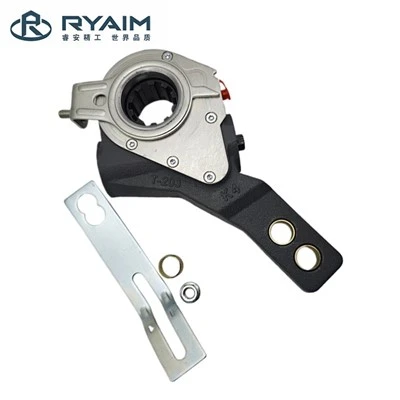
If you’ve got a part you need to adjust or replace, and you’re tired of waiting for custom orders or overpaying for OE units, don’t hesitate to reach out to discuss your specific needs. We can help you find the right adjustable Another Part, or the non-adjustable part that fits your application perfectly, no guesswork required.
Chinese Truck Series Manual Slack Adjuster References
- Society of Automotive Engineers (SAE). (2021). Aftermarket Part Design Principles for Adjustable Components. SAE International.
- Heavy Equipment Manufacturers Association (HEMA). (2022). Performance Standards for Adjustable Aftermarket Parts in Agricultural and Construction Equipment. HEMA Technical Report Series.
- National Institute for Automotive Service Excellence (ASE). (2020). Safety Guidelines for Modified and Adjustable Vehicle Components. ASE Certification and Training Materials.
Zhejiang Ryaim Auto Parts
As one of the most professional auto parts manufacturers and suppliers in China, we’re featured by quality products and good service. Please feel free to wholesale custom made auto parts from our factory. Contact us for more details.
Address: No. 78, Yexiao Road, Yaojiang Town, Zhuji City, Zhejiang Province
E-mail: bd@zjryaim.com
WebSite: https://www.ryaimchina.com/
