Hey everyone, Structural Timber
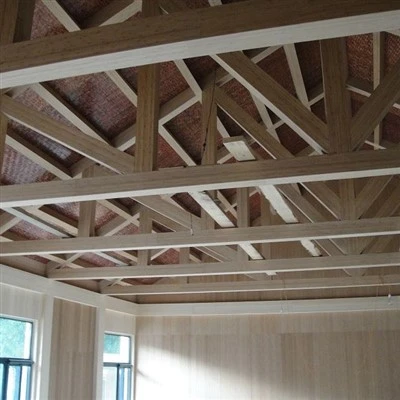
Let’s cut to the chase—if you’re in the structural timber game, you’ve probably been asked this a hundred times: “Do I need to kiln-dry the timber I’m buying?” As a structural timber supplier who’s been in this for way too long (read: way before everyone started hyping mass timber like it’s the new gold rush), I get it. Kiln drying adds a cost, takes extra time, and if your project is on a tight deadline, it’s easy to brush it off and go with air-dried. But here’s the thing: I’ve seen way too many clients skip that step, only to end up with warped walls, split beams, or even structural failures that could’ve been avoided. Let’s break this down like we’re talking over a coffee, no jargon, no nonsense.
First, let’s start with what kiln drying actually is, because I know a lot of folks hear the term and zone out. Air-dried timber is just… left to sit outside (or in a shed) for months, even years, letting moisture evaporate naturally. Kiln drying is a controlled process—we stack the timber in huge ovens (kilns) where we tweak temperature, humidity, and airflow to pull out moisture fast, down to a specific level tailored for where the timber’s going. For structural timber, that “specific level” is usually 6-12% moisture content (MC), depending on the climate the structure will live in. If you’re building in the Pacific Northwest, that’s one number; if you’re building in Arizona, that’s another. Air-dried timber rarely gets that consistent—some pieces might be 15% on top, 8% on the bottom, and that’s where the problems start.
Let’s talk about why moisture’s the big bad wolf here. Wood is hygroscopic—it absorbs and releases moisture based on the air around it. So if you use an air-dried beam that’s sitting at 18% MC, and you put it in a house that’s heated to 70°F in the winter (which drops indoor MC to like 5%), that beam’s gonna lose moisture fast. What happens when wood dries unevenly? It warps. We’re talking cups, bows, twists, splits—none of which are structural issues you want. I had a client last year who built a custom garage with air-dried Douglas fir beams. Six months later, the front beam was so twisted, the overhead door wouldn’t close all the way. We had to replace three beams, and he ended up paying way more for repairs than he would’ve for kiln-dried timber in the first place. That’s not a one-off, either.
Wait, but some people say “my grandpa used air-dried timber for barns that stood for 50 years—why’s that different?” Barns are open-air, right? They don’t have the controlled humidity of a modern house. They expand and shrink with the seasons, but they’re built to handle that movement. When you’re doing structural timber for a closed structure—walls, floors, roof trusses—you don’t want that kind of movement. Kiln drying locks the moisture in at a level that matches the expected indoor (or controlled outdoor) environment, so the timber moves way less after installation. That means your walls stay straight, your floors don’t squeak or gap, and your structural members hold their shape.
Another big one: strength. You might think dry wood is weaker, but nope—kiln-dried structural timber is actually stronger, more consistent. When you dry wood properly, you reduce the chance of decay and insect infestations. Moisture is food for termites, fungus, mold—all the stuff that eats away at timber from the inside. Air-dried timber can take months to dry, and if it’s stored poorly, it can get moldy before it even hits your job site. Kiln drying kills that stuff—high heat in the kiln wipes out insect larvae and spores, so your timber arrives clean and protected. Plus, strength testing (yeah, we do these for every load we ship) shows that kiln-dried structural timber has higher modulus of rupture and modulus of elasticity—translation: it’s better at holding weight, less likely to bend or crack under load. That’s not just a “nice to have” for a deck or a bookshelf; that’s critical for a roof truss supporting 20 feet of ceiling, or a beam holding up a second floor.
But let’s be real—kiln drying isn’t perfect, and it’s not for every single project. Wait, what? Yeah, hear me out. If you’re building a temporary structure, like a festival stage that’ll be taken down in a year, air-dried might be fine. If you’re in a super humid climate (like coastal Florida) and you’re using timber for something that’ll be exposed year-round (like a dock), you might treat it with something and let it air-dry, because kiln drying won’t stop it from absorbing moisture from salt air. But here’s the catch: for permanent, enclosed, load-bearing structural timber—this is non-negotiable. I’ve had clients who tried to save $0.20 per board foot on air-dried timber, only to spend 10x that on repairs. Let’s do the math: a 2x10x12 kiln-dried Douglas fir is maybe $15 more than air-dried. If you’re using 100 beams, that’s $1,500. But if one beam fails, or you have to fix a warped wall, that’s $15,000 easy. I’ve seen it happen.
Also, consistency is huge for suppliers. When you kiln-dry timber, every piece is the same MC, the same straightness, same quality. Air-dried timber can have knots that are loose, or uneven shrinkage, which means you might have to reject 10% of the pieces before they go up. As a supplier, we sort our kiln-dried timber by strength grade, so you know exactly what you’re getting—no surprises. With air-dried, you might get a great piece one time and a warped one the next, because the drying process is out of our control once it leaves the yard.
Wait, let’s address a common myth: “Kiln-dried timber is more flammable.” No, that’s not true. Fire resistance has nothing to do with moisture content for structural timber— it’s about the treatment, the thickness, and the type of wood. In fact, dry wood ignites faster, but that’s a tiny difference compared to a structure that’s compromised by warped beams. The real fire risk is a badly built structure, not kiln drying. So that’s a myth I hear all the time, and it’s just wrong.
Another thing: installation. Kiln-dried timber is lighter. That might sound trivial, but when you’re lifting 20-foot beams onto a roof, lighter means faster, safer installation. Less strain on your crew, less chance of dropping a beam and damaging it. Air-dried timber is heavier because it has more moisture, so you’re paying for that extra weight when you transport it, too—higher shipping costs. Kiln drying actually saves you money on freight, because the timber weighs less.
Let me wrap this up with a few real-world examples. Last month, a construction company came to us after a botched job on a multi-family building. They’d used air-dried spruce for the floor joists, and within a month, the gaps between the subfloor and the joists were so big, a child’s toy fell through. They tried to shim it, but the shims didn’t last because the joists were still moving. We supplied kiln-dried spruce joists, and now, six months later, there are zero gaps. Another client: a small business owner building a new storefront. He skipped kiln drying on his front columns, and three months in, one column split down the middle. He had to pull the entire storefront facade down to replace it—cost him twice what he saved on the timber.
So, to answer the question: Does structural timber need to be kiln dried? If you’re building something permanent, enclosed, load-bearing—hell yes. If you want to avoid warping, splitting, structural issues, higher repair costs, and headaches for your crew or your clients—yes. If you’re doing a temporary project, or something that’s fully exposed year-round and you’re treating it differently, maybe not. But 9 times out of 10, for any structural timber that’s going to be part of a building that’s meant to last, kiln drying is worth every extra penny.
As a structural timber supplier, we don’t push kiln drying just because it’s more profitable—we push it because we’ve seen the consequences when you skip it. We sort every piece, control the moisture content to match your project’s location, and make sure your timber arrives straight, strong, and ready to install. No surprises, no warps, no callbacks.
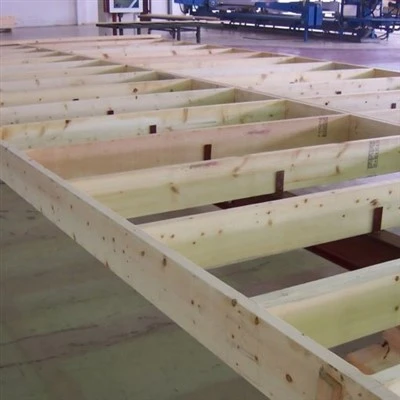
If you’re working on a project and you want to chat about whether kiln-dried timber is right for you, or you want to get a quote, don’t hesitate to reach out. We’re here to help you get the right timber the first time, so your project goes smoothly.
Precast Wall Panels Now, before I go: the references I used for this info are from the Forest Products Laboratory (U.S. Department of Agriculture), the American Wood Council, and the National Wood Flooring Association. They’ve done all the hard science, and I’ve just translated it into stuff you can actually use for your next build.
Zendekin Low-Carbon Technology Co., Ltd.
We are one of the most professional structural timber manufacturers and suppliers in China. With abundant experience, we warmly welcome you to wholesale customized structural timber from our factory. If you have any enquiry about quotation, please feel free to email us.
Address: Building 3, Yincheng INC Center, No.59 Tianyuan West Road, Jiangning District, Nanjing, Jiangsu, China.
E-mail: zdqeco@163.com
WebSite: https://www.zdqeco.com/
