If you’ve ever pulled on a pair of underwear and felt that perfect, snug-yet-not-suffocating give that moves with you through a busy day, you’ve felt elastane at work. As an underwear fabric supplier, I field this question weekly from designers, brand buyers, and even small boutique owners testing fabrics for their lines: What is the stretchability of elastane in underwear fabric? It’s not a one-size-fits-all answer, and skipping the details of elastane performance can lead to ill-fitting underwear that rides up, loses shape after a few washes, or irritates sensitive skin. Let’s break down the science, the numbers, and the real-world context that matters most for anyone specifying or choosing underwear fabric. Underwear Fabric
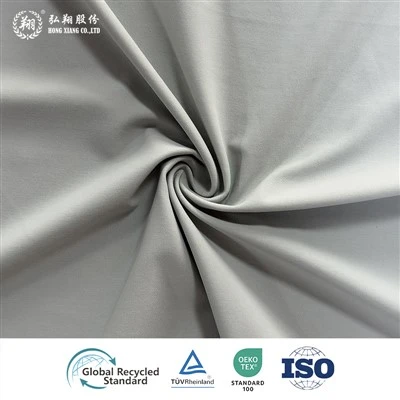
First, let’s get the basics straight for anyone who might be new to textile science. Elastane (also called spandex or Lycra, though Lycra is a branded subset of elastane) is a synthetic polymer made from segmented polyurethane, developed in the 1950s specifically for stretch applications. Unlike natural fibers like cotton or wool, which have a limited ability to elongate before breaking, elastane molecules are structured as long, coiled chains that straighten when stretched and can recoil back to their original shape once the tension is released. That’s the core of its stretch, and why it’s the go-to fiber for underwear—garments that need to adapt to movement, breathability, and long days without feeling restrictive.
The stretchability of elastane in underwear fabric isn’t a fixed number, though. It depends on three key variables: the percentage of elastane blended into the fabric, the construction of the fabric (woven vs. knitted), and the finish applied after manufacturing. Let’s start with elastane percentage, because that’s the most immediate factor. For underwear, elastane content typically ranges from 2% to 15%, and that range serves very different purposes. The lowest end, 2% to 5% elastane, is used in underwear that needs a subtle, almost invisible stretch—think seamless cotton briefs or modal boxer briefs for daily wear. This small percentage adds just enough give to keep the fabric from gaping at the waistband or thighs, but doesn’t change the fabric’s hand feel (the way it feels against skin) much; it still acts mostly like the primary fiber, usually cotton, modal, or Tencel.
Move up to 6% to 10% elastane, and you get the sweet spot for most performance underwear. This is the range we source for most of our clients, because it balances stretch, recovery, and breathability perfectly. Let’s put that in concrete terms: a fabric with 8% elastane can stretch to 1.5 to 2 times its original length when pulled gently, and will snap back almost 95% of the way once tension is released. That’s the stretch you feel in a good pair of performance briefs or high-waisted underwear that holds its shape through bending, sitting, and walking without digging in. For context, a fabric with 10% elastane will stretch roughly twice its original length, while a fabric with 12% to 15% is reserved for more specialized uses: compression underwear, athletic briefs for workouts, or shapewear underwear, where you need a firmer, more binding hold. It’s important to note that elastane alone can’t do the heavy lifting here—its performance is amplified by how it’s paired with other fibers, too.
Next, fabric construction, which is where a lot of suppliers and even buyers mix up expectations. Elastane works best in knitted fabrics, not woven ones. Woven fabrics are made by interlacing warp and weft fibers at right angles, which gives them great tensile strength but very little stretch (usually less than 10% elongation, even with elastane added). Knitted fabrics, by contrast, are made by interlocking loops of fiber, which creates natural give that pairs perfectly with elastane’s recoil. The most common knit structures for underwear are single jersey, interlock, and rib knit—each with different stretch profiles. Single jersey is a lightweight, smooth knit, usually used for basic briefs; with 8% elastane, it has about 120% elongation (meaning it stretches to 2.2 times its original length) in the cross-grain, and 50% in the lengthwise grain. Interlock is a double-sided knit, thicker and more durable, with slightly less stretch (around 100% cross-grain elongation) but better recovery, making it ideal for high-waisted underwear that needs to stay in place. Rib knit, the most stretch-heavy structure, has vertical ribs that create gaps between yarns, so even with a 6% elastane blend, it can stretch up to 150% cross-grain and retain shape perfectly—this is why waistbands and leg bindings often use rib knit, even in underwear with lower overall elastane content.
Recovery is just as important as stretch, and this is where elastane outperforms every other stretch fiber on the market. Too often, brands focus only on how much a fabric stretches, not how well it bounces back. A fabric that stretches 200% but only recovers 50% is useless for underwear—it’ll sag, bag, or ride up after two wears. Good elastane for underwear has a recovery rate of 90% or higher when new, but that rate drops over time with wear and washing. How quickly that happens depends on the quality of the elastane itself, not just the percentage. Lower-grade elastane (common in cheap, fast-fashion underwear) breaks down faster: after 10 washes, recovery can drop to 60% or lower, while high-quality elastane (like the ones we source for our fabric line) retains 85% recovery even after 50 washes. That’s a key point for our clients: we prioritize elastane that’s OEKO-TEX certified, because it’s free from harmful chemicals and has a more consistent molecular structure, leading to longer-lasting stretch.
I get asked all the time if there’s a downside to more elastane. For daily underwear, more isn’t always better. If you have 15% elastane in a pair of everyday briefs, you might feel compressed in a way that’s uncomfortable for all-day wear, especially if you have sensitive skin or live in a warm climate—higher elastane blends can sometimes trap more heat, because the tighter knit structure is less breathable. That’s why we often recommend 7-9% elastane for daily cotton or modal underwear, 10-12% for athletic or performance wear, and 12-15% only for shapewear or specialized compression garments. We also test every fabric blend we make for “stretch retention” under real-use conditions: we wash fabrics 50 times in hot water (standard for household laundry), stretch them to 150% of their original length, and measure how much they return to their starting size. That’s how we ensure our underwear fabrics don’t go baggy after a month of use.
Another common myth I encounter: elastane causes irritation. That’s not the elastane itself, it’s either the finish on the fabric or low-quality blends. Pure elastane is soft and non-irritating, but when it’s blended with cotton or other fibers, the way it’s spun and processed can create rough fibers that rub against skin. We use a process called “open-end spinning” for our blended fabrics, which mixes elastane core-spun yarns (where a core of elastane is wrapped in cotton or modal) evenly throughout the fabric, so there are no exposed elastane fibers on the surface. That eliminates friction and irritation, even for sensitive skin, while still keeping the stretch performance high. Core-spun yarns also mean the elastane isn’t exposed to the surface, so it’s less likely to break down from direct friction with clothing or skin.
Let’s put this all into perspective with real examples of how elastane stretch translates to real underwear. A customer comes to us wanting fabric for basic seamless briefs: we recommend a 90% cotton / 8% elastane / 2% nylon blend, single jersey knit. This fabric has roughly 120% cross-grain elongation, 92% recovery after 50 washes, feels soft against skin, and moves with the body without digging. For high-waisted shaping underwear, another client needs more hold, so we suggest a 85% modal / 10% elastane / 5% polyester blend, interlock knit, with 100% cross-grain elongation and 90% recovery after 50 washes. For men’s athletic boxer briefs, we use a 78% polyester (recycled, for our sustainable line) / 12% elastane / 10% polyamide blend, rib knit, with 150% cross-grain elongation, 88% recovery after 50 washes, and moisture-wicking properties to keep sweat away.
As an underwear fabric supplier, I also work with brands to help them specify the right elastane stretch for their target market. If a brand is making luxury daily underwear, they don’t need 15% elastane—they need a consistent 8% blend that feels premium, lasts, and doesn’t feel restrictive. If a brand is making workout underwear for runners, they need the extra stretch and recovery of 12% elastane to accommodate high-impact movement. And for anyone worried about sustainability, we also offer a line with GRS-certified elastane (made from recycled plastic bottles) that has the same stretch performance as virgin elastane, so brands can hit their sustainability goals without sacrificing fabric quality.
One thing I always emphasize to new buyers: stretchability isn’t just a technical spec—it’s tied to customer satisfaction. A 2023 textile industry survey found that 68% of consumers stop buying a brand’s underwear because it loses its stretch or fits poorly after a few washes. That’s not because elastane is bad—it’s because brands often cut corners on elastane quality or percentage to lower costs. When you choose the right elastane blend and fabric construction, you get underwear that customers will come back to, because it feels good, fits well, and lasts.
If you’re a brand owner, designer, or retailer looking for underwear fabric that balances elastane stretch, performance, and quality, we can help. Whether you need custom blends, standard stocks, or fabrics tailored for specific uses (daily wear, athletics, shapewear, or sustainable lines), our team can provide sample fabrics with detailed stretch and recovery test data so you can make the right choice for your customers.

To discuss your specific requirements and get a custom quote for underwear fabric, feel free to reach out. We can share test results, swatches, and all the technical details you need to ensure your garments have the perfect stretch that sets your brand apart.
Jacquard Knitted Fabric References
Textile Institute. (2020). Elastomeric Fibers in Apparel: Performance and Durability. Textile Progress.
OEKO-TEX International. (2022). Guide to Stretch Fiber Performance in Underwear Fabrics. OEKO-TEX Technical Bulletin.
American Association of Textile Chemists and Colorists. (2021). Test Method for Elongation and Recovery of Knit Fabrics. AATCC Test Method 212.
Zhejiang Hongxiang Textile Technology Co., Ltd.
Address: No. 8, 12th Road, Warp Weaving Park, Maqiao Street, Haining City, Jiaxing City, Zhejiang Province
E-mail: gd@hongxiang888.cn
WebSite: https://www.h-xiang.com/
