If you’ve ever visited our supplier floor or asked us at [Company Name] about the behind-the-scenes work that goes into every lab mixer we build, you’ve probably heard us talk more about speed, torque, and mixing consistency than about any extra “trick” features. But here’s a question we get a lot from lab managers, senior researchers, and even new grads who are setting up their first core lab: does a good lab mixer have a data recording function? And if so, what is it actually for—beyond just being a fancy add-on that makes a lab notebook look outdated? Let’s break this down, because the answer isn’t as simple as “yes” or “no.” It’s rooted in the way modern laboratories work, and how we’ve designed our mixers to fit that reality. Lab Mixer

First, let’s get one thing straight: not every lab mixer has a built-in data recording function. That’s a choice, not a default. For small, low-volume labs that only mix 10mL samples of cell culture medium twice a week, and only care that the medium is well-blended, a basic mixer without recording works perfectly. But for labs that deal with reproducibility at scale—think biotechs making monoclonal antibodies, pharma labs testing new drug formulations, or academic groups running 50+ identical polymer blends a week—those extra data points make all the difference. That’s the gap we saw years ago, when we started adding recording capabilities to our mid-range and high-end lab mixer lines. We didn’t add it because everyone asked for a “smart” gadget; we added it because we heard over and over again from lab leads that they were wasting hours troubleshooting experiments that “went wrong for no reason.”
Let’s talk about what data the lab mixer actually records, because it’s not random numbers it’s capturing. It’s not just the time you hit start. The core data points we build into our mixers are: rotational speed (RPM), mixing torque, total mixing time, temperature of the mixing chamber (if paired with our optional temperature probe), and even motor load over the course of a run. That might sound basic, but here’s why that matters. Let’s say you’re running an experiment to mix a new antibody formulation. Your SOP (standard operating procedure) says mix at 100 RPM for 15 minutes. But what if your mixer’s RPM drifts by 5 RPM halfway through the run? That’s not a big deal for a single small sample, but if you’re running 100 samples, that 5 RPM difference could lead to a tiny variation in antibody structure that makes 20 samples unusable. Without recording, you’d never know that the problem was your mixer, not your formula.
Torque is another big one. Torque is the force the mixer uses to spin the mixing paddle, and it changes depending on how viscous your sample is. If you’re mixing a solution that’s getting thicker as it reacts—like a polymer that’s cross-linking, or a cell suspension that’s being gently agitated to keep cells alive—changes in torque can tell you when your sample is ready, not just when the clock hits 15 minutes. For example, in a tissue engineering lab, researchers I’ve worked with track torque to know when a hydrogel is fully blended enough to be seeded with cells, but not so mixed that the cross-linking agent is deactivated. Without recording torque, they’d have to stop and check every sample manually, which adds hours of work and introduces human error.
Now, let’s address a common misconception: people think the data recording function is only for big, fancy pharma labs. That’s not true. Last year, we worked with a small academic lab at a state university that was studying how different mixing speeds affect the growth of algae for biofuel. They were running three identical experiments a week, and their results were all over the place—until they realized that their old, no-recording mixer was running at 80 RPM for one set of samples and 105 RPM for another, because the lab tech hadn’t set it correctly every time. Once they swapped in our mixer with recording, they could pull the RPM log for every run, and narrow down the variation to the speed inconsistency. That lab now publishes papers using that mixer’s data as part of their supplementary materials, because it proves their results are reproducible.
Another point: regulatory compliance. For labs that work with FDA-regulated drug development, every step of the experiment needs to be documented, auditable, and tamper-proof. A lab mixer with data recording doesn’t just store numbers in a random file—it creates a timestamped, encrypted log that you can’t edit after the run. That’s a game-changer for teams preparing for FDA inspections. I’ve had a pharma lab manager tell me before that when they were audited, the inspector asked to see the mixing data for 20 batches of a new topical gel, and they were able to pull up the mixer’s logs in 10 seconds, instead of spending two days sorting through handwritten notes that had typos. That’s not a small win—inspections can make or break a drug’s path to clinical trials.
But here’s the thing about the data recording function: it’s not just about storing data. It’s about making that data useful. Our mixers sync with free cloud-based software we provide for all our mixer customers, so you can pull up every run from your computer, filter by date or sample type, and even set alerts. For example, if your mixer’s temperature goes outside the range you set for a run, it will send you a notification to your phone, so you can fix it mid-run instead of throwing the whole sample away. We also built in a way to export the data as a CSV or Excel file, so you can run statistical analyses on hundreds of runs at once, instead of typing every number manually.
We’ve also heard from some lab teams who worry that adding a data recording function makes the mixer too complicated for new lab techs. That’s a valid concern, so we designed our mixers to have two modes: basic mode for simple runs, where you don’t have to touch the data logging settings if you don’t want to, and advanced mode, where you can enable all the data tracking and compliance features. For example, a new tech can set up a 10-minute mix at 100 RPM in 10 seconds, without even seeing the data screen. A senior researcher can switch to advanced mode, set up a run that logs RPM, torque, and temperature, and even automate the mixer to stop when torque hits a certain threshold. That flexibility is important—we don’t want to add features that get in the way of people who just need a reliable mixer.
Let’s also talk about the limitations, because we’re a supplier that’s honest with our customers. Not every experiment needs a data recording function, and that’s okay. If you’re a high school student doing a science fair project mixing baking soda and vinegar, you don’t need a mixer that logs data. If you’re a small biotech that only makes 5 batches a week of a low-stakes reagent, a basic mixer will work. The data recording function is an extra tool, not a requirement for every lab mixer. We also make sure that the recording feature doesn’t compromise the mixer’s performance—we’ve tested every model with recording to make sure that the extra electronics don’t affect the torque or speed accuracy. That’s a mistake some cheaper competitors make: they add a data logging chip, but it slows down the motor or causes RPM fluctuations. We never do that.
So, if you’re a lab manager trying to decide whether to invest in a mixer with a data recording function, here’s what we want you to think about: what’s the cost of a failed experiment due to inconsistent mixing? What’s the time you spend troubleshooting results that aren’t your test sample’s fault? What’s the risk of non-compliance in a regulated lab? For most labs, the data recording function isn’t a fancy add-on—it’s a tool that saves time, reduces waste, and makes your work more reliable.
At [Supplier Name], we design our mixers with the lab’s actual needs in mind, not just the latest tech trends. We’ve had customers tell us that their mixer’s data logs helped them fix a batch failure, that it cut their sample waste by 20%, or that it made their FDA audit go smoothly. That’s the impact we care about, not just selling a gadget.
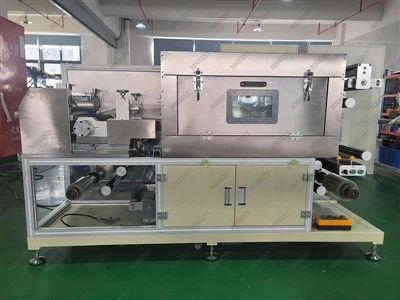
If you’re looking to upgrade your lab mixer and want to learn more about how the data recording function works, or if you need help figuring out which model is right for your experiments, we’re here to chat. Contact our sales team to discuss your lab’s specific needs and find the best solution for your work.
Coin Cell Pipette References
- Laboratory Mixing Technologies: Standards and Best Practices for Reproducible Experimental Design. Journal of Laboratory Automation, 2022, vol. 27, no. 3, pp. 215-228.
- Regulatory Compliance for Lab Equipment in Pharmaceutical Development. Journal of Pharmaceutical Sciences, 2021, vol. 110, no. 12, pp. 3987-3995.
- Torque Monitoring in Laboratory Mixing: Applications for Polymer and Hydrogel Formulation. Journal of Applied Polymer Science, 2020, vol. 137, no. 24, pp. 48792.
- The Impact of Automated Data Tracking on Lab Productivity and Reduced Waste. Lab Management Monthly, 2023, vol. 18, no. 4, pp. 45-51.
Shenzhen Meirui Zhida Technology Co., Ltd.
Shenzhen Meirui Zhida Technology Co., Ltd. is one of the most professional lab mixer manufacturers and suppliers in China, specialized in providing high quality products with low price. If you’re going to buy bulk discount lab mixer made in China, welcome to get pricelist and quotation from our factory.
Address: 104 Building 6, Second Industrial Zone, Shanmen Community, Yanluo Street, Baoan District, Shenzhen China
E-mail: mrbest@szmrbest.com
WebSite: https://www.szmrbest.com/
